Economists vastly underestimated the strength of the U.S. labor market for the month of August, according to new data released by the Department of Labor.
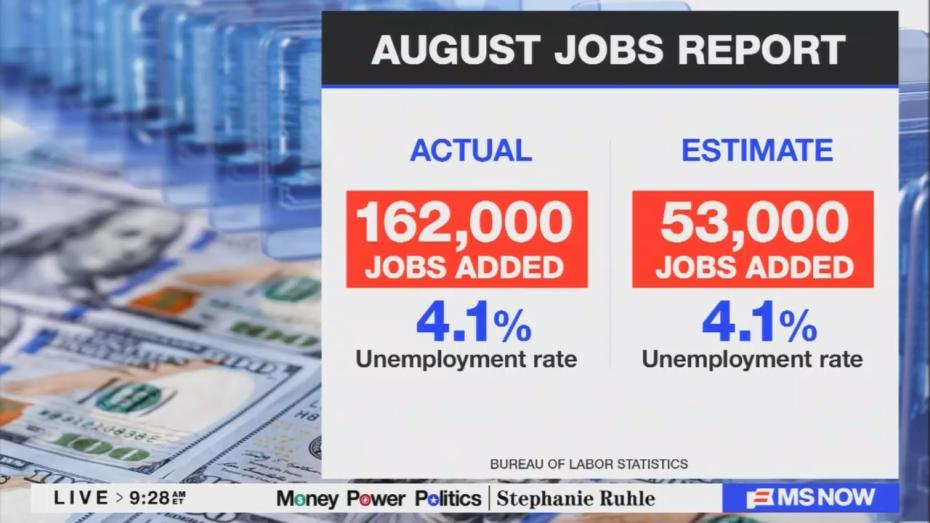
The Bureau of Labor Statistics analyzed that the U.S. economy added a whopping 162,000 jobs in August, eclipsing the consensus estimate of a mere 53,000 increase by economists surveyed by Dow Jones. This reflected the biggest monthly gain since March. The unemployment rate remained unchanged at 4.1 percent.
Even more telling, as the BLS contextualized, was that the reported figure was “higher than the average monthly gain of 31,000 over the prior 12 months.” FWD bonds chief economist Chris Rupkey told CNBC that the numbers reflect, on net, a labor market that “is alive and well and generating thousands of new jobs to help keep economic growth squarely in the plus column.”
Notable among the job gains was in food services and drinking places, which saw a 59,000 increase, which was “well above” the paltry monthly average gain of 12,000, per BLS. Gains were also notched in local government, education, and manufacturing, which continued to achieve an upswing from the December 2025 lows:
In August, employment in manufacturing continued its upward trend (+16,000) and is up by 58,000 since a recent low in December 2025. Employment in machinery manufacturing (+6,000) and in fabricated metal product manufacturing (+6,000) continued trending up in August.
The U.S. stock market tumbled on the news, as investors feared the possibility of a Federal Reserve rate hike. Investor’s Business Daily reported that the Dow fell 0.5 percent in early-day trading, while the S&P 500 also dropped 0.2 percent and the Nasdaq ticked down 0.1 percent.
The possibility of a rate hike will be more concrete following the release of August’s inflation report next week, according to Morgan Stanley Wealth Management chief economic strategist Ellen Zentner. Zenter told CNBC that “[a]n upside surprise in payrolls will likely ramp up concerns about a rate hike, but that outcome is in the hands of next week’s inflation numbers.”
However, if inflation comes beneath consensus estimates, per Zenter, “the Fed will likely feel comfortable discounting potentially inflationary signals coming out of the labor market.”
Shortly after it went live, President Donald Trump praised the BLS jobs report in a Truth Social post, using it as a pretext for putting pressure on the Fed to lower interest rates. “[Y]ou haven’t seen anything yet,” the President exclaimed. He continued: “Lower the interest rates because the U.S.A. is a much stronger credit than it was just a short time ago! A STRONG COUNTRY MEANS A LOWER INTEREST RATE - IT’S A BETTER CREDIT…Very simple! We should have the LOWEST RATE of any country in the World, like ‘the old days.’”