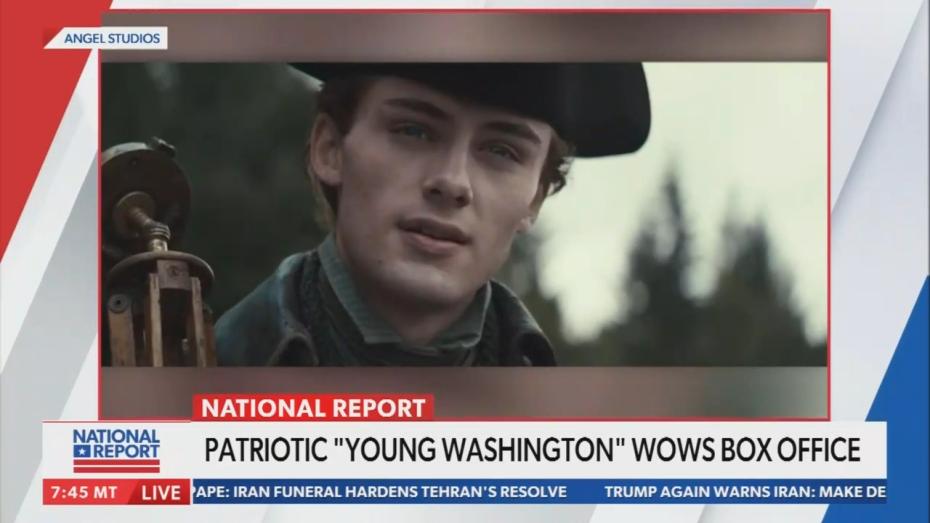
Angel Studio’s patriotic hit Young Washington is still flourishing in theaters nationwide, but liberal critics would have us believe it’s not due to a quality production with talented actors. One critic in particular called it “fraud” due to the company’s “Pay-It-Forward” ticketing system.
As noted here last week, Young Washington has been a hit with an incredible box office performance. For its first weekend, the film opened to $19.4 million on a $20 million budget, with a first-day total of nearly $7.6 million, doubling Supergirl’s first-day total. Domestic total has now reached roughly $41 million, showing solid holdover appeal driven by audience enthusiasm.
The Wrap’s William Bibbiani, however, accused Angel Studios of “voter fraud” over its “Pay it Forward” ticket model. Apparently, Christians and patriots voluntarily funding tickets for a movie celebrating America is now scandalous, specifically for a studio concerned with “corny,” “jingoistic,” and “religious films” and “panhandl[ing]” audiences.
This, Bibbiani asserted, was proof Angel Studios films are only successful if tickets are free:
Angel Studios repeatedly concludes their more jingoistic and religious films with a last-minute panhandle over the closing credits, flimsily disguising their scheme — to get their fans to buy extra tickets, for theoretical audiences who may never actually use them — to inflate the box office and potentially make it look like their films are more popular than they are.
This suggests they don’t actually think conservative themes are popular, since otherwise they wouldn’t need to game the system. If you truly believe in voting with your money, then films like “Young Washington” — which conclude with an actor, in this case Kelsey Grammer, saying that giving Angel Studios extra cash is the same as “launching a movement” — can only be categorized as a form of voter fraud.
“Young Washington” is made with such corny insistence on Washington’s and America’s greatness that it could, by all rights, be a hit film on the nation’s quarter-millennial birthday. I guess we’ll never know, since, if it does make a lot of money, Angel Studios can’t brag about it, because the number of tickets that get sold to actual, interested audience members could be a lot smaller than the number of tickets technically sold. The dishonesty of the moneymaking enterprise poisons what could have merely been another artificial biopic, designed only to make (some) Americans feel good about themselves before their annual fireworks show.
Bibbiani’s wishful thinking doesn’t make sense, however, when you consider the strong audience feedback: A tremendous 92% viewer score on Rotten Tomatoes, an impressive A from CinemaScore, and excellent IMDb reviews.
It couldn’t be more obvious that audiences are loving the film, inspiring others to check it out, and thus the kind of magic every movie producer hopes for.
A comment on Bibbiani’s critique defended Angel Studio’s “Pay it Forward” campaign:
My understanding is that many of the tickets are provided through memberships that people voluntarily pay for. Those members choose to help make it possible for others to see films they believe are worthwhile. I don’t see anything improper about that. People donate books to libraries, sponsor museum admissions, and buy tickets for others to attend concerts and community events. This is simply another form of voluntary support. Someone may not like Angel Studios’ business model, but comparing it to “voter fraud” seems like an exaggerated analogy. If people freely choose to spend their own money so others can see a film, that’s a legitimate marketing and outreach strategy—not deception.
Angel Studios themselves explained exactly what the system is and what it’s not here. In particular, it stated they have “revolutionized the entertainment industry by enabling viewers to play a part in creating and sharing stories that they deeply care about” and “empowered millions of people to take ownership...and help spread impactful messages” worldwide.
Perhaps anti-Christian Hollywood is feeling threatened that a Christian production company is finding ways to be successful without them, and they hate that they’re losing control over the portrayal of Christians in entertainment?