Haberman later insinuated that the aftermath of the Kirk assassination and the heightened security measures for government officials, including some now residing on military bases, led to the unrest and ICE-involved shootings in Minneapolis.
About 30 minutes into the interview, Lemire turned to talk about recent political assassinations and the attempts on Trump, in a way he described as an “accelerant” to Trump actions. He also labeled the threats against Trump as “perceived”:
And, Maggie, I want to ask you about the idea of how Trump is thinking about his own mortality. Which is an animating theme in this book, too. (...) But how that seems to be almost an accelerant - the threats on his life, the threats he perceived to be out there, the ballroom, yes, but a lot of what he's trying to do.
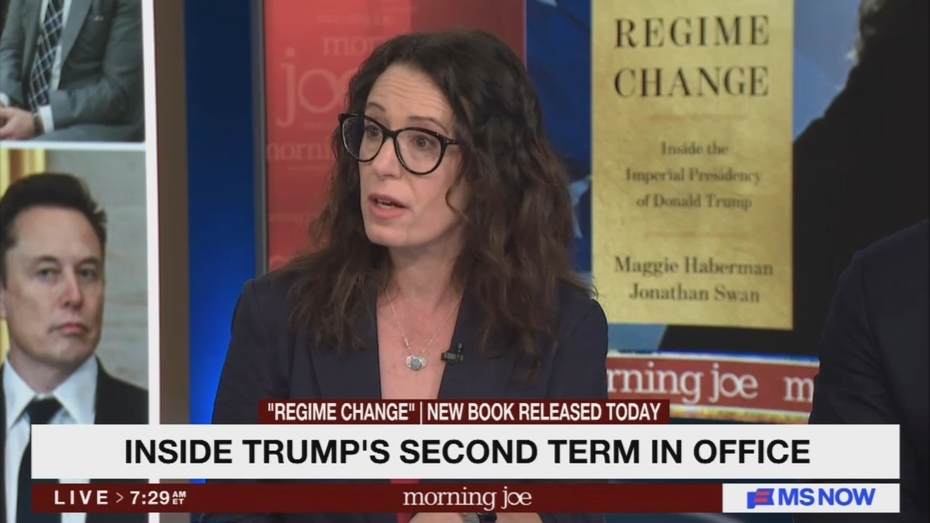
In continuation of the ‘Regime Change’ book tour, Jonathan Lemire posed a question on Trump’s feelings on “mortality,” especially after the Kirk assassination and, as Lemire described it, “the threats he perceived to be out there.”
— Nick (@nspin310) June 23, 2026
Co-author Maggie Haberman later appeared to… pic.twitter.com/mVmLftabaw
Haberman responded with the reported line on how Trump found out about the assassination through his son, Barron Trump, someone who was attacked by the host of the first stop of the Haberman and Swan book tour for not enlisting in the military.
Haberman said the assassination reminded Trump of his “mortality,” and made a connection of Trump actions to the reaction of the Kirk assassination. She said it was Trump’s “impulse,” along with Stephen Miller’s and others, that “it’s time to crack down on the left. We have to actually start going after people who are going after us.”
The NYT writer then rhetorically scoffed at the whole situation and increased threats against cabinet members, as she briefly called the post-Kirk assassination reaction something that “escalated this siege mentality that they are under.”
Haberman’s large insinuation that she ended her comments on connected the high security of cabinet members with Secret Service details and, sometimes, residences at Military bases, led to an isolation from the world that led to the Minneapolis ICE activities and ensuing unrest:
But you are talking about an administration where so many of these officials are living on military bases now. There are so many officials who have Secret Service details, who have intense security, and that just separates them further from the city they're living in and from the government that they're serving and the public that they're serving. And so it was another point in our reporting. And again, we spent a fair amount of time on this, on how it becomes an escalation that in some ways helps get closer to what we saw in Minneapolis later in the year.
Lemire’s “perceived threats” line and Haberman's blame on Minneapolis unrest on needed security for officials who have been under threat, partially due to language by the media that labels Republican officials as fascists and Nazis, seemed to try to minimize the now three assassination attempts against Trump and all of the threats of violence against him and other conservatives.
The transcript is below. Click "expand":
MS NOW’s Morning Joe
June 23, 2026
7:29:01 AM Eastern
(...)
JONATHAN LEMIRE: And, Maggie, I want to ask you about the idea of how Trump is thinking about his own mortality. Which is an animating theme in this book, too. There's Butler, of course, but also the Charlie Kirk assassination, you know, and that's some new reporting here that we've never heard before, how he sort of learned about that, you know, frankly, flashing anger at Kash Patel about that investigation. But how that seems to be almost an accelerant - the threats on his life, the threats he perceived to be out there, the ballroom, yes, but a lot of what he's trying to do.
MAGGIE HABERMAN: Yeah, there's no question that the security aspect of this comes up over and over and over again in the book, in our reporting has for some time, the day that Charlie Kirk was killed was - it was not a turning point for this White House, but it was something of a demarcation line. So, in our reporting, he hears about it because his son, Barron, calls and was very upset watching what had happened.
And it is a reminder, A, of mortality. It is a reminder of everything that people see in the lives of elected officials and this White House, many of whose members were close with Charlie Kirk, are learning about it in real time. There's a Signal group chain where people are texting, you know, “Charlie, are you okay?” Because they've heard there's a shooting and he doesn't respond.
And Trump is sort of spending the day absorbing it. But his impulse was, we are going to - and the impulse of others in the White House, to be clear. And it was not just Stephen Miller, which is often the view on that one. There were others who really agreed that it's time to crack down on the left. We have to actually start going after people who are going after us.
It emphasized putting that part aside about, you know, whether they were focused on the people who are actually, you know, going after Trump and his advisors or not. It escalated this siege mentality that they are under. There are a number of aides who have had real threats against them. There are others where we’re less clear about what the security threats are.
But you are talking about an administration where so many of these officials are living on military bases now. There are so many officials who have Secret Service details, who have intense security, and that just separates them further from the city they're living in and from the government that they're serving and the public that they're serving. And so it was another point in our reporting. And again, we spent a fair amount of time on this, on how it becomes an escalation that in some ways helps get closer to what we saw in Minneapolis later in the year.
(...)