If so, someone forgot to tell the advice desk.
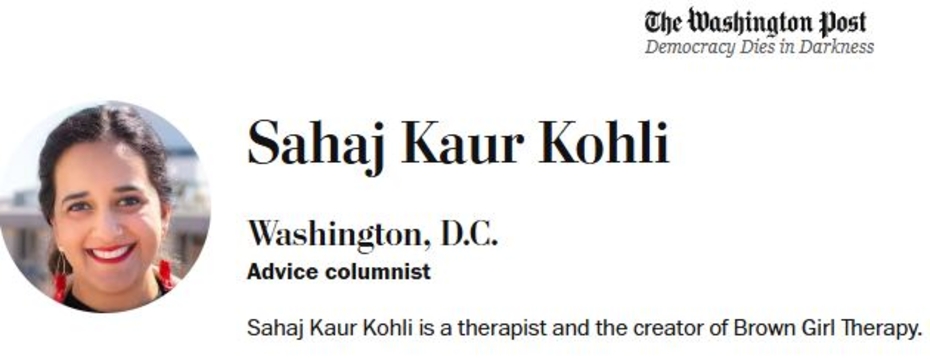
This week, the Post made the editorial decision to republish a 2024 “Ask Sahaj” column in which a young South Asian woman wrote that she feels hurt not being seen as beautiful by white people, particularly white men. (Sahaj took a week off.) This was the headline deck:
Ask Sahaj: After so many racist incidents, I’m afraid White people think I’m ugly
How can this letter writer get over their fear of being unattractive due to racist beauty standards?
The letter-writer, who notes she wears a hijab, describes feeling invisible in social and romantic settings. Her insecurity is presented candidly and sympathetically.
The columnist’s diagnosis, however, veers left from the jump. The response opens [emphasis added throughout]:
“You need to accept that the messaging about beauty standards you’ve internalized is rooted in white supremacy and colonialism.”
It continues:
“These beauty standards … weren’t created for you; in fact, they are founded on a belief that you, me and other people of color are inferior because of our race.”
That’s not a passing comment about fashion trends. It’s a broad indictment of Western culture itself.
The advice then turns prescriptive:
“Decolonizing your beauty standards can come down to divesting your self-worth from ‘beauty’ altogether.”
And more bluntly:
“Unlearn these Western ideals of beauty.”
What might once have been treated as a complicated personal dating concern is instead filtered through a woke ideological prism — one that pins the problem not on human complexity, but on colonialism itself.
Notably absent from the discussion is a straightforward complicating factor the reader herself mentions: she wears a hijab — a visible marker of religious observance that may signal cultural distance or romantic boundaries to many non-Muslim men. Whether fair or not, social signals matter in dating dynamics. Yet that reality goes unexplored.
Instead, the solution shifts toward the therapeutic. The columnist writes:
“When I work with clients who struggle with these same feelings, I will ask them to spend time looking in a mirror every morning and saying nice things about themselves.”
Shades of the old Saturday Night Live “Daily Affirmations” sketches, in which Stuart Smalley reassured himself in the mirror, “I’m good enough, I’m smart enough, and doggone it, people like me.” The difference, of course, is that Smalley was parody.
Attraction isn’t a public policy question. It’s subjective, particular, and often shaped by visible cultural cues — not something that can be “decolonized” by rhetorical reframing.
That the Post chose to republish the column this week suggests that, whatever shifts may be occurring elsewhere at the paper, framing personal romantic disappointment as an outgrowth of racism and colonialism remains comfortably within its editorial mainstream.
For those lamenting that Bezos has transformed The Washington Post into a right-wing outlet, the advice section offers conspicuous counter-evidence.