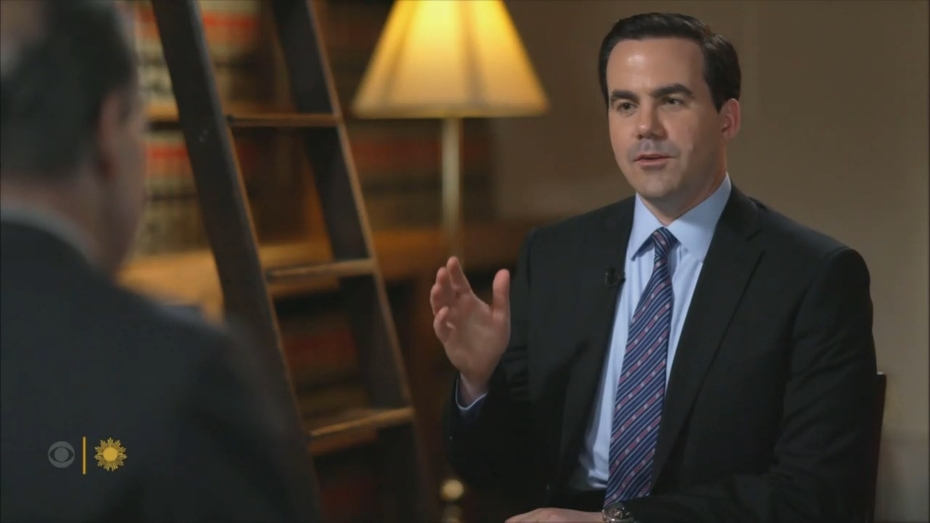
CBS’s Jane Pauley introduced Costa’s story as the court’s decision “causing turmoil.” Costa’s package began with a clip from former President Lyndon B. Johnson after he signed the Voting Rights Act (VRA).
Johns Hopkins history professor Martha Jones then discussed the VRA passage and discrimination in the 1800s and 1900s, as images played on the screen of 60s Civil Rights Protests.
On CBS News Sunday Morning, Robert Costa said the Supreme Court's Callais v. Louisiane decison was a culmination of the John Roberts-led court rulings on "race-conscious policies."
— Nick (@nspin310) May 11, 2026
This came after Costa continued the CBS trend of relating redistricting to the Civil Rights… pic.twitter.com/VTnq2dBPfu
She implied the Supreme Court decision to limit the VRA erased the blood of the movement:
But to think of the Voting Rights Act as an act of Congress, right, or an act of Johnson`s pen, is to, in essence, erase the blood from the page. And there is a lot of blood in that story.
After Jones talked of the “blood in that story,” Costa replied, “That story continues,” and signaled what the legacy John Roberts-led court would be:
The Supreme Court`s decision was the culmination of years of rulings made by the conservative majority under Chief Justice John Roberts, saying race-conscious policies in education, the workplace, and in voting are unconstitutional.
Costa did speak with Hans Von Spakovsky, a veteran conservative lawyer, and peppered him with questions that alleged the decision would lead to voter discrimination
Von Sapkovsky said gerrymandering was just a part of the “hurly-burly” of politics. Costa then evoked the “outrage” of Tennessee redistricting and said “critics fear” a new map “will dilute the voting power of the state`s black citizens.”
The conservative lawyer told Costa that black candidates should affiliate with the Republican Party to win, something Costa took some issue with as he responded, “So they have to become a Republican in some of these red states to have a chance of winning?”
Rep. Jamie Raskin (D-MD) was presented as a seeming expert in Costa's story.
— Nick (@nspin310) May 11, 2026
Raskin alleged the court was "trying to bail out Donald Trump." Costa said they might deny that because "they've been rolling back the Voting Rights Act for years." pic.twitter.com/jtKarlCEDU
Costa’s last guest was Democrat Congressman Jamie Raskin (MD), who was interviewed as a seeming court expert. Rasking stated the decision “represents the complete collapse of the Roberts Court into partisan political activity,” and was to “bail out Donald Trump from all of his policy catastrophes of this term by making it possible for him to win districts.”
Costa pushed back, but continued his frame as he said the court “would deny that” since “they`ve been rolling back the Voting Rights Act for years.”
Raskin continued and said the court has a “partisan determination to give Donald Trump and the GOP a majority the best they can.” Costa asked for evidence, and Raskin said their decisions were “not rooted in the text of the Constitution.”
The interview closed as Costa returned to Hopkins Professor Martha Jones, who “says it is the latest chapter in America's ongoing reckoning with race and the Constitution.”
— Nick (@nspin310) May 11, 2026
Jones ominously said, “History will be the judge,” because historians will "control the narrative." pic.twitter.com/dkMTLwtPay
The interview closed as Costa returned to Professor Jones, who, Costa stated, “says it is the latest chapter in America`s ongoing reckoning with race and the Constitution.”
Jones ominously said, “history will be the judge,” and historians would portray the court’s actions in the future:
I think anyone who is a party to what is unfolding at the Court now is wise to be humbled. Because they won`t always control the narrative, but history writers will.
It did not seem as though CBS News had gotten the memo of its turn into a right-leaning network, as many liberals alleged.
The transcript is below. Click "expand":
CBS News Sunday Morning
May 10, 2026
9:07:30 AM Eastern
JANE PAULEY: The Voting Rights Act of 1965 was landmark legislation that aimed to end racial discrimination in voting. But as our Robert Costa tells us, the power of that law has been challenged in recent days, causing turmoil just ahead of this fall`s midterm elections.
[Cut to story]
PRESIDENT LYNDON B. JOHNSON (Former President of the United States, Clip from August 6, 1965): And every family across this great entire searching land will live stronger in liberty, will live more splendid in expectation, and will be prouder to be American because of the act that you have passed, that I will sign today. Thank you.
ROBERT COSTA: Nearly 61 years ago, President Lyndon Johnson signed the Voting Rights Act, a defining moment for the civil rights movement and a turning point for the nation.
MARTHA JONES (Johns Hopkins History Professor): Slavery is abolished in 1865. In 1870, the 15th Amendment is passed, intending to guarantee black men the right to vote; 1920, the 19th Amendment is intended to guarantee all women the right to vote. And still, black Americans are kept from the polls in too many places - by law, by intimidation, by violence. So, one thing we can say about 1965 is that people have been waiting a very long time.
COSTA: Waiting and struggling to end racial discrimination in voting, says Martha Jones, a history professor at Johns Hopkins University.
JONES: Lives were lost, lives were threatened, communities were under siege. And Americans - black and white -put themselves in harm`s way in order to finally set fire to the feet of Lyndon Johnson, set fire to feet of Congress. And finally, the result is a Voting Rights Act.
But to think of the Voting Rights Act as an act of Congress, right, or an act of Johnson`s pen, is to, in essence, erase the blood from the page. And there is a lot of blood in that story.
COSTA: That story continues. Late last month, the Supreme Court ruled it was illegal for lawmakers in Louisiana to create a new majority-black congressional district. The 6-3 decision, split along ideological lines, has enormous implications for who will wield power, and it will make it far more difficult for districts drawn on racial lines to survive.
REP. CLEO FIELDS (D-LA): Let`s be clear, once the Supreme Court rules, it`s a final judgment of the highest court of the land.
COSTA: This past week, Congressman Cleo Fields of Louisiana, a Democrat whose district will be affected, sounded the alarm.
FIELDS: The real issue is whether or not a person who looks like me will have the opportunity to serve in Congress, and that`s what that fight has always been about.
COSTA: The Supreme Court`s decision was the culmination of years of rulings made by the conservative majority under Chief Justice John Roberts, saying race-conscious policies in education, the workplace, and in voting are unconstitutional.
[To Spakovsky] From a conservative perspective, what does this decision mean, not only in terms of the law, but for American democracy?
HANS VON SPAKOVSKY: I think this is one of a series of, frankly, good decisions by the court that is saying racial discrimination is wrong.
COSTA: But many black Americans I`ve spoken to in the South, they say they don`t see how this is played out as racial discrimination but an ability to have representation.
VON SPAKOVSKY: Yeah, well, I - I think they`re taking the wrong view of that.
COSTA: Hans von Spakovsky is a veteran conservative lawyer appointed to the Federal Election Commission by President George W. Bush.
Von Spakovsky`s views are aligned with the recent majority opinion written by Justice Samuel Alito, which says that using race to draw election maps is unnecessary and unconstitutional, but that using politics to do so is just fine.
VON SPAKOVSKY: That`s part of what the Supreme Court has called the hurly-burly of politics.
COSTA: What is the hurly-burly of politics?
VON SPAKOVSKY: The hurly-burly of politics is that you - we have basically an open market where people compete with what their ideas should be. But anybody who thinks we`re ever going to get gerrymandering, partisan gerrymandering entirely out, that`s just not going to happen. We`ve had it since Elbridge Gerry, the governor in Massachusetts, did it in the early 1800s. That`s where the name for it comes from.
COSTA: And in the wake of the ruling, many Republican-controlled states are rushing to change their maps this year and give the GOP, which holds a narrow majority in the U.S. House, a better shot at keeping it in November.
This past Thursday, amid outrage and protests, Tennessee`s Republican governor signed a new map into law that critics fear will dilute the voting power of the state`s black citizens.
What happens if a consequence of this decision is fewer black members of Congress?
VON SPAKOVSKY: Well, if they want to get someone elected - look, if they affiliate with the Republican Party, black candidates will get elected. We`ve seen that.
COSTA: So they have to become a Republican in some of these red states to have a chance of winning?
VON SPAKOVSKY: The point of our Constitution and the Voting Rights Act is that everyone is guaranteed an equal opportunity to vote. They are not guaranteed success in the candidates that they think should be elected.
COSTA: In terms of the arc of the Roberts Court, where does this decision fit?
REP. JAMIE RASKIN (D- MD): Well, I believe that this decision represents the complete collapse of the Roberts Court into partisan political activity.
COSTA: Congressman Jamie Raskin, a Maryland Democrat, is the ranking member of the House Judiciary Committee.
RASKIN: There`s no other way for me to understand what just happened other than they, too, are trying to bail out Donald Trump from all of his policy catastrophes of this term by making it possible for him to win districts.
COSTA: They would deny that -
RASKIN: Sure.
COSTA: - surely, because they`ve been rolling back the Voting Rights Act for years.
RASKIN: Yeah. In fact, you know, if you understand what they`ve done, they`ve basically said it`s unconstitutional to deliberately create a majority African-American and a majority Hispanic district, although you can create all the majority white districts you want. That`s just considered the norm.
COSTA: You are both a constitutional law professor and a House Democrat. When you evaluate this ruling, do you just see the Supreme Court acting in a conservative way?
RASKIN: No. It`s got nothing to do with conservatism. It`s about partisan determination to give Donald Trump and the GOP a majority the best they can.
COSTA: Do you believe that`s the Court`s intent?
RASKIN: Absolutely. No doubt in my mind that that`s -
COSTA: What gives you that belief and evidence of it?
RASKIN: Because there`s no other way of explaining these decisions that are not rooted in the text of the Constitution, much less the Voting Rights Act. They totally reverse the - the plain meaning of the Voting Rights Act. And they are rushing these things to get done before the elections.
COSTA: As the Supreme Court`s decision roils this year`s elections, Professor Martha Jones says it is the latest chapter in America`s ongoing reckoning with race and the Constitution.
JONES: As a historian, my counsel to judges is that history will be the judge, right? That history will be the judge. That part of what we`re doing in this moment is making a record. And that`s part of what the Supreme Court does for us, is make a record of what has happened here.
Only history will tell us in some sense what it meant, what its long-term consequences were - for black Americans, yes, but for American democracy. I think anyone who is a party to what is unfolding at the Court now is wise to be humbled. Because they won`t always control the narrative. But history writers will.