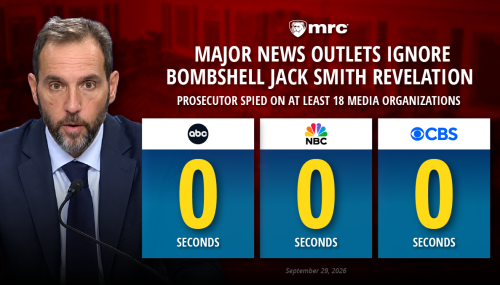
Much like NewsBusters reported Thursday, the liberal broadcast and cable news networks have been largely silent about a major legal win for the Second Amendment and gun rights advocates; where a federal judge in Texas ruled the registration of suppressors, as well as short-barreled rifles and shotguns, as unconstitutional. The ruling opened the floodgates across the country, but it did not receive any mention on much of TV news. Well into Friday, only CBS’s streaming service CBS News 24/7 gave the story any airtime, Thursday evening, and they even admitted there was basically nothing to stop it.
“Some Americans can now own short-barreled rifles, shotguns and silencers without registering them with the federal government,” announced Lindsey Reiser on The Daily Report. “Last week, a federal judge in Texas ruled the registration requirements under the National Firearms Act are unconstitutional. (…) The judge gave the Justice Department until today to appeal, but for now, it chose not to.”
So, "The Big Three" broadcast networks still have not mentioned the massive legal win for the Second Amendment and gun rights advocates in the gutting of the National Firearms Act on their flagship morning and evening newscasts. CBS relegated the news to their streaming network… pic.twitter.com/sz3Ruy694w
— Nicholas Fondacaro (@NickFondacaro) August 14, 2026
Reiser spoke with CBS News legal contributor Jessica Levinson, who actually gave a fair explanation of the judge’s reason for finding the registration of now-formally NFA items when the taxing function of the law was rolled back by Congress:
So, the judge is saying this actually not based on the Second Amendment. I know we all look at a statute that deals with gun control, and we think Second Amendment. This is about whether or not Congress had the power to enact the statute, and whether it continues to have that power.
As we've talked about when it comes to the federal government, you have to point to part of the Constitution that allows it to act. When it comes to Congress, there are certain enumerated, meaning listed powers. One of those is the taxing clause. And there used to be basically a $200 tax or fee that people who are making transactions or purchases related to these short barreled guns or silencers had to pay. Then in 2025, in the Big Beautiful Bill, Congress zeroed out that tax. So, you're not paying $200 anymore.
What the judge said today or this week - excuse me - is that when it comes to Congress using its taxing power, you need to have some tax. You need to have something that raises revenue. And when you zero that out in the Big Beautiful Bill, there is no more tax, so Congress no longer has a power that it can use to pass or at least continue to enact this part of the statute.
When Reiser wondered if “this the end of the road” for the registration of suppressors, short-barreled rifles and shotguns, Levinson admitted it likely was.
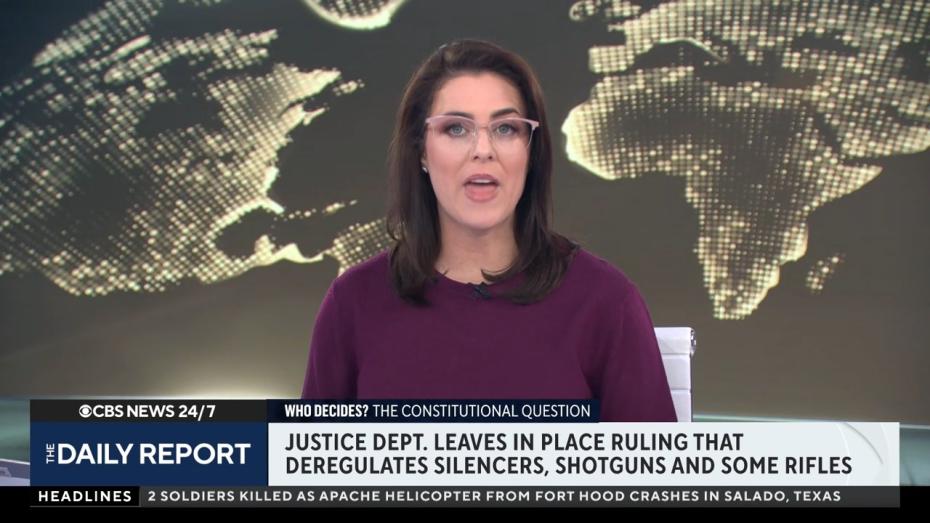
“So, this is fascinating because it actually might be,” she said. “Because you need standing in federal court. And what you would need briefly is a plaintiff that has enough of an injury in order to say, ‘I can bring this case.’ And if we're looking at - You know, who are we looking at here? Individuals, members of Congress, maybe states. I see standing problems with each of those groups.”
Although, she did hedge her prediction slightly: “So, it may be if the DOJ doesn't appeal that this is the end of the road for this particular case with this particular judge.”
At least they weren’t claiming it was going to lead to an increase in gun violence like the liberal organizations behind the civilian disarmament movement were doing. For now.
The transcript is below. Click "expand" to read:
CBS News 24/7’s The Daily Report
August 13, 2026
6:39:06 p.m. EasternLINDSEY REISER: Some Americans can now own short-barreled rifles, shotguns and silencers without registering them with the federal government.
Last week, a federal judge in Texas ruled the registration requirements under the National Firearms Act are unconstitutional. This act is the primary law that regulates the purchase and sale of certain specialized weapons and equipment.
The judge gave the Justice Department until today to appeal, but for now, it chose not to. A DOJ spokesperson told CBS News, quote, “The Department respects Americans’ Second Amendment rights and is currently assessing the impact of the ruling.”
CBS News legal contributor Jessica Levinson joins us now. She's also a professor at Loyola Law School.
So, why is the judge saying that this part of the National Firearms Act is unconstitutional?
JESSICA LEVINSON: So, the judge is saying this actually not based on the Second Amendment. I know we all look at a statute that deals with gun control, and we think Second Amendment. This is about whether or not Congress had the power to enact the statute, and whether it continues to have that power.
As we've talked about when it comes to the federal government, you have to point to part of the Constitution that allows it to act. When it comes to Congress, there are certain enumerated, meaning listed powers. One of those is the taxing clause. And there used to be basically a $200 tax or fee that people who are making transactions or purchases related to these short barreled guns or silencers had to pay. Then in 2025, in the Big Beautiful Bill, Congress zeroed out that tax. So, you're not paying $200 anymore.
What the judge said today or this week - excuse me - is that when it comes to Congress using its taxing power, you need to have some tax. You need to have something that raises revenue. And when you zero that out in the Big Beautiful Bill, there is no more tax, so Congress no longer has a power that it can use to pass or at least continue to enact this part of the statute.
REISER: The Supreme Court has been skeptical of whether federal judges have the power to impose nationwide injunctions. So, who does this apply to?
LEVINSON: So, this only applies to the plaintiffs in this case. But these plaintiffs include groups and individuals beyond just the Northern District of Texas, where the judge made the decision.
So, for instance, there's one group of plaintiffs Gun Owners in [sic] America, GOA, and that includes a great number of individuals who are covered by this particular ruling. In addition, there are 15 states that are plaintiffs.
Now, not everybody in each of those states is covered, but state agencies are. So, this is not a nationwide injunction, but in effect, it covers a good deal of plaintiffs who get the benefit of this decision.
REISER: Is this the end of the road? If the Justice Department doesn't step in?
LEVINSON: So, this is fascinating because it actually might be. The Justice Department opted not to challenge the particular ruling, at least on an emergency basis. We're all looking to see if the Justice Department appeals this.
As we have talked about. Why does that mean that maybe there's nobody left to challenge this judge's decision? Because you need standing in federal court. And what you would need briefly is a plaintiff that has enough of an injury in order to say, ‘I can bring this case.’
And if we're looking at - You know, who are we looking at here? Individuals, members of Congress, maybe states. I see standing problems with each of those groups.
So, it may be if the DOJ doesn't appeal that this is the end of the road for this particular case with this particular judge.
REISER: Jessica Levinson, as always, thank you.