This came after last year’s takeover of CBS News by Bari Weiss, who has stated the desire to broaden the audience for CBS News programming and combat the perception of liberal bias.
Further bolstering Weiss’s argument for said changes, Bennett and Kroft commiserated over the prospect of a “weaker, less independent or less ambitious” 60 Minutes. Bennett went first:
CBS News has fired longtime 60 Minutes correspondent Scott Pelley after a contentious all-staff meeting in which Pelley reportedly clashed with newly installed executive producer Nick Bilton and accused CBS News editor in chief Bari Weiss of murdering the storied news magazine. Bilton, in a letter firing Pelley yesterday evening, accused him of acting with remarkable incivility and contempt.
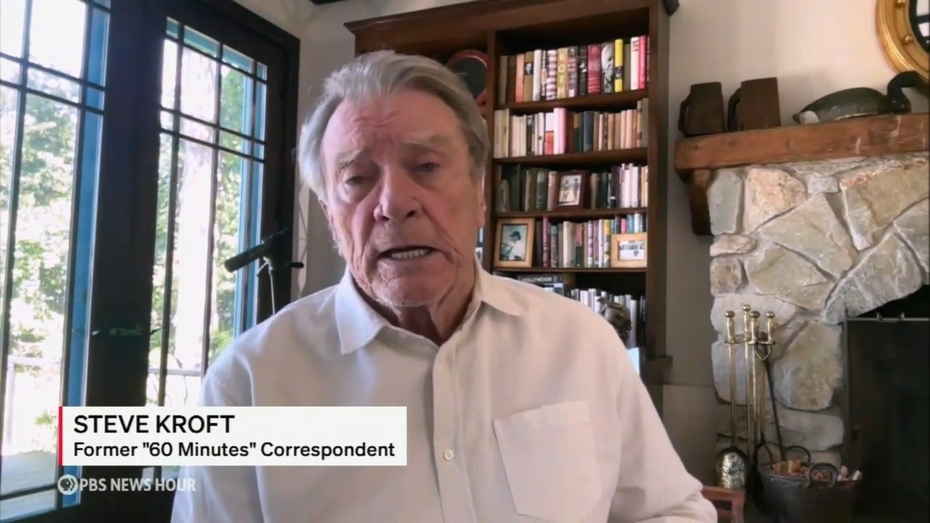
Bennett introduced Kroft, who apparently “spent decades helping make 60 Minutes the most respected, most watched news magazine in TV history.” Kroft said the new regime has “been disastrous for the show.”
Shortly thereafter, Kroft’s laments devolved into conspiracy theorizing:
[Weiss] refused to answer any of the questions, which leaves you with what's been said by the President and by his staff and by the chairman of the FCC that they don't like the way CBS has been operated. They don't like the fact that it's on the air. They would like to see it taken off the air. They've said that a number of times. They would like to see people fired. And that's what's happened.
Incidentally, it wasn’t Pelley’s long history of liberal propaganda that got him canned, but his throwing a toddler tantrum toward his boss in public, a reliable way to lose one’s job:
BENNETT: Pelley said that the new management instructed him to inject falsehoods and bias into a politically sensitive story, which he says he did not do. Cecilia Vega, in a separate statement, also spoke of pressure to insert political bias and said that some staffers became reluctant to pitch certain stories out of fear of internal repercussions. How significant a break is what they describe from the editorial culture and standards that defined 60 Minutes during your tenure?
KROFT: It's never happened. That's the only way to describe it. I have never had anybody ask to make any kind of insertion or addition to a story to change the tone of it or to change the facts of it. I don't think it's ever happened at 60 Minutes.
And why not? Perhaps there was no previous obligation to highlight alternative views because everyone on staff took the same liberal, pro-Democrat line, a fact NewsBusters has demonstrated for decades. Without any nods toward ideological balance, one-way liberal and anti-GOP presumptions led to garbage stories like Dan Rather’s 2004 George W. Bush National Guard story, which some basic journalistic skepticism would have quickly sunk.
(The 94-old Rather weighed in, writing on his “Steady” Substack that 60 Minutes is “a beacon, a symbol that the country has got to take a stand and keep reminding each other that democracy cannot survive, much less thrive, under this level of big corporation and big government interference and intimidation in the news.”)
Bennett then wondered what will happen to America itself if we “lose if an instituion like 60 Minutes becomes weaker, less independent, or less ambitious.”
Referring to Alfonsi, Pelley, and Vega, Kroft cast doubt on the shows future because they’re “the kind of people you would need if you wanted to continue to put a program like CBS’s 60 Minutes on the air” featuring “incredibly good journalists.”
Alfonsi is not an “incredibly good journalist.” Besides a lead-off controversy over Weiss insisting Alfonsi get the White House’s side of an El Salvador deportation story, Alfonsi had previously proved herself a partisan hack by confronting Florida Gov. Ron DeSantis with a phony pay-for-play scandal during COVID, and showed herself no friend of free speech in a story delighting in Germany sending people to jail for online wrong-think.
PBS News Hour
06/03/26
7:25 p.m. EasternGEOFF BENNETT: CBS News has fired longtime 60 Minutes correspondent Scott Pelley after a contentious all-staff meeting in which Pelley reportedly clashed with newly installed executive producer Nick Bilton and accused CBS News editor in chief Bari Weiss of murdering the storied news magazine. Bilton, in a letter firing Pelley yesterday evening, accused him of acting with remarkable incivility and contempt. In his own statement, Pelley said, "The leadership of 60 Minutes is no longer recognizable. The principles I hold dear are gone, and so I must leave as well." The firing marks the latest and most dramatic chapter in the upheaval surrounding 60 Minutes and CBS News, as Weiss moves to reshape both the nation's most watched television news magazine and the news division more broadly. For more, we're joined now by Steve Kroft. He spent 30 seasons as a correspondent for 60 Minutes before retiring in 2019. Steve Kroft, welcome to the News Hour.
STEVE KROFT: Thank you very much.
BENNETT: You joined --
KROFT: Nice to be here. I wish different circumstances.
BENNETT: -- yes, indeed. We should say, you joined 60 Minutes back in 1989, spent decades helping make it the most respected, most watched news magazine in TV history. As you have watched recent events unfold. Scott Pelley's firing, the dismissal of Tanya Simon, the former executive producer, the firings of correspondents Sharyn Alfonsi and Cecilia Vega, what has been going through your mind?
KROFT: You know, I think it's been disastrous for the show, for the audience, which is not insubstantial. It's been going on for a long time. It began really with an interview that Bill Whitaker had done with Kamala Harris, in which CBS was sued for $17 million by the Trump administration for what they called an illegal edit. The lawsuit had absolutely no merit. Yet CBS and the corporate management, Paramount, decided to settle the case for $17 million. And since then, it's just been sort of one thing after another.
BENNETT: And the broader context, which you're speaking of, is important, because CBS News is now operating under new ownership as Paramount Skydance seeks approval from Trump regulators to acquire Warner Bros. Discovery, which, by the way, also owns CNN. And President Trump, we should say, has made no secret of his hostility toward much of the mainstream press. He has called out 60 Minutes and CBS News repeatedly. So how much do the larger political and corporate pressures at play help explain what's happening right now at 60 Minutes in CBS News?
KROFT: I think it perfectly explains it. For Paramount, the parent company, getting these deals done, first the permission to merge the two companies from the FCC, and then now awaiting a decision on whether this is going to go through with the FCC and be approved, I think that Paramount has just decided that it was going to be -- that that was the only thing that was important. And they were going to try and block anything that might get in the way of that. Scott Pelley said this morning, he asked Bari Weiss, the president of the corporation, why they fired Tanya Simon, the executive producer of the show, why they had fired various correspondents in the last week -- well, just in one day. And she refused to answer any of the questions, which leaves you with what's been said by the president and by his staff and by the chairman of the FCC that they don't like the way CBS has been operated. They don't like the fact that it's on the air. They would like to see it taken off the air. They've said that a number of times. They would like to see people fired. And that's what's happened.
BENNETT: And yet one could argue every new owner, every new management team arrives believing they can improve what they bought, that they can make an institution better, even a standout success like 60 Minutes. In this case, though, where is the line between a legitimate business decision and a journalistic interference?
KROFT: Well, I think that this is journalistic interference. It makes no business sense whatsoever. The show is still doing very well. It's the highest rated news program on television. And it has been that way for more than 50 years. The audience was up about 9 percent last year. And why would you mess with that? It's got an audience of about 10 million people, between nine and 10 million people, which is still one of the largest audiences on network television.
BENNETT: I want to ask you about something else here, because, in a statement, Scott Pelley said that the new management instructed him to inject falsehoods and bias into a politically sensitive story, which he says he did not do. Cecilia Vega, in a separate statement, also spoke of pressure to insert political bias and said that some staffers became reluctant to pitch certain stories out of fear of internal repercussions. How significant a break is what they describe from the editorial culture and standards that defined 60 Minutes during your tenure?
KROFT: It's never happened. That's the only way to describe it. I have never had anybody ask to make any kind of insertion or addition to a story to change the tone of it or to change the facts of it. I don't think it's ever happened at 60 Minutes.
BENNETT: We should say we have reached out to CBS News for a statement. They have yet to respond. Zooming out, what does the country lose if an institution like 60 Minutes becomes weaker, less independent or less ambitious?
KROFT: You have already seen the effects of it. Cecilia Vega in her final statement to the staff outlined a number of problems that have occurred on the show and that people have been unwilling or afraid to do story -- intimidated from doing stories that needed covering and that it instilled this feeling of fear into the broadcast. And I think that's absolutely, 100 percent true. So it's already having effects. And I think that Scott was doing this not just for himself, making the point about himself personally. I think he was doing it to stand up for Sharyn Alfonsi, who was fired, and for Cecilia Vega, who was fired, and for Tanya Simon, who was fired, and Draggan Mihailovich, who was fired. All of these people are incredibly good journalists and the kind of people you would need if you wanted to continue to put a program like CBS’s 60 Minutes on the air. And now they are gone. I think it was a slap in the face to everybody who has worked there over a long period of time.
BENNETT: Former 60 Minutes correspondent Steve Kroft. Steve, thanks again for your time. We appreciate it.
KROFT: My pleasure.