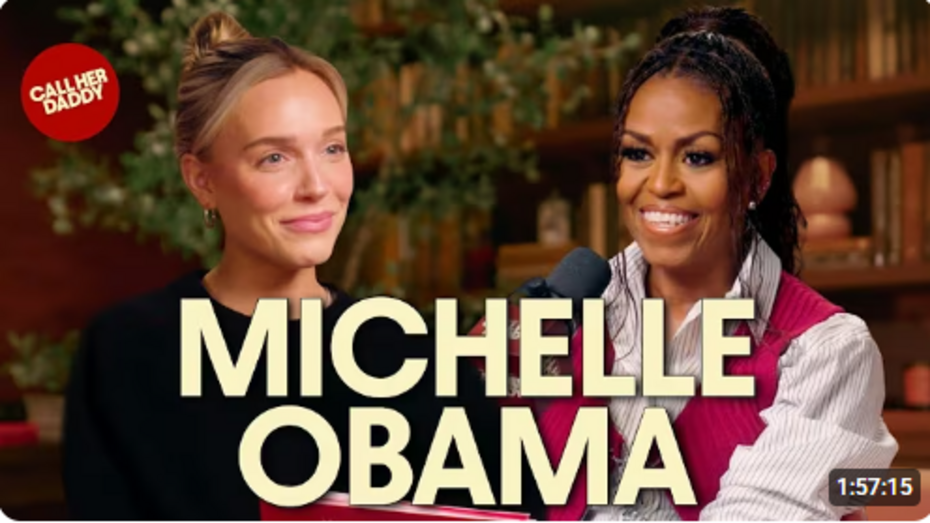
Michelle is on a book tour promoting her $50 coffee-table book of photographs, The Look, "a stunning journey through Michelle Obama’s style evolution." But she's claiming the shallow media dismissed her as a woman as she and Barack ascended to the White House. This is, to be blunt, a lie. She was adored. They talked about her clothes, and her wonderful bare arms -- and her law career, and her smarts. So here's the lame complaint:
As my popularity rose, I was being covered more, right? And, so, the press enters the scene, and there are now reports, right? And the first thing after all this great conversation and connection, the top of the article would be, "She was wearing --" you know, not my education, not my, you know, not my professional career, but it started with appearance, and it got worse as we got better.
They weren't doing that to my husband, right? They weren't describing him physically, and he was out there more than I was. So, I was like, "OK, well, this is where it comes from." It's like, "Wow, whoever is doing this, when it comes to how we put women in their place, it's like, okay."
NewsBusters has the receipts -- many, many adoring receipts. The liberal media could have introduced Obama as the jerk who said she'd never been proud of America until they considered her husband for president. CNN's Alina Cho in January 2008 was one of many adorers, and she started with the education and the professional career -- after repeating that the Obama campaign called her their "secret weapon."
The product of blue collar roots, Michelle grew up on Chicago's South Side, graduating from Princeton and Harvard Law. She met Barack at her law firm. Though three years younger, she was assigned to mentor him. They married in 1992. The Obama campaign hopes their story will resonate with and inspire black women in South Carolina, a place where many have strong ties to the Clintons. Black women could be the key swing vote. Enter Michelle Obama.
In February of 2008, ABC's Good Morning America was Gush Morning America.
This was the open:
DEBORAH ROBERTS: Fascinating woman, Diane. Critics have taken her on, as you know, for her blunt, straight-talking style. But the Obama camp calls Michelle Obama "the closer." Her husband, they say, makes a good case for his candidacy, but then she comes in and seals the deal. She's the spouse of politics' newest star, but lately, Michelle Obama is attracting a spotlight of her own, drawing big crowds at events last week.
This was the close:
ROBERTS: An opinionated and charming woman, Diane. I asked her about race in this campaign, because, as you know, so many people talk about it. She and her husband refuse to dwell on it. They genuinely believe that people want to move beyond that, talk about something else.
DIANE SAWYER: Yes. She's a Harvard lawyer herself. And he said once, but she has to leave the room during his debates, 'cause she gets way too nervous.
This also happened in print. Richard Wolffe began his Newsweek cover story in February 2008:
Michelle Obama was never much interested in calling attention to herself. As an undergrad at Princeton in the 1980s, she was interested in social change, but didn't run for student government. Instead, she spent her free time running a literacy program for kids from the local neighborhoods. At Harvard Law, she took part in demonstrations demanding more minority students and professors. Yet unlike another more prominent Harvard Law student who would later take up the cause, she was not one to hold forth with high-flown oratory about the need for diversity.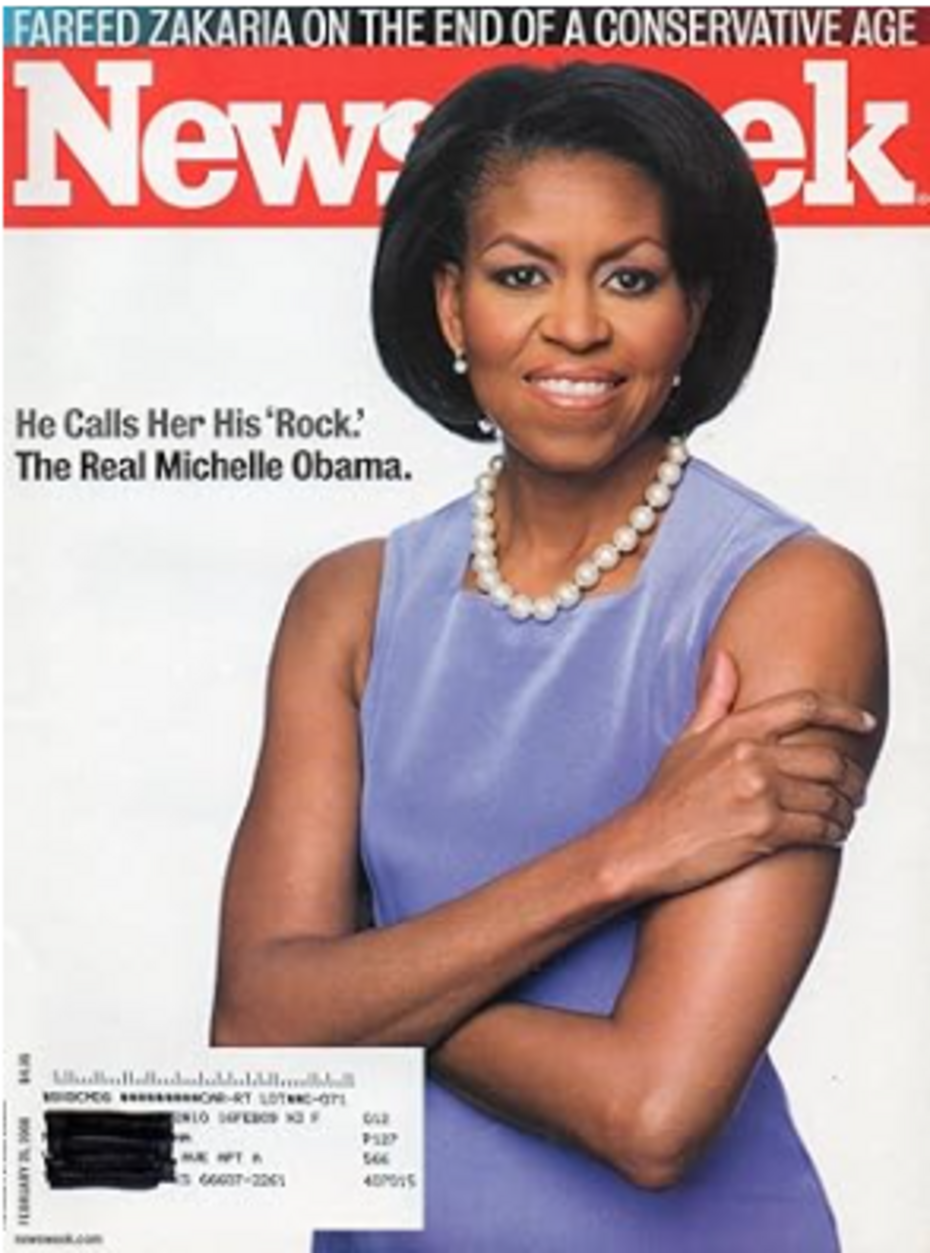
So she's lying. About reporters who relentlessly hugged her in their journalism.
Alex Hall highlighted the conservative counterpoint, that "Call Her Daddy" host Alex Cooper had asked her guest about her outfit within the first minute of the interview, the second question after asking her how she was doing. "Talk to me about your outfit, how did you pick it?" Cooper asked 45 seconds into the interview.