In six minutes and 48 seconds on Monday's Morning Edition newscast, NPR justice correspondent Carrie Johnson offered a eulogy to Robert Mueller, the former FBI Director and special counsel in the "Russian collusion" probe of Trump. The collusion probe was the final third of the segment.
JOHNSON: Trump called the investigation a witch hunt. Republicans in Congress started to attack the investigators. Republican lawmaker Steve Chabot pointed out several lawyers on the Mueller team had donated to Democratic candidates.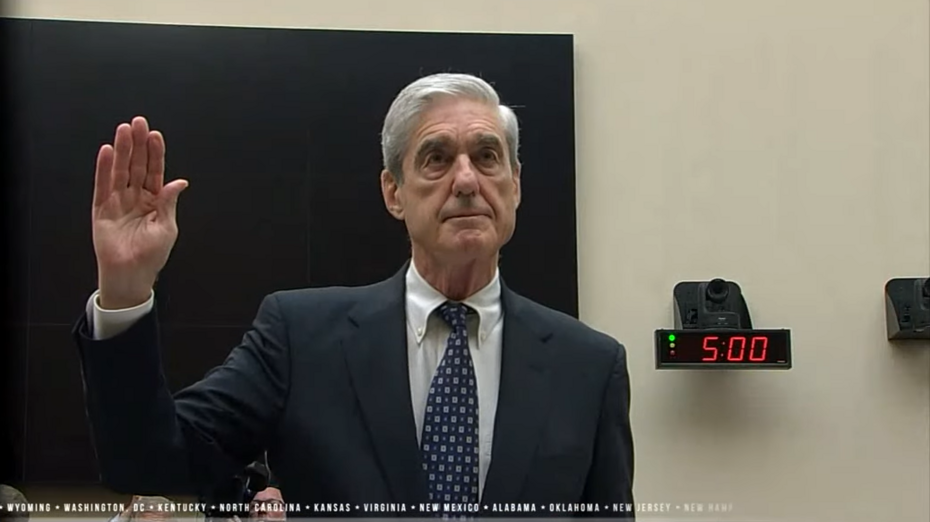
STEVE CHABOT (R-Ohio): How, with a straight face, can you say that this group of Democrat partisans are unbiased and will give President Trump a fair shake?
JOHNSON: In the end, the team was able to complete its investigation. They charged 37 people and entities, including former campaign Chair Paul Manafort, national security adviser Michael Flynn and 25 Russians. Trump went on to grant clemency to some of those people. The Justice Department later walked away from many of the cases. When Mueller delivered his long report, he said it spoke for itself. But Democrats wanted more and insisted he testify.
This passage requires some fact-checking. Washington Post checker Glenn Kessler found 13 of 17 Mueller staffers were registered Democrats, and nine of them were Democrat donors. Six of them donated to Hillary Clinton. Andrew Weissman, the power behind Mueller's throne, attended Hillary's election-night party in 2016. The staff could clearly be painted as partisan.
Then notice how Johnson cited as a Mueller accomplishment that they "charged 37 people and entities," including "25 Russians." None of those Russians were coming to America for legal action, so that was just sound and fury signifying nothing. People who pled guilty (like Manafort) weren't guilty of collusion, but of crimes like tax evasion and bank fraud.
Then NPR shamelessly replayed audio from a 2019 ad from Tom Steyer's group "Need to Impeach." Steyer was running for president in the Democrat primaries at the time, but NPR left all that detail out.
A reluctant witness, Mueller once again fulfilled his duty. He was visibly older, a bit hard of hearing and mostly refused to take the bait from politicians. Mueller said he didn't make a judgment about whether Trump obstructed justice but said he couldn't exonerate the president either. There was enough damaging information for a group supporting impeachment to cut this ad featuring questions from Democrats and Mueller's terse replies.
(SOUNDBITE OF ARCHIVED RECORDING)
UNIDENTIFIED LAWMAKER #1: And what about total exoneration? Did you actually totally exonerate the president?
MUELLER: No.
UNIDENTIFIED LAWMAKER #2: Isn't it fair to say that the president's written answers showed that he wasn't always being truthful?
MUELLER: Generally.
UNIDENTIFIED LAWMAKER #3: You believe that you could charge the president United States with obstruction of justice after he left office?
MUELLER: Yes.
JOHNSON: As Mueller left the Capitol building after an exhausting day he had tried to avoid, a man approached the former Marine. "Semper fi," the man said. "Semper fi," Mueller replied. Carrie Johnson, NPR News.
MICHEL MARTIN, host: On Truth Social this weekend, President Trump said, and I quote, "good, I'm glad he's dead."