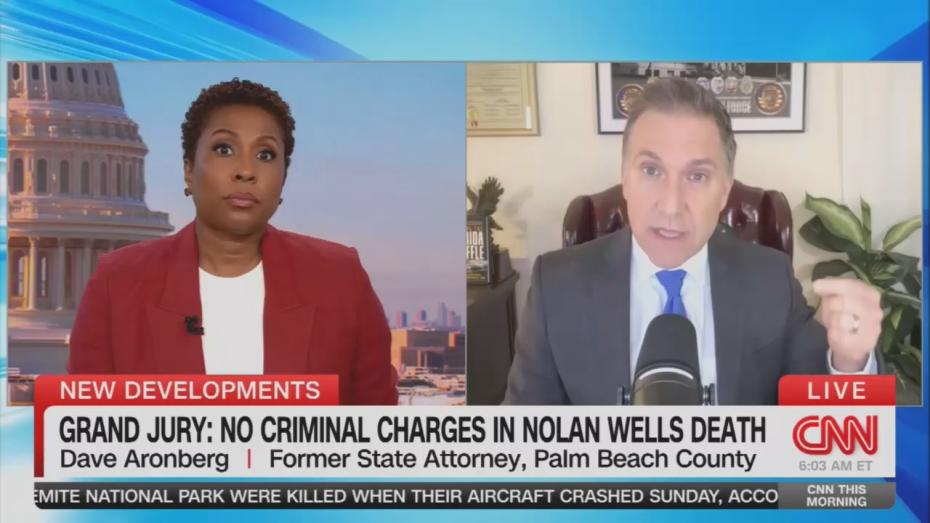
Despite an exhaustive grand-jury investigation that turned up no evidence of a crime in the death of Nolan Wells, a black 18-year-old Mississippian, CNN This Morning host Audie Cornish didn't stop stirring the racial pot.
The Wells family retained race-hustling lawyer Benjamin Crump for the case. On Tuesday's episode, Cornish cited social media on other deaths of young black people and used them to insist there's racism in so many unsolved mysteries involving young black people:
CORNISH: One of the things I found interesting when I looked in social media is people were posting the images of other high-profile and, high-profile deaths of young black people, where they haven't been solved, the deaths were mysterious, some were the case of hanging, right, on, on campuses. When we talk about what drives, you know, these kind of internet narratives, is it this kind of recent history? Is it people feeling like Justice and investigators aren't going to help them?
A Jackson County grand jury had already answered Cornish's question. It found Wells' death "consistent with drowning," declined to charge anyone, and found no evidence that race had anything to do with what happened on Horn Island.
In a clip Cornish played, District Attorney Angel Myers McIlrath said:
McILRATH: Anyone with an internet connection can become an influencer, take fragments of information, construct a narrative without context or first-hand knowledge, and broadcast it to thousands or millions of people with little or no responsibility to the truth or consequences for what they do. What we have seen happen in Nolan's case, where lives and reputations have been damaged, is reprehensible.
Or anyone who hosts a network television show, Audie. Cornish took fragments — other deaths, hangings on campuses, Mississippi's past — and left the impression that Wells' death is still a mystery, and that a parent is entitled to ask whether "if my child dies in Mississippi, will anyone find out what happened?"
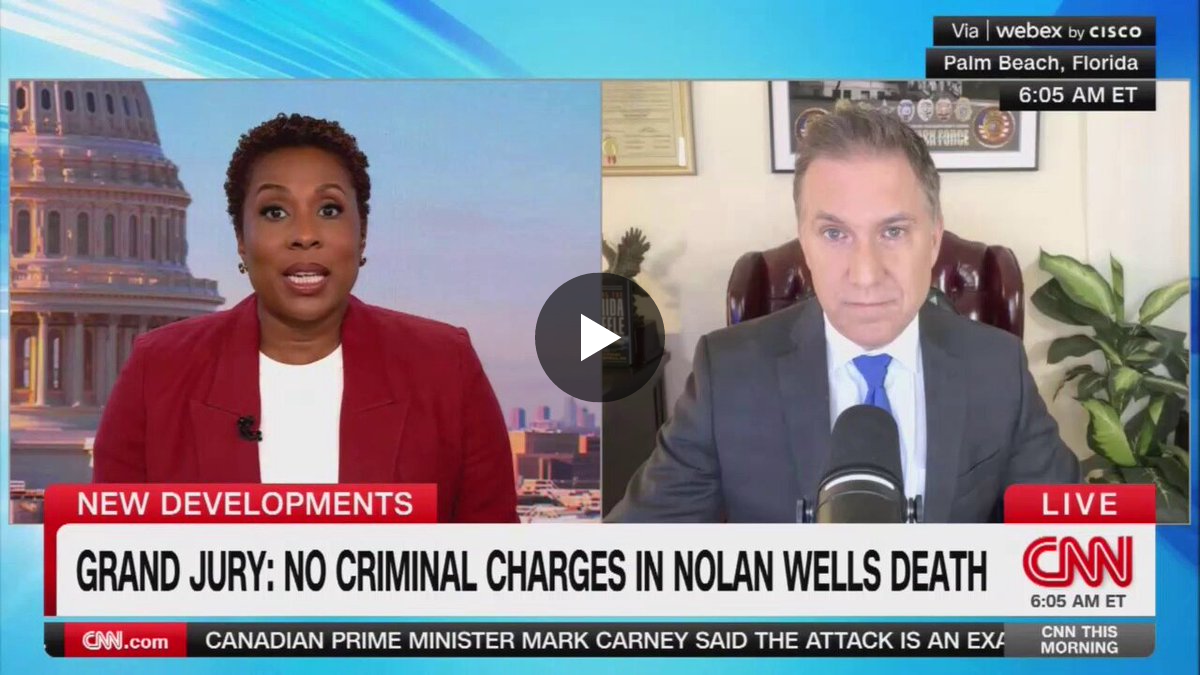
CNN's Cornish Stirs Racial Angle in Nolan Wells Death pic.twitter.com/IxH4rCYTRV
— Mark Finkelstein (@markfinkelstein) September 22, 2026
If Cornish was hoping that Dave Aronberg, a former state attorney for Palm Beach County, would back her vague accusations, she picked the wrong guest. Aronberg talked about the actual investigation rather than the atmospherics. The grand jury heard from 43 witnesses and issued 132 subpoenas. Two pathologists reviewed the evidence, including one hired by Ben Crump. The family even had its own phone examiner.
"The evidence just did not support the accusations," Aronberg emphatically stated. The family's independent examiner called the death undetermined. That, Aronberg added, "does not mean homicide, and suspicion does not mean evidence." As for the bruising on the back of Nolan's neck that Cornish mentioned, Aronberg noted that a witness told the grand jury that Wells had slipped awkwardly off a boat, which could explain it.
Cornish never named the campus hanging she was pointing toward. But in September 2025, 21-year-old Demartravion "Trey" Reed was found hanging from a tree at Delta State University in Cleveland, Mississippi. The coroner reported no injuries consistent with an assault. The state medical examiner ruled the death a suicide by hanging. Reed's family and Ben Crump rejected that conclusion, but a year later, suicide remains the official ruling. That is not an unsolved campus mystery. It is a case authorities closed as suicide.
The county's investigation into the death of Nolan Wells was extensive. And notably, the grand jury report said the family’s lawyers advised that their investigation turned up no witnesses or evidence they believed warranted referral.
But Cornish chose to use the segment to spread suspicion and ill feeling, suggesting race is why people should doubt the result: "People feeling like justice and investigators aren't going to help them. People feeling like, wait a second, if my child dies in Mississippi, will anyone find out what happened?"
That goes beyond poor journalism and into the realm of reprehensible racial suspicion-mongering.
CNN This Morning
9/22/26
6:00 am EDT
AUDIE CORNISH: Good morning, everybody. I'm Audie Cornish, and here is where we begin: the latest news and the death of Nolan Wells. Right now, no foul play, no criminal charges will be filed in the 18-year-old's death. This after a grand jury hearing.
Wells died on a boating trip with friends on the 4th of July in Mississippi. The grand jury found his death was, quote, consistent with drowning. Ben Crump, the lawyer for the family, said in a statement, quote, We don't know how Nolan died, and neither does the State of Mississippi. Mississippi must keep investigating, and if it will not pursue this to the end, the Department of Justice should."
So the death of Wells has sparked all sorts of questions, especially after photos circulated of the black teen surrounded by three friends.
ANGEL MYERS MCILRATH: The narrative that three white boys and a black boy went to an island, and only three white friends returned, spread like wildfire. This was false. There is absolutely no evidence to support the allegations that Nolan's disappearance and death were racially motivated.
The family, the Crump team, and anyone close to Nolan knew that his disappearance and death were not the result of racial hate or violence. Yet the flames of that narrative, set against the backdrop of Mississippi's terrible history, were fanned by both people who knew the truth and those who didn't.
CORNISH: So bringing in Dave Aronberg, he's a former state attorney for Palm Beach County, Florida. So, you've seen some grand juries, and this one, for instance, found that there was bruising on the back of Nolan Wells' head, that they found it was not a fatal injury. And at the time, Crump added this in his statement, that he believes the grand jury report didn't determine how Wells actually suffered that injury, and quote, to this date, not one person has explained how they got there. Can you talk about the distinction he's making, about the cause of death versus the question mark about what happened?
DAVE ARONBERG: Good to be with you, Audie. When it comes to that injury, that discoloration in the back of the neck, that was partially explained, at least by one grand juror witness who said that they saw that Nolan had fallen on a boat, and that could have explained that injury.
But when it came to the grand jury, I, I get it that my friend Ben Crump wants answers, the family wants answers. But you had 43 witnesses before this grand jury. You had 132 subpoenas. You had two different pathologists, and the family even had its own phone examiner, and the evidence just did not support the accusations, right?
And, and even though Dr. Mitchell, the separate independent medical examiner hired by the family, said it was an undetermined cause of death, and you hear what Ben Crump said, that does not mean homicide, and suspicion does not mean evidence.
. . .
MCILRATH: Anyone with an internet connection can become an influencer, take fragments of information, construct a narrative without context or first-hand knowledge, and broadcast it to thousands or millions of people with little or no responsibility to the truth or consequences for what they do.
What we have seen happen in Nolan's case, where lives and reputations have been damaged, is reprehensible.
CORNISH: One of the things I found interesting when I looked in social media, is people were posting the images of other high-profile and, high-profile deaths of young black people, where they haven't been solved. The deaths were mysterious. Some were the case of hanging, right?, on, on campuses.
When we talk about what drives, you know, these kind of internet narratives, is it this kind of recent history? Is it people feeling like justice and investigators aren't going to help them?
ARONBERG: That's part of it. Mississippi has a long history, and that's why it has had so much attention paid to it.
CORNISH: But this is 2025 and 2026. That's why I'm asking, right? This is recent history of people feeling like, wait a second, if my child dies in Mississippi, will anyone find out what happened?