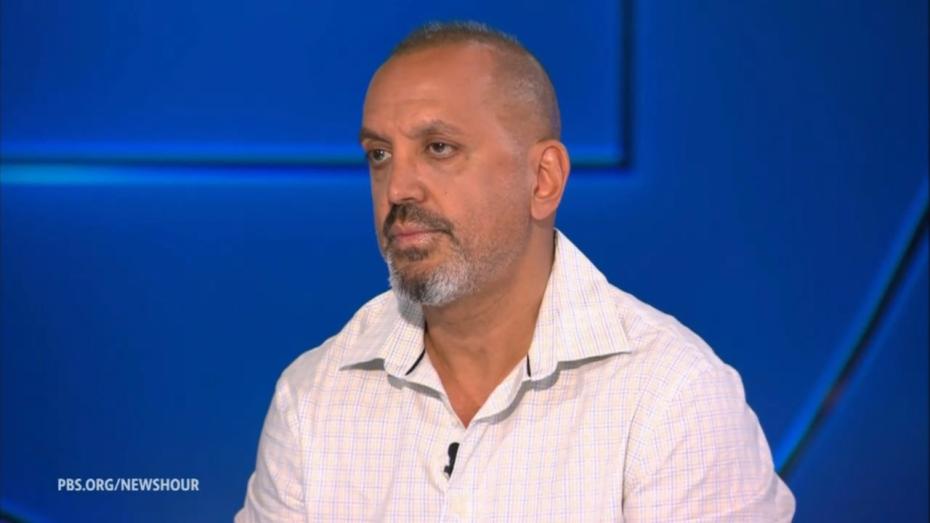
Based in Tehran, journalist and special correspondent, Reza Sayah, wanted to set the record straight on the happenings in Iran on Wednesday’s PBS’ NewsHour. But according to him, the regime was in a good place, they had more support from the people than ever with no opposition in the streets, and they were very generous to journalists like him.
“So, war is difficult and the ones who feel it the most are the average people. At the same time, you see a lot of pride in Iranians, you see a lot of confidence,” Sayah boasted. “You see in a lot of the Iranians, they know that this moment could be defining for the future of their sovereignty and independence.”
As for the regime, he touted how they took it on the chin from America and were still kicking:
Well, this was a defining moment for them. They took a very hard punch from the world's lone superpower, the United States, two nuclear powers. And despite their senior political leaders, military leaders, and the supreme leader being assassinated, the leadership is still there. They have different names, different identities, but they are still there.
When asked by anchor Amna Nawaz about the deadly crackdown on the protestors earlier this year, Sayah seemed to suggest that while some may want “reform” and “change,” the people have largely rallied around the regime (Click “expand”):
Well, they haven’t come out in protest. Iran is 90 million people, there is certainly a significant, considerable segment of the population that, at the very least, want reform. There’s a segment of the population that wants regime change.
And, there is also a big, huge part of the population that doesn't want to be the target of foreign attacks, foreign wars, and they see this moment is a moment of survival for Iran. So, the anti-government protesters that we saw in January have not reappeared in the streets.
That doesn't mean that people don't want, you know, reform, that don't want change. But, I think the population that has made its presence felt is the Iranian population that sees this as a war of survival, and they’re outraged that they’ve been bombed by the United States and Israel.
Sayah claimed to have an unbiased standard when it comes to sharing the truth of the Iranian people for the past 20 odd years, yet what he ends the segment with seemed to contradict:[They] were very critical of my reports where they didn't grant me press credentials. But my experience with them has been if my reports are fair and balanced and if, in their view, I’m presenting both sides, they are willing to welcome international journalists, including American journalists.
Right at the very end, Sayah muddied his argument. Too quick to rave of the independence he was granted, in which he stated he was, “able to report freely over there,” his attempt to strike down any impression of a possible ‘big brother’ figure, which was likely a minder, is highlighted.
PBS Frontline producer Sebastian Walker was able to admit on MS NOW back in March that Iran attached minders to his crew.
Of course, the Iranian government would want American journalists to capture the likeness of their country. That is, if the Iranian government likes what they’re hearing. As long as it's good press, “in their view.”
So why beat around the bush? Why lie about what is currently debilitating the Iranian people? Maybe it could be inferred that Sayah doesn’t want to lose his job with the network, or that he doesn’t want to discredit the 20 years of work he has dedicated to Iran as a correspondent. Whatever it is, Sayah failed to show what is really going on and instead captured his obvious slant.
The transcript is below. Click "expand" to read:
PBS’ NewsHour
September 16, 2026
7:10:04 p.m. Eastern(...)
AMNA NAWAZ: So, you are there, on the ground, reporting for us and others. With the war now approaching seven months, what has daily life become for people in Tehran and across Iran?
REZA SAYAH: It’s very difficult. I mean, life in war is difficult, you know. Initially, they had to deal with being bombed on a daily basis, then the economic pressure, the uncertainty, and now you have additional sanctions. So, war is difficult and the ones who feel it the most are the average people.
At the same time, you see a lot of pride in Iranians, you see a lot of confidence. You see in a lot of the Iranians, they know that this moment could be defining for the future of their sovereignty and independence. So, you have all these emotions together. But definitely when you’re at war, it’s difficult and painful.
NAWAZ: Let's talk about the leadership and the sort of strength of the regime. As you’ve been covering, the U.S. and Israel have killed dozens of Iran's top military commanders and senior officials, ramping up the economic pressure as well, hit a number of Iran's military installations. And yet, the regime seems to still be standing. New supreme leader of course, but the same ideological regime. Has that surprised you to see that strength of the regime? Do you know how weakened they have been by the U.S.?
SAYAH: Well, this was a defining moment for them. They took a very hard punch from the world's lone superpower, the United States, two nuclear powers. And despite their senior political leaders, military leaders, and the supreme leader being assassinated, the leadership is still there. They have different names, different identities, but they are still there.
And, to many observers, this was an indication that Iran has very powerful, entrenched, well rooted institutions that can take a punch like this and still survive. And, not only in their view have they survived, now indications are that they’re getting more aggressive- that they believe that the United States does not want a fair, diplomatic solution.
That they want to destabilize the United States [sic] and in their view, Israel wants Iran to be a failed state. And, they believe that diplomatic solutions, negotiations has not worked- they haven’t got anything tangible. So, they’re considering and carrying out measures that indicate that they’re being more aggressive.
NAWAZ: There were, as you well know, mass protests, millions of Iranians who took to the streets before the war. We saw the Iranian Government respond with a brutal crackdown, which we’ve seen before. Reports of at least dozens of the protesters who have been executed since then. Human rights groups say 100 protesters still on death row. How would you describe the anti-government sentiment right now? Are people still willing to come out and protest?
SAYAH: Well, they haven’t come out in protest. Iran is 90 million people, there is certainly a significant, considerable segment of the population that, at the very least, want reform. There’s a segment of the population that wants regime change.And, there is also a big, huge part of the population that doesn't want to be the target of foreign attacks, foreign wars, and they see this moment is a moment of survival for Iran. So, the anti-government protesters that we saw in January have not reappeared in the streets.
That doesn't mean that people don't want, you know, reform, that don't want change. But, I think the population that has made its presence felt is the Iranian population that sees this as a war of survival, and they’re outraged that they’ve been bombed by the United States and Israel.
NAWAZ: Reza [Sayah], what is it like for you as a journalist reporting on the ground in Iran for western outlets? Do you face repercussions or pressure, intervention from government officials?
SAYAH: Yes, repeatedly there is this narrative that American citizens are in danger there- that the Iranian Government systematically goes after dual citizens and American citizens in order to use them as pawns in negotiations. There have been some arrests of dual citizens, and those have been unjustified. They have been crimes. But, I have not seen any systematic effort by the Iranian Government over these 20 years I've reported there to go after dual citizens, and I'm an example.
I'm an American citizen. I’ve an American passport. I'm able to report freely over there. They have criticized many of my reports, especially in 2009 during the Green Movement. They were very critical of my reports where they didn't grant me press credentials. But my experience with them has been if my reports are fair and balanced and if, in their view, I’m presenting both sides, they are willing to welcome international journalists, including American journalists.
(...)