The New York Times reacted badly to the Supreme Court’s 6-3 ruling in vote in Louisiana v. Callais that struck down racial gerrymandering to insure black voters have the best chance to elect black representatives to Congress.
Political reporter Nick Corasaniti, long-obsessed with so-called GOP “voter suppression,” was dramatically opinionated in his news story, “Voting Rights Ruling Could Fuel Era of Endless Redistricting Wars.”
The Supreme Court’s decision to upend a key provision of the Voting Rights Act has plunged the nation into a dizzying new era of partisan conflict, most likely ushering in a forever redistricting war that could produce fewer competitive seats in Congress and further polarize American politics.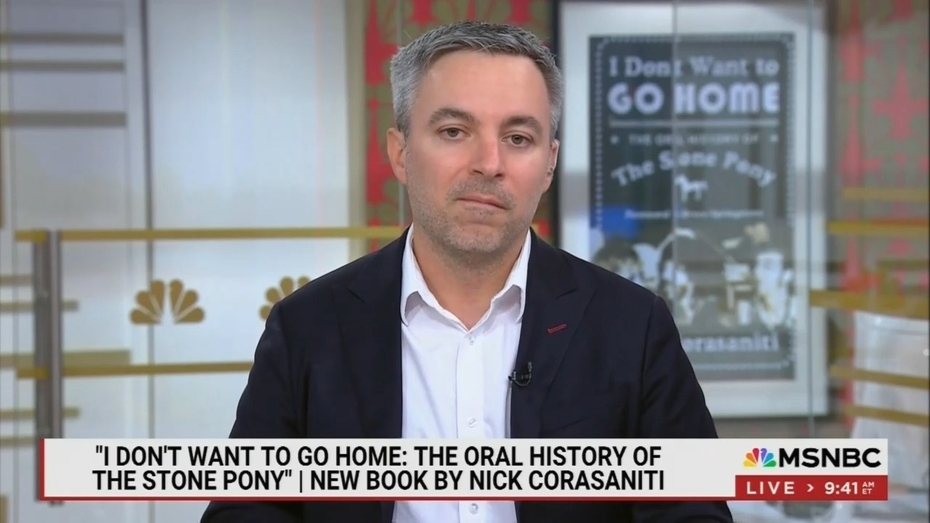
Left as probable casualties are longstanding principles of fair representation — along with American voters, who are likelier now to be shunted into hyperpartisan districts drawn in each state to benefit the party in power. A great carving could effectively dilute the power of millions, especially minority voters, and make partisan primaries more important than general elections when it comes to choosing leaders.
“We lost one of the last seatbelts of our democracy,” said Alanah Odoms, executive director of the American Civil Liberties Union of Louisiana.
Somehow, the ACLU doesn't warrant the liberal label, but the Supreme Court majority is branded conservative.
The ruling by the court’s conservative majority struck down Louisiana’s congressional map, describing it as an unconstitutional gerrymander that improperly considered race to create a majority-Black district. The ruling, Democrats argued, effectively removed one of the final guardrails that kept the most ruthlessly partisan interests at bay when it came to drawing congressional and legislative maps.
Some also fear that the court’s decision will reverberate beyond the halls of Congress.
Corasaniti sounded all-in on racial gerrymandering (which, not coincidentally, guarantees certain seats for the Democratic Party in the U.S. Congress).
More broadly, minority voters fear a backslide after losing what they say was a critical legal protection.
“Black Americans have never been fully represented in the electoral process,” said Damon Hewitt, the president of the Lawyers Committee for Civil Rights Under Law, a civil rights group. “This ruling makes it less likely that we ever will.”
Friday’s lead New York Times story by Atlanta bureau chief Rick Rojas carried a similar alarmist tone: “How the Voting Rights Decision May Block the Rise of Young Black Leaders.” By “young black leaders,” the paper only means Democrats. The paper certainly isn’t sympathetic to black conservatives.
Evan Turnage left a job on Capitol Hill and returned home to Mississippi to run for Congress. It didn’t pan out; he lost a Democratic primary in March against a popular incumbent. But by crisscrossing the region and building name recognition, he thought he had laid groundwork that could pay off later.
Next time, though, he could face an even more formidable hurdle: His district, long drawn to have a majority-Black constituency, could be redrawn to become practically impossible for a Black Democrat to win.
Or -- perhaps candidates could appeal to voters of all races?
Across the South, Republican officials are ready to quickly redraw legislative districts, seizing upon the Supreme Court decision on Wednesday that struck down a voting map in Louisiana and further weakened the landmark Voting Rights Act, which for decades helped usher in generations of Black leaders.
Rojas could have more accurately pointed out that the Supreme Court struck down racial preferences in national electoral politics.
He devoted two paragraphs to Justice Samuel Alito’s reasoning, including his note that Louisiana’s map violated the Constitution’s equal protection clause by creating a second majority-black district (incidentally, the Times capitalizes “Black” but not “white).
But critics said that, in effect, the court’s decision gutted the law.
Rojas did uncover a “certain strain of optimism” in the unsuccessful candidate Turnage remembering that his grandparents had the honor of voting for Barack Obama.