One thing’s for sure: newly-minted CBS Evening News anchor Tony Dokoupil definitely has his work cut out for him if he’s serious about re-engineering the cesspool of lefty slop that has plagued that show for years. Its utterly embarrassing coverage — if you even want to call it that — of the climate change boondoggle is no exception. This is always an acceptable conspiracy theory -- even if all the panicked predictions of imminent doom since 1988 haven't come true.
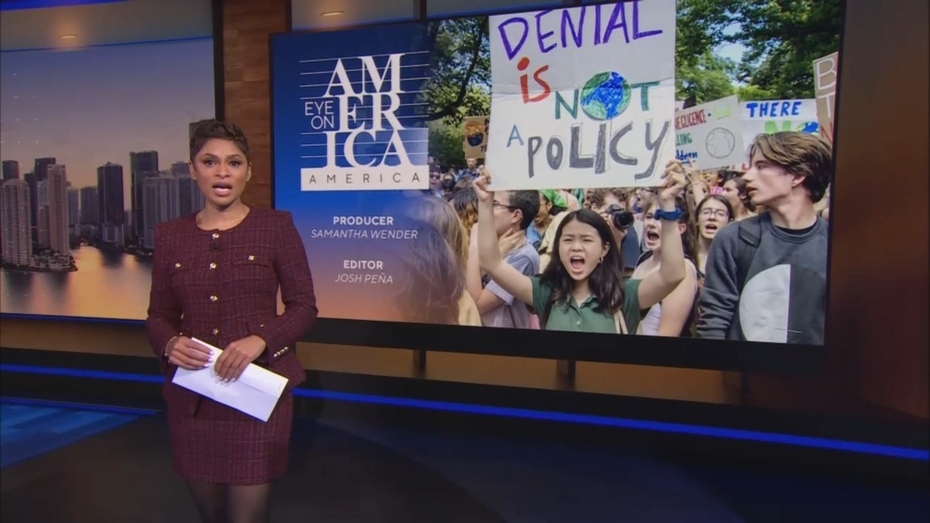
“There is a lot of concern in this country about climate change and its impact, particularly with some young adults who say it's a consideration when deciding whether or not to have children.” Duncan teed up CBS national environmental correspondent David Schechter, who compares real war fears (nuclear war, 9/11) to leftist eco-panic.
“You might remember growing up feeling anxious about threats to our country like a nuclear war or 9/11,” Schechter sensationalized. “What today's youth worries about is climate change.” Watching this segment was like watching someone scratch chalk across a blackboard.
At least this story had an alternative viewpoint, Alina Voss of the American Conservation Coalition -- which CBS failed to name. She told Voss fear of climate disaster is no reason to avoid creating a new generation of humans.
But CBS also turned to Northwestern professor Sarah Dimick, who studies climate change themes in literature and composes papers like this beaut: "The Poetry of Climatic Witness: Slam Poets at United Nations Climate Summits."
Climate Depot founder and executive director Marc Morano unloaded on CBS leadership following the climate-doom segment in comments to MRC Business. “Memo to Bari Weiss, CBS News still needs vast improvements in how it reports on 'climate change. The unscientific premise of this segment on kids' climate 'anxiety' was that we are all 'definitely' going to feel more extreme weather due to global warming,” he continued.
Morano argued that the reason why this is a trend at all amongst young people is exactly because they’ve been brainwashed by the educational system around them that has been infused with leftist axiomatic dogmas:
These kids have been propagandized from kindergarten through college and the least CBS News can do is provide accurate scientific reporting, which would ease their psychological climate worries.
Hopefully this is not a telltale sign of what the American people should expect from the supposed “anti-woke” revamping of the entire CBS News corporate structure.
Transcript is below (click Expand):
CBS Evening News
December 29, 2025
JERICKA DUNCAN: There`s a lot of concern in this country about climate change and its impact, particularly with some young adults who say it`s a consideration when deciding whether or not to have children. National environmental correspondent David Schechter has tonight`s Eye on America.
DAVID SCHECHTER: You might remember growing up feeling anxious about threats to our country, like nuclear war or 9/11.
JORDAN CRUMPTON (College Student): Is that really a situation you want to put your kids in?
DAVID SCHECHTER: What many of today`s youth worry about is climate change, such as Jordan Crumpton (sp?), a junior at Northwestern University.
JORDAN CRUMPTON: You want what`s best for your kids and for them to live a happy and healthy life.
DAVID SCHECHTER: And you`re concerned that they won`t?
JORDAN CRUMPTON: I`m concerned that, the direction we`re moving, they won`t be able to.
DAVID SCHECHTER: A study released last year found 52 percent of young Americans aged 16 to 25 were hesitant to have children because of climate change concerns. But while the U.S. reached a record low fertility rate last year, data shows that is driven by economic concerns and women waiting to get pregnant later in life, not by climate change.
ALINA VOSS: We have college branches. We have young professional branches.
DAVID SCHECHTER: Alina Voss in Columbus, Ohio, works for an environmental nonprofit that promotes conservative values.
ALINA VOSS: The innovation is working.
DAVID SCHECHTER: She is optimistic about the future, believing technology will protect families from the worst impacts of climate change.
We definitely are heading to a world that has more drought, more fire, more flood. Isn`t that a world that`s not as good as the one that previous generations had?
ALINA VOSS: I don`t think it`s a reason for the next generation not to exist.
SCHECHTER: At Northwestern, student Zia Robbins doesn`t know what the future will look like, but says that won`t stop her from having a family.
ZIA ROBBINS (College Student): I don`t think that we`re going to solve this issue. And I think that a responsibility for me is going to be raising a child who`s conscious of the environment.
SARAH DIMICK (Assistant Professor, Northwestern University): They do not see it in terms of kind of an apocalyptic scenario.
SCHECHTER: Assistant Professor Sarah Dimick teaches about how authors write about climate change, and what she`s seeing are students who have lived with the impacts of wildfire smoke and intense storms, which gives them a more nuanced view of what`s happening to the planet with less doom.
DIMICK: Which I think is too easy of a story.
SCHECHTER: What does that mean, too easy of a story?
DIMICK: Everyone dies. There`s doom and gloom at the close. And I think students right now are really trying to think through, what sorts of stories or narratives can give us more traction than just utter demise?
SCHECHTER: Climate change may indeed make many young people anxious.
STUDENT: We need to be more aware of just kind of the overall landscape and how our choices are impacting everyone.
SCHECHTER: But to say that fear will keep them from starting families paints an entire generation with too broad a brush.For Eye on America, I`m David Schechter in Evanston, Illinois.