After playing a soundbite of Jeffries announcing his plan, moderator Whoopi Goldberg didn’t seem to be a big fan of it. She wondered if it was putting to much of a burden on students who were trying to better their lives:
GOLDBERG: So this could have a huge impact on college sports programs in the south. But is it putting a little too much burden on the students, because if you are someone who has just, you know, you getting to go to college and this is the school that's said ‘yes’ to you --
BEHAR: On scholarship, right?
GOLDBERG: Maybe on a scholarship.
Hostin was fine with the Jeffries’ idea because “you know, athletes have been involved in protests and politics for a long time.”
She acknowledged that there was a lot on the line for the students because they “stand to get a free education, they stand to make money because of the NIL now.” Yet still, she argued that it would be better for them to give that up because of the damage and harm it would cause to red states.
Sunny Hostin boasts about the "economic damage and economic harm" Hakeem Jeffries wants to do to the south with his plan to have black students boycott their university athletic scholarships.
— Nicholas Fondacaro (@NickFondacaro) May 20, 2026
Alyssa Farah Griffin calls it "a very good idea" because "the economy would crumble":… pic.twitter.com/KsW7ifDpvU
“I think it's economic damage and economic harm has longtime been a very effective tool in the civil rights movement,” she proclaimed.
Seemingly to encourage young athletes to take part in the boycott, Hostin suggested that the athletes were “the top of the top and so they're going to have a lot of other choices.” She also told them to think of themselves as Kylin Hill of Ole Miss:
And I would suggest that if you think about Ole Miss, there was -- I think a running back, his name is, yeah, it was a running back. His name was Kylin Hill. He played at Ole Miss. You know, Ole Miss brings in a lot of money. He vowed not to play unless the state changed the confederate flag. The Confederate flag came down months later. Because college sports brings in so much money.
Neither of Hostin’s two children were attending college on an athletics scholarship.
“In theory, I think it's a very good idea! Let’s talk macro! If all black Americans boycotted any industry, it would -- the economy would crumble,” touted Farah Griffin in response, before agreeing with Goldberg: “but it's putting, in my mind, too much onus on the young people who did not create the problem that we’re in.”
For her part, co-host Joy Behar ridiculously compared the situation to the Vietnam War. “Well, like teenagers, they're teenagers and they're going to have to give up a lot. The Vietnam War was basically halted by teenagers,” she suggested.
Adding: “So, I'm not saying it's a great idea or it's not a great idea, I'm just pointing out it is young people who change the world.”
So just like with Vietnam, Behar and Hostin would have other peoples’ teenagers make the sacrifice for their political cause. Maybe they should change the lyrics of Fortunate Son to “It ain't me, it ain't me. I ain't no View host's son, son.”
The transcript is below. Click "expand" to read:
ABC’s The View
May 20, 2026
11:14:46 a.m. Eastern(…)
WHOOPI GOLDBERG: So this could have a huge impact on college sports programs in the south. But is it putting a little too much burden on the students, because if you are someone who has just, you know, you getting to go to college and this is the school that's said ‘yes’ to you --
BEHAR: On scholarship, right?
GOLDBERG: Maybe on a scholarship.
SUNNY HOSTIN: Also there is money for athletes - for athletes now with the NIL
BEHAR: What do you think? You think it’s too much or a burden on them?
GOLDBERG: You know, I think it's really going to become a case-by-case basis because I don't know how many schools we're talking about. I don't know how many athletes we're talking about and I don't know this is the best way. It can be part of a bigger picture but I don't know if this is the only way to go.
HOSTIN: Well, I agree with you on that I think there has to be strategy. I mean, you know, athletes have been involved in protests and politics for a long time.
GOLDBERG: Yeah.
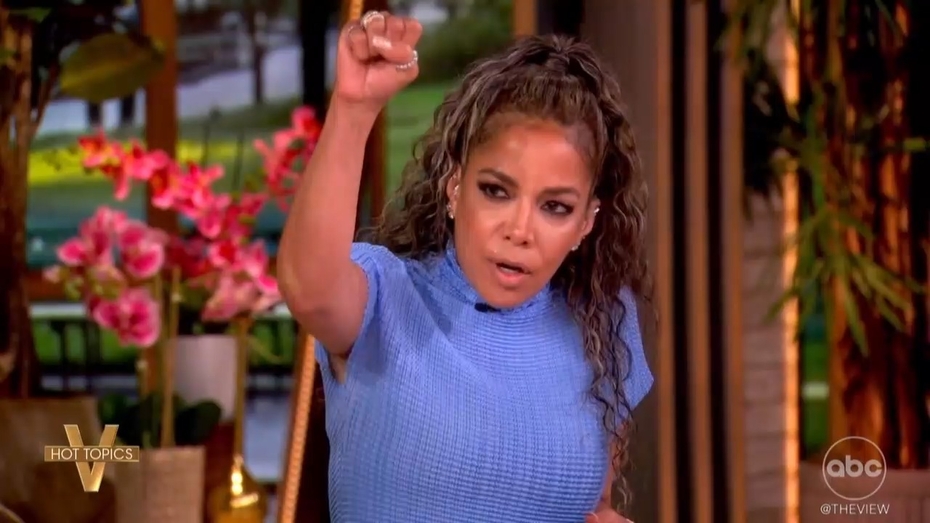
HOSTIN: Remember the Olympics and you had [raises fist in the air] John Carlos and you had Muhammad Ali but these were athletes that were established already. These college athletes stand to get a free education, they stand to make money because of the NIL now, so I think it is asking a lot. But, I think it's economic damage and economic harm has longtime been a very effective tool in the civil rights movement.
BEHAR: Resistance has a price. Let me give you some history.
GOLDBERG: Yes, do.
BEHAR: Well, like teenagers, they're teenagers and they're going to have to give up a lot. The Vietnam War was basically halted by teenagers.
HOSTIN: Correct.
BEHAR: Because it was 17 and 18-year-old kids who were going to go and fight this crazy war that they were doing. So, I'm not saying it's a great idea or it's not a great idea, I'm just pointing out it is young people who change the world.
HOSTIN: If there's structure though don't you think this could possibly work? Because we're talking about just the state schools, Whoopi, we’re not talking about the SEC. The conference.
FARAH GRIFFIN: Oh, that’s an important distinction.
GOLDBERG: That's important to know.
HOSTIN: So, we're talking about 13 schools. These kids are the top of the top and so they're going to have a lot of other choices.
And I would suggest that if you think about Ole Miss, there was -- I think a running back, his name is, yeah, it was a running back. His name was Kylin Hill. He played at Ole Miss. You know, Ole Miss brings in a lot of money. He vowed not to play unless the state changed the confederate flag. The Confederate flag came down months later. Because college sports brings in so much money.
FARAH GRIFFIN: In theory, I think it's a very good idea! Let’s talk macro! If all black Americans boycotted any industry, it would -- the economy would crumble. Arts, music, doctors, everything. Of course, that is a powerful way to protest but it's putting, in my mind, too much onus on the young people who did not create the problem that we’re in.
(…)