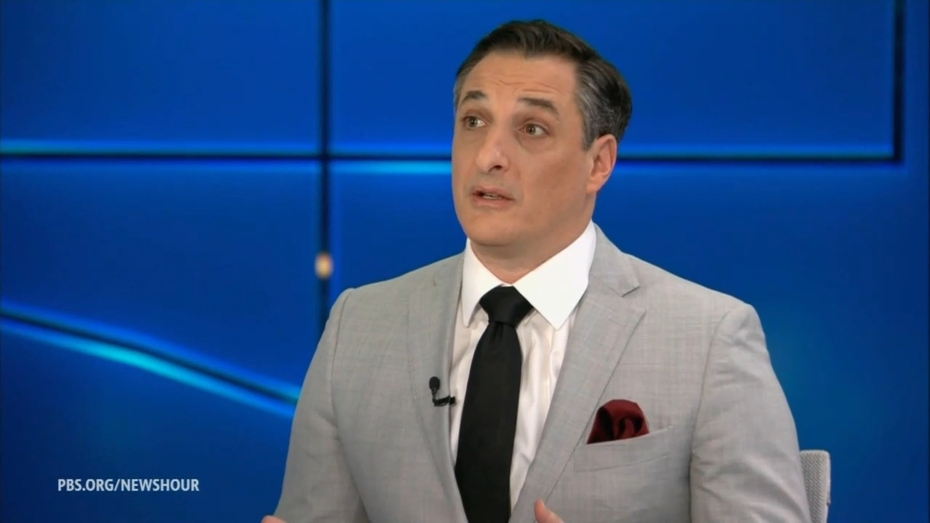
Senior political editor Domenico Montanaro unleashed this doozy of a double-standard for entry No. 4, sub-headed “Right-wing authoritarians are OK, but left-wing dictators are not?”
Trump referred to Maduro as a "dictator" four times during his news conference Saturday (an "outlaw dictator," "illegitimate dictator," "now-deposed dictator" and "dictator and terrorist.")
But there are lots of other dictators, authoritarians and strongmen in the rest of the world, many of whom Trump has praised through the years.
Yet in the past year, Morning Edition has hosted guests who have tossed around the terms “dictator” and “fascist” and “authoritarian” to describe the democratically elected Donald Trump without being challenged by NPR interviewers. Sometimes NPR does the smearing themselves, as in this August 20 piece headlined "Do Trump's D.C. moves echo an authoritarian playbook?"
To be fair, Montanaro did label Maduro a “dictator” throughout his piece. Yet he also whined that “dedication to Trump among the faithful runs deep -- and there's an entire conservative media infrastructure built to insulate him and give the base talking points," and tried to boost the Democrats with suggested talking points, like "the fact that many people are struggling to buy groceries, homes and health care."
Here are some of Morning Edition's unchallenged labeling smears of Trump over the last year, starting with an August 26 segment:
Reporter Stephen Fowler: After spending months searching for the right tone and message or frankly any tone or message in response to Trump, there was a noticeably aggressive and provocative tack from Democratic leaders this week, including DNC Chair Ken Martin calling the president a, quote, "dictator in chief," who said the administration is, quote, "fascism dressed in a red tie."
Former Yale professor Jason Stanley, who absconded to Canada to avoid dawning fascism in the United States and who wrote Erasing History: How Fascists Rewrite the Past to Control the Future, referred on the April 1 edition to his new home’s “long-term plan of creating a center that will be a refuge for politicians, journalists and professors from democratically backsliding or authoritarian countries like the United States or Russia.”
On May 25, host A Martinez spoke with leftist professor Steven Levitsky under the text headline “Harvard's Steven Levitsky says Trump administration acts as authoritarian government.”
A Martinez, Host: ….Steven, you wrote in 2018 the book "How Democracies Die," where you warned that the Trump administration was acting like an authoritarian government, and you say it's happening again. What's different, if anything, this time around?
Steven Levitsky: ….Trump was always very authoritarian….So this is an all-out authoritarian assault, the likes of which we haven't seen in this country probably ever.
As demonstrated, Donald Trump, elected president fair and square twice, receives far harsher language on NPR that does an actual authoritarian dictator and election thief Maduro. Monday’s written rundown by reporter Jorge Valencia, “The rise and fall of Venezuela's Nicolás Maduro,” related the failure of Maduro’s corrupt command economy but Valencia's labeling was whitewashed, the only mention of Maduro's socialism coming via proper noun:
[Maduro’s] father held leadership roles in a local workers union, and as a teenager Maduro, sponsored by the Socialist League, spent a year in Havana studying politics….
The strongest anti-Maduro descriptor came in the last sentence.
Maduro made his first appearance in federal court in New York on Monday. In a video posted on Saturday by the White House, two U.S. Drug Enforcement Administration agents in New York grip his arms and escort him away as he stands tall, smiles and wishes onlookers a happy new year -- a strongman formed in the certainties of a revolution, but with the consequences of his rule finally closing in.