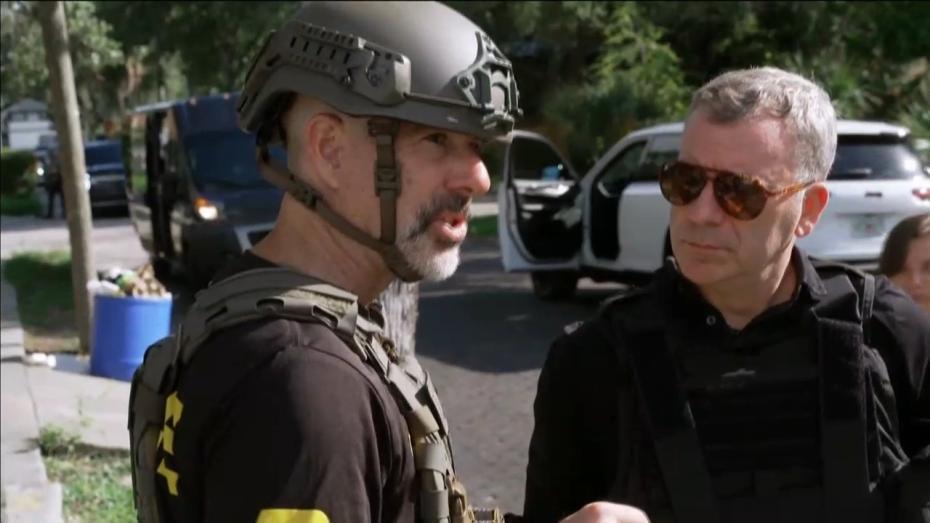
Sunday’s 60 Minutes featured one of the rare conservative stories of the show’s season, with correspondent Jon Werthiem detailing the fights against cartels and their import of deadly synthetic drugs to the US. However, the show returned to its normal state in the second portion of the show, with longtime correspondent Lesley Stahl decrying the Trump administration cutting funding from “gun violence prevention” programs amid a story on disturbing social media groups that idolize mass shooters.
To lead off the story, Wertheim stated, “The DEA, the U.S. Drug Enforcement Administration, is now confronting what it calls the greatest and most deadly drug threat the country has ever faced: synthetic opioids, which have killed more than a quarter of a million Americans in the last five years.”
In one of the rare conservative lead stories of the new ‘60 Minutes’ season, correspondent Jon Wertheim detailed the fight against synthetic opioids while rightly portraying it as a battle against the cartels, as he rode along with DEA agents and administrator Terry Cole. pic.twitter.com/hHPP3yseX6
— Nick (@nspin310) November 23, 2026
Much of Wertheim’s interview with DEA Administrator Terry Cole discussed the threat posed by cartels and the deadly synthetic pills entering the US. Cole stated, “The cartels will exploit every avenue and every source possible to bring new poison to the United States. Listen, it's all about profit for them. They don't care about our citizens, they don't care about our sovereignty, our national security.”
Later, as Cole railed against the cartels, Wertheim stated, “You're describing not just a public health crisis now, you're describing a national security crisis.” pic.twitter.com/t1WJVOEvZh
— Nick (@nspin310) November 23, 2026

Wertheim responded, “You're describing not just a public health crisis now, you're describing a national security crisis.”
Later, after showing Cole at an event in New York, remembering overdose victims, Wertheim continued his and Cole’s focus on the cartels: “Head of the DEA, Terry Cole, considers synthetic drug making the most deadly criminal act carried out by today's cartels.”
Cole later said the cartel drug industry has evolved, and called it “industrialization. Wertheim followed by detailing how drug-making materials enter the US:
Notably, Wertheim's story also detailed how chemicals for cartel drug-making originate from China and India and are shipped to labs in both Mexico AND Canada before entering the US. https://t.co/LA8a6hpat7 pic.twitter.com/CeSXS17QN5
— Nick (@nspin310) November 23, 2026
Industrialization through a global pipeline. Here's how the DEA explained it to us: Chemicals from China and India are ordered online and shipped to makeshift labs in Canada and in Mexico. The chemicals are then mixed by cartels and made into powders, and then pressed into pills either in Mexico or in the U.S.
A somewhat surprisingly conservative 60 Minutes lead story, given the season has mostly hit the Republicans and the Trump Administration on Iran, data centers, and more.
However, Sunday's 60 Minutes still had to bash the Trump Administration in some form.
In a disturbing story about social media fan clubs for mass shooters, Lesley Stahl decried the Trump administration cutting money from “gun-violence prevention,” which the White House called… https://t.co/LA8a6hpat7 pic.twitter.com/0v7ccFq6Ww— Nick (@nspin310) November 23, 2026
But Sunday’s episode still had to have its anti-Trump moment, with Stahl, who fear-mongered before the midterm elections claiming possible Trump interference, among two other anti-Trump stories this season, trying to place some blame on mass shootings on the Trump administration for cutting “gun violence prevention” programs amid a disturbing story on mass shooter fandom:
Herberhold travels around the U.S. holding forums like this one in Denver, educating law enforcement, parents and schools about what to look for in these teens, when to act, and where to find them.
She says more government help is needed, but the government is moving in the other direction. Last year, the Trump administration cut over $400 million in grants that supported gun violence prevention programs.
When we reached out to the administration, they told us, "The days of funding grossly ineffective programs that have little to no effect on problems they purport to solve are over."
Stahl represents how some of the old guard at 60 Minutes has still not changed and continues to bash Republicans, making the show still anything but ‘MAGA-coded.’
The transcript is below. Click "expand":
CBS’s 60 Minutes
November 22, 2026
8:04:50 PM Eastern
JON WERTHEIM: The DEA, the U.S. Drug Enforcement Administration, is now confronting what it calls the greatest and most deadly drug threat the country has ever faced: synthetic opioids, which have killed more than a quarter of a million Americans in the last five years. Synthetics include fentanyl, but now also ever-more-lethal new drugs that are entering the bloodstream of this multi-billion dollar criminal industry. These drugs are concocted and tweaked in clandestine labs, cartels changing one molecule at a time to evade law enforcement and meet demand.
Tonight: lessons in deadly chemistry: the latest front in the U.S. opioid epidemic, a crisis far from over.
[Story begins]
This past August, St. Petersburg, Florida. We joined heavily armed DEA agents as they prepared for a raid. The goal: disrupting a ring that distributes drugs. Cocaine and methamphetamine, but more critically, synthetic opioids.
Early morning, we were at this house in a residential neighborhood — one of 10 locations throughout the area hit simultaneously. A drone sent in to determine if anyone inside was armed. Then a flash grenade tossed into the house. Recovered: stacks of cash, a weapon, and one man inside who was arrested.
Taking part in the sweeping operation: longtime agent, now head of the DEA, Terry Cole.
DEA ADMINISTRATOR TERRY COLE: After we took the main target in custody, we are going to continue to dismantle the network. The network that is bringing this poison in, this network that's killing our youth, that's addicting our youth.
WERTHEIM: You're saying this is a snapshot. What we saw this morning.
COLE: This is just a small portion of what's going on globally for DEA.
(...)
8:06:57 PM Eastern
WERTHEIM: In raids like this, DEA head Terry Cole says agents are increasingly finding new synthetic pills, more deadly than anything they've ever seen.
[To Cole] Most Americans know about fentanyl. We're hearing about all sorts of other synthetics now.
COLE: I think as we continue to, you know, clamp down on the pressure in Mexico, they continue to evolve as well. The cartels will exploit every avenue and every source possible to bring new poison to the United States. Listen, it's all about profit for them. They don't care about our citizens, they don't care about our sovereignty, our national security.
WERTHEIM: You're describing not just a public health crisis now, you're describing a national security crisis.
COLE: Absolutely, you know, in the past when we talk about cocaine, methamphetamine, and heroin, the traditional type of narcotics that come into the United States, they've never killed at record numbers like we currently see now.
(...)
8:14:28 PM Eastern
WERTHEIM: Head of the DEA, Terry Cole, considers synthetic drug making the most deadly criminal act carried out by today's cartels.
[To Cole] We're seeing these synthetics getting made more lethal, with just a little tweak to a chemical compound, that must scare the hell out of you.
COLE: How they evolve is truly amazing. Listen, they have the money to hire the best chemists in the world. They have the money to bring people into their laboratories. This is industrialization.
WERTHEIM: Industrialization through a global pipeline. Here's how the DEA explained it to us: Chemicals from China and India are ordered online and shipped to makeshift labs in Canada and in Mexico. The chemicals are then mixed by cartels and made into powders, and then pressed into pills either in Mexico or in the U.S.
(...)
8:31:15 PM Eastern
LESLEY STAHL: Herberhold travels around the U.S. holding forums like this one in Denver, educating law enforcement, parents and schools about what to look for in these teens, when to act, and where to find them.
She says more government help is needed. but the government is moving in the other direction. Last year, the Trump administration cut over $400 million in grants that supported gun violence prevention programs.
When we reached out to the administration, they told us, "The days of funding grossly ineffective programs that have little to no effect on problems they purport to solve are over."
At the same time, more and more TCC posts are popping up on platforms teens can easily access, including Roblox, a gaming platform where very young kids could be subjected to TCC images.
(...)