Video
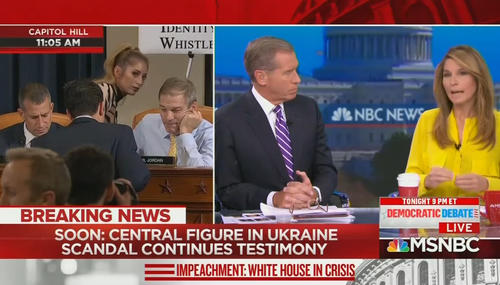
MSNBCers: Sondland Took a ‘Blow Torch’ to Trump Defense
November 20th, 2019 1:27 PM
MSNBC hosts Brian Williams and Nicolle Wallace, on Wednesday, proclaimed Ambassador Gordon Sondland’s testimony was a “blow torch” to Donald Trump’s defense. After the first part of the hearing was over, Williams came on the air to call it a “blow torch” and “stunning testimony.” His co-host Wallace added that Sondland was “taking a blow torch to every defense Donald Trump has offered....today…
Video
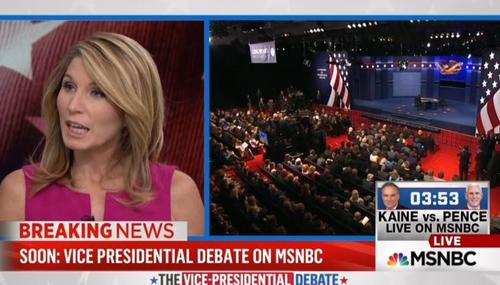
On VP Debate Night, Gleeful Ex-Palin Aides Take to MSNBC to Mock Her
October 5th, 2016 1:32 PM
In the final minutes before Tuesday night’s vice presidential debate, MSNBC journalists did what you would expect from the liberal network: They mocked Sarah Palin. Killing time before Tim Kaine and Mike Pence took the stage, ex-Palin aides Steve Schmidt and Nicolle Wallace regaled their left-wing hosts with behind the scenes stories from the 2008 debate prep. Wallace recounted, “She in rehearsal…
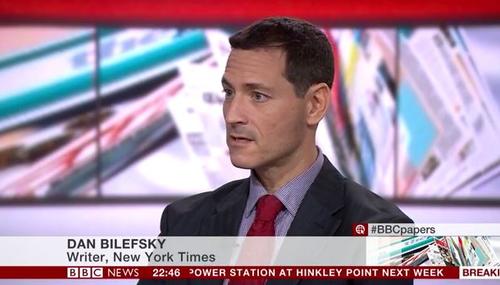
NYT's Pathetic Smear: Fears Brexit Vote 'Unleashed a Wave of Violence'
September 2nd, 2016 7:10 PM
Post-Brexit, the liberal media lashed out with myriad hysterical predictions of economic meltdown and threw around bitter accusations of xenophobia, with the New York Times leading the charge. Well, those dire predictions of crisis have not exactly panned out, but the Times is back trying to pump some life into the libel, by labeling any violent crime against any immigrant in England as Brexit-…
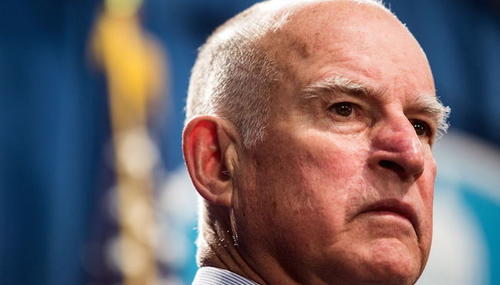
New York Times Spins for Jerry Brown on Oil Search on His Land
December 29th, 2015 12:25 AM
What do you do if you are a liberal governor trying to present the public image of a concerned environmentalist and then get caught red handed using state employees to find oil on your personal property? Why you have Adam Nagourney of the New York Times perform spin control to paint a picture of yourself as a rugged outdoorsy type surviving as a nature boy on that very same land you wanted to…
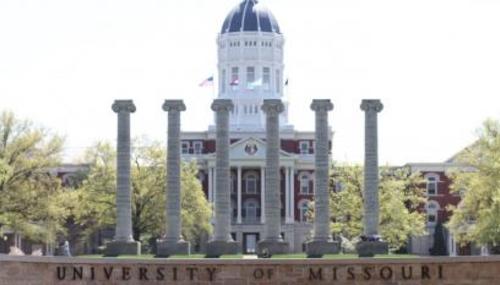
NYT Incurious About Racial Slur Charge by Mizzou Prof. Against Faculty
November 11th, 2015 2:45 PM
The New York Times is displaying an astounding lack of curiosity about a significant charge of racism relayed by its own editorial page editor. Brent Staples was quoting a Missourian article by University of Missouri journalism professor Cynthia Frisby when something she wrote just leaped off the page. It was a charge of racist slurs being hurled at her by fellow School of Journalism faculty…
Video
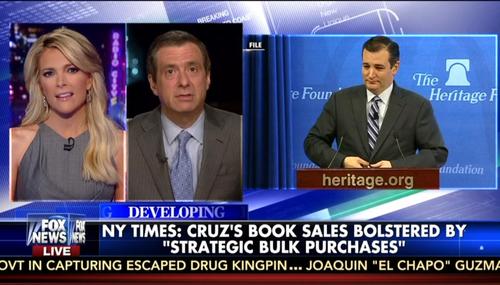
Megyn Kelly, Howard Kurtz Hit NYT For Exclusion of Cruz Book
July 14th, 2015 3:33 PM
On the July 13 edition of The Kelly File, Fox personalities Megyn Kelly and Howard Kurtz hit The New York Times for leaving Ted Cruz’s new book, A Time For Truth, off their best seller list because of the paper’s suspicions about bulk purchases.
NYT's Peters Hits 'Waste of Time' Obama-Care Repeal Votes and GOP's 'M
May 16th, 2013 11:59 AM
New York Times reporter Jeremy Peters let the Republicans in Congress know he was tired of their silly and "waste of time" attempts to repeal Obamacare in Wednesday's "House to Vote Yet Again On Health Care Repeal."
(Peters was last seen helping Chuck Hagel, Obama's nominee for Secretary of Defense, limp across the confirmation finish line.) He wrote on Wednesday:
NYT's Parker Grouses Obama 'Wined and Dined' the 'Bad Date' GOP Congre
May 16th, 2013 11:16 AM
As multiple scandals engulfed the presidency, "Watching Washington This Week," a nytimes.com video featuring New York Times congressional reporters Jeremy Peters and Ashley Parker having a pseudo-informal chat outside the White House, managed to place President Obama as the victim of a cold Republican Congress.
NYT's Weisman Emphasizes Harsh GOP Partisanship Over Actual Obama Scan
May 14th, 2013 12:15 PM
Tuesday's front-page New York Times story by Michael Shear and Jonathan Weisman, "Obama Dismisses Benghazi Furor But Assails I.R.S," again emphasized partisan back-and-forth at the expense of journalistic digging into the actual facts of the IRS and Benghazi controversies swirling around the Obama White House.
Weisman's byline is an assurance that the story to follow will be light on details…
Bruni the Clueless? NYT Columnist Mocks 'Clueless' Americans and 'Mean
May 14th, 2013 11:38 AM
In his Sunday New York Times column, former White House reporter Frank Bruni took a whack at "America the Clueless" and Republicans in particular, but made a couple of pretty clueless errors of his own (Eighteen percent of AP survey respondents said Obama was Jewish)?
NY Times Public Editor: Soft IRS, Benghazi Coverage Lends Credence to
May 14th, 2013 11:03 AM
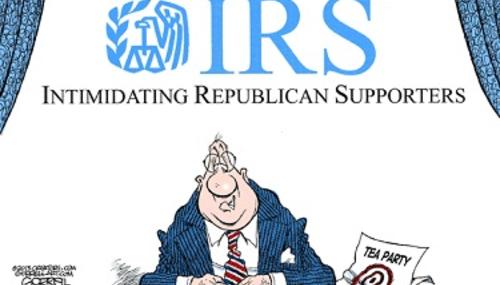
The New York Times did some damage control for the Obama administration in its lead editorial Tuesday, defending in part, the IRS's politically motivated audits against fledgling Tea Party nonprofits during the last campaign cycle. The paper ridiculously portrayed the White House as just as outraged as conservatives in a headline: "White House Under Fire: It Condemns I.R.S. Audits of Political…
NYT's Gillis, Writing Under False Headline, Rants Against Warming Skep
May 13th, 2013 2:49 PM
New York Times's environmental reporter Justin Gillis earned an unusual two-column lead story part in Saturday's paper, part of his long-running scarefest series, "Temperatures Rising." The latest entry: "Heat-Trapping Gas Passes Milestone, Raising Fears." (Though that scary headline turns out to be upon further review a bit premature.) Gillis committed his usual smear of warming skeptics: "…
IRS Apologizes for Politically Motivated Tea Party Scrutiny Once Appla
May 13th, 2013 11:28 AM
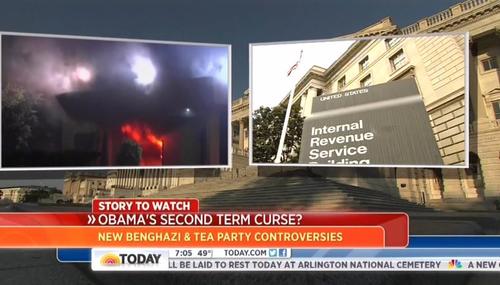
Scandalous news that the Internal Revenue Service intimidated nonprofit opponents of the Obama administration made page 11 of Saturday's New York Times.
The IRS apology to Tea Party and other conservative organizations for politically motivated targeting of their nonprofit status was dealt with in mild fashion by reporter Jonathan Weisman, though not on the front page. "I.R.S. Apologizes to…
After Editor's Lecture, New York Times Still Framing Benghazi Through
May 10th, 2013 11:37 AM
New York Times reporter Mark Landler reported on the ongoing controversy over Benghazi on Friday, as House Republicans demanded the White House release what they consider an incriminating email showing officials knew Islamic terrorists were responsible for the attack, yet blamed an anti-Islamic Youtube video instead: "Benghazi Debate Focuses on Interpretation of Early E-Mail on Attackers."