Video
King Whines About Afghanistan ‘Monday Morning Quarterbacking’
October 5th, 2021 1:26 PM
During an interview with retired General Stanley McChrystal on Tuesday’s CBS Mornings, co-host and Democratic Party donor Gayle King rushed to protect President Biden from criticism of his disastrous withdrawal from Afghanistan by dismissing the legitimate questioning as “Monday morning quarterbacking.” She fretted that people weren’t being “fair” to the woefully incompetent…
Video
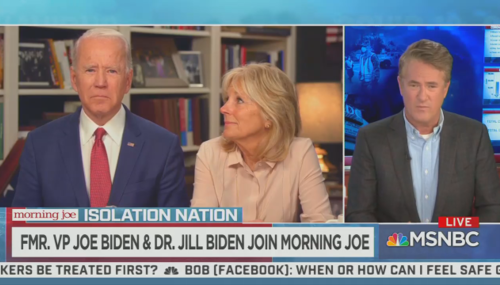
Scarborough's Fawning Q to Biden: Can You Talk About People's Pain?
April 16th, 2020 10:15 AM
When do the liberal media's unctuous interviews of Democrats stop being journalism and start constituting campaign contributions-in-kind? The question arises again today in the context of Morning Joe's fawning interview of Joe Biden.

Bozell & Graham Column: PBS 'Learning' to Love Suicide Bombers?
April 15th, 2017 7:57 AM
On April 5, The New York Times published an op-ed by retired Gen. Stanley McChrystal headlined “Save PBS. It Makes Us Safer.” McChrystal now runs a big lobbying firm, so that may be why he cares so much: he’s a gun for hire. So how does the general think PBS makes us “safer,” and from what? The answer: commercialism.
But PBS isn't making us safer from suicide bombers. It's teaching the need to…

NBC's Lauer Interrogates McChrystal on 'Demeaning' Criticism of Obama
January 7th, 2013 5:28 PM
In an interview with retired General Stanley McChrystal on Monday's NBC Today, co-host Matt Lauer grilled the former Afghanistan commander on his resignation following criticism of President Obama in a 2010 Rolling Stone article: "There were several demeaning quotes attributed to your staff members, even to you, about the President and about key members of his staff....Was he [Obama] furious…
Washington Post Casts Doubt on Hersh's 'Crusader' Conspiracy Theory
January 21st, 2011 4:16 PM
The Washington Post on Friday took on Seymour Hersh's outlandish conspiracy theory that "neo-conservative" members of Opus Dei and the Knights of Malta inside the military "overthrew the American government" and are waging a "crusade" against Muslims. The newspaper reported that, contrary to Hersh's claims, General Stanley McChrystal was not a member of either organization, and that there was "…
Ed Schultz's Goofy Reign of Error Flails Forward
July 31st, 2010 11:47 PM
Liberal radio host and MSNBC bobblehead Ed Schultz doesn't sugarcoat his contempt when it comes to Sarah Palin.Here, for example, is what Schultz said about Palin on his radio show July 14 (click here for audio) -- I think she is shamelessly stupid.Unlike Schultz, who doesn't know the difference between "circumspect" and "suspicious", as he showed on June 22 when talking about Gen. Stanley…
Rolling Stone Writer That Took Down McChrystal Gets Book Deal
July 6th, 2010 3:17 PM
The Rolling Stone magazine writer that took down General Stanley McChrystal a few weeks ago has been rewarded with a significant book deal.One source says Michael Hastings will get seven figures for his "unprecedented behind-the-scenes account of America's longest war."According to Forbes, publishing house Little, Brown will release the following statement later on Tuesday:
Geraldo Rivera Compares Rolling Stone Writer To Al Qaeda Terrorists
June 26th, 2010 5:25 PM
Geraldo Rivera on Friday excoriated Rolling Stone writer Michael Hastings actually comparing him to al Qaeda terrorists.Discussing the article that effectively destroyed General Stanley McChrystal's career, Rivera told Fox News's Bill O'Reilly, "These guys, particularly the staffers who gave the most damning statements about the civilians in office, including the vice president of the United…
Were McChrystal and Staff Talking Off The Record to Rolling Stone
June 26th, 2010 1:57 PM
In the midst of this week's Gen. Stanley McChrystal controversy, a possibility concerning statements allegedly made by him and his staff has largely gone overlooked: might they have been speaking off the record when they were around Rolling Stone's Michael Hastings?This certainly would explain some of the bizarre comments allegedly made by military members knowing full well how the chain of…
MRC-TV: The June 24 'Media Mash' on Hannity
June 25th, 2010 11:42 AM
"The media, for like five seconds, those with thrill up and down their legs, they were a little critical of the Anointed One and what was one of the worst speeches in the Oval Office... but as soon as he fired McChrystal and hired Petraeus, they went nuts," Sean Hannity observed last night at the beginning of his recurring "Media Mash" segment with NewsBusters publisher Brent Bozell.The Fox News…
MoveOn.org Removes 'General Betray Us' Ad From Website
June 24th, 2010 5:49 PM
In a classic example of liberal hypocrisy, the far-left leaning, George Soros-funded group MoveOn.org has removed its controversial "General Betray Us" ad from its website.For those that have forgotten, shortly after General David Petraeus issued his report to Congress in September 2007 concerning the condition of the war in Iraq and the success of that March's troop surge, MoveOn placed a full-…
George Stephanopoulos Fawns Over Obama's Handling of McChrystal Contro
June 24th, 2010 5:05 PM
Good Morning America's George Stephanopoulos on Thursday hyped Barack Obama's handling of the decision to fire General Stanley McChrystal and replace him with David Petraeus, lauding the action as a "political masterstroke." His comments built on extensive media praise on Wednesday, including many reporters who called the move "brilliant." Stephanopoulos seemed particularly pleased. The former…
Why Can't Media Acknowledge That Rolling Stone Is On the Radical Left
June 24th, 2010 3:40 PM
One of the more annoying tics in the current bubble of national media coverage of Gen. Stanley McChrystal's truly bizarre granting of access to Rolling Stone magazine was the utter lack of any description of the magazine -- neither its ideology (hard-left) or its central focus (rock and pop music). Washington Post media reporter Howard Kurtz provided a little depth with an article on Thursday,…
Jon Stewart: Media 'Kind of Suck' for Getting Scooped by Rolling Stone
June 24th, 2010 3:26 PM
Comedian Jon Stewart Wednesday pointed out an inconvenient truth about this week's General Stanley McChrystal incident: the media "kind of suck" for getting scooped by Rolling Stone magazine.As "The Daily Show" host addressed the day's events involving the General and President Obama, he showed clips of various press members expressing disgust that Rolling Stone would get such access to…