AP Pretends That New Cuban President Was 'Elected'
April 19th, 2018 5:08 PM
The Associated Press and many of the AP's colleagues in the establishment press have had a nearly 60-year romance with Cuba's brutal communist regime. They have frequently regaled readers with the island nation's "free healthcare" and "free education," as if that makes up for the fact that the typical Cuban subsists on far less than the $2 a day the international community considers extreme…
Video
ABC, NBC Skip Cuba’s Sham Election Handing Off Control to Dictator
April 18th, 2018 9:32 PM
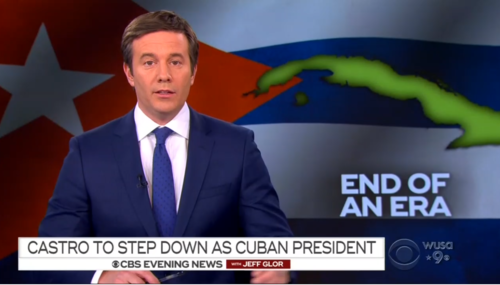
The communist government of Cuba held their sham election for a new leader on Wednesday after President Raul Castro stepped down to make way for Vice President Miguel Diaz-Canel to take the reins. The news of the transition broke early that morning, but both ABC and NBC appeared too lazy to even give it a simple brief on their morning and evening broadcasts. CBS and Spanish-language networks…
Video
On CNN, Filmmaker Jon Alpert Blames U.S. for Communism Failing in Cuba
November 25th, 2017 5:57 PM
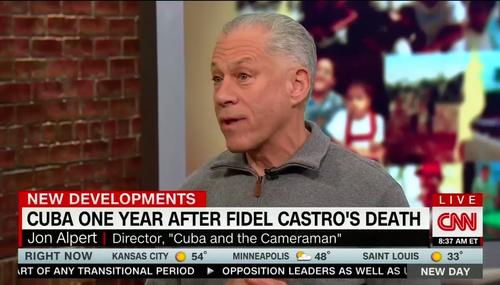
Appearing as a guest on Friday's New Day on CNN a year after Fidel Castro's death to promote his film about Castro's Cuba, filmmaker Jon Alpert blamed the United States for the economic failures of communism on the island country as he charged that the U.S. ruined the Cuban economy by flooding the sugar market in the 1970s.
Not News: Black Lives Matter Praises Castro's Harboring of Cop-Killers
December 6th, 2016 12:09 AM
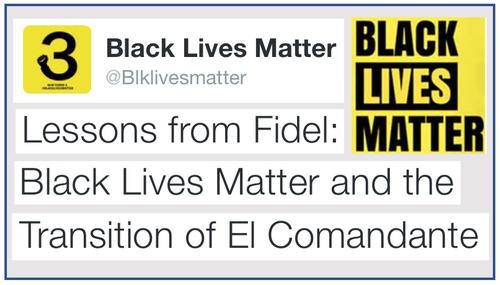
No review of the reactions of leftists and the establishment press (but I repeat myself) to the death of Fidel Castro would be complete without seeing what the wonderful, caring people at Black Lives Matter wrote after the Cuban dictator died.
BLM's reaction is posted at a website called Medium.com. Since that post doesn't link elsewhere, it was possible to hope that the content there doesn't…
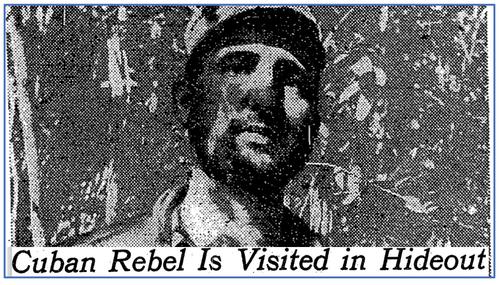
The Fake New York Times Story That Launched Fidel Castro
November 28th, 2016 12:19 PM
How ironic it is that the announced death of Cuban Communist dictator Fidel Castro late Friday night coincides with the U.S. establishment press's obsession with smearing websites which dare to challenge their narratives as Russian-inspired "fake news."
Castro's original rise to power was arguably the product of a spectacularly fake dispatch written nearly six decades ago by reporter Herbert L.…
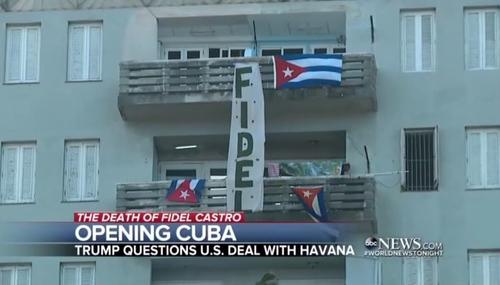
Video
ABC, NBC Stoke Fear Trump, Not Castro Regime, Will Worsen Cuban Lives
November 28th, 2016 10:50 AM
On Sunday night, ABC and NBC had teams assembled in Cuba to shamefully mourn the death of murderous authoritarian leader Fidel Castro with both newscasts turned to fear-mongering in touting claims the President-elect Donald Trump and not current Cuban leader Raul Castro’s communist regime could harm Cuban lives going forward if he goes back on President Barack Obama’s move to resume ties between…
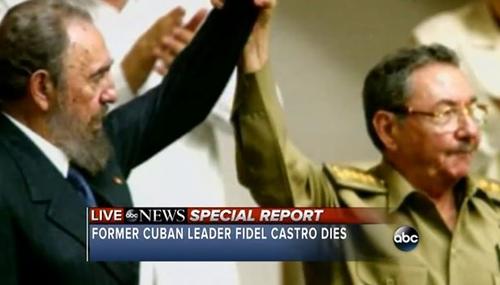
At AP, Castros' Cuban 'Revolution' Is Alive and Well as It Never Died
November 27th, 2016 4:01 PM
Geraldo Rivera is far from the only member of the U.S. press with what Fox News's Pete Hegseth described Saturday as a "reflexive desire" to see Communist dictator Fidel Castro, whose death was announced Friday night, as a "cult hero." Entire major U.S. news outlets fell prey decades ago.

Video
Sean Penn: Vote Hillary or ‘Masturbate Our Way Into Hell’ With Trump
September 29th, 2016 5:34 PM
While a guest on CBS's Late Show With Stephen Colbert on Tuesday night, liberal actor/activist Sean Penn asserted that Americans have two options on November 8: “stick it out” under a Hillary Clinton presidency or “masturbate our way into hell” with Donald Trump.
According to an article posted by Jessica Chasmar -- a continuous news writer for the Washington Times -- Penn was on the program to…
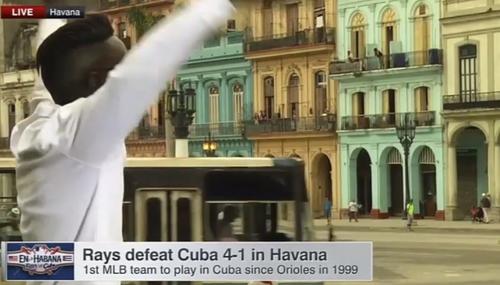
Video
ESPN Cries ‘Invasion’ After Cuba Broadcast Is Halted by Dissidents
March 24th, 2016 1:27 AM
Bob Ley, ESPN's longest-serving commentator, was in Cuba yesterday after the Tampa Bay Rays defeated the island nation's national team 4-1 in an exhibition baseball game.
Shortly after the conclusion of that game, ESPN had Ley report from a rather nice-looking streetscape in Havana (not your typical avenue in the workers' paradise). As he did, a demonstrator interrupted him. ESPN, acting as if…
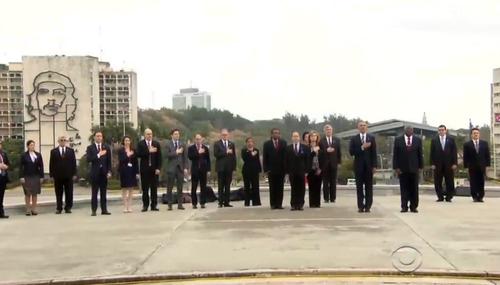
Dissidents' Delight? NYT Heaps Praise on Obama, Its Man in Havana
March 23rd, 2016 3:09 PM
As President Obama’s three-day Cuba excursion wraps up, the New York Times coverage from Havana took a few shots at the Communist nation’s persecution of dissidents, and the overall authoritarian nature of the regime. But the fawning over Obama’s “remarkable” visit went way over the top, including self-fawning: "Mr. Obama himself marveled aloud at the significance of his trip." On the last day of…
Video
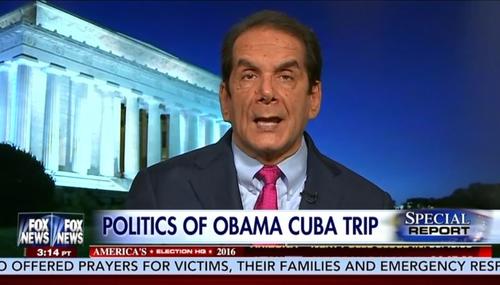
Krauthammer: Obama Is on a ‘Holiday Trip' to Cuba as 'The World Burns'
March 22nd, 2016 9:23 PM
Fox News contributor, frequent Special Report panelist, and syndicated columnist Charles Krauthammer was given his own segment on Tuesday night’s Fox News Channel (FNC) show in light of the Islamic terror attacks in Brussels and he used his airtime to berate President Obama for his “ideological holiday trip” to communist Cuba “while the world burns.”
Video
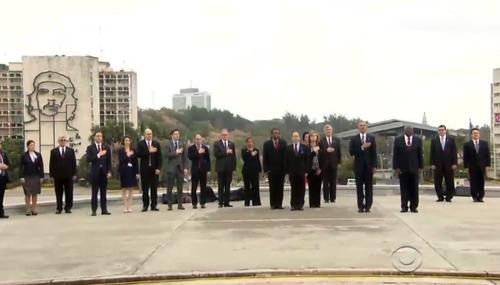
ABC, NBC Ignore President Obama's Photo Op with Che Guevara Mural
March 22nd, 2016 12:22 AM
On Monday night amidst the voluminous amount of Cuba coverage, ABC’s World News Tonight and NBC Nightly News made sure to not inform their viewers of an ominous and disturbing backdrop hours earlier when President Obama and a portion of the U.S. delegation stood in Havana’s Revolution Square with a mural of the brutal leftist leader Che Cuevara in the background.
Video
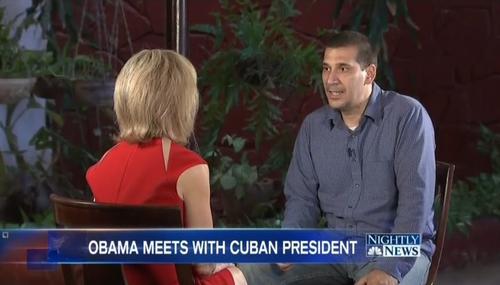
Mitchell Lectures Detained Cuban Dissident on Benefits of Obama Visit
March 21st, 2016 10:29 PM
NBC News chief foreign affairs correspondent/MSNBC host Andrea Mitchell continued to heap praise on President Obama’s decision for the U.S. to reestablish relations with Cuba to the point where she briefly lectured a recently detained Cuban dissident on Monday’s NBC Nightly News about the benefits of the President’s visit: “The President's argument is if I come, if we talk, I can make progress.”
Video
Muir: Does Castro 'Have a Point' About No U.S. Universal Healthcare?
March 21st, 2016 9:20 PM
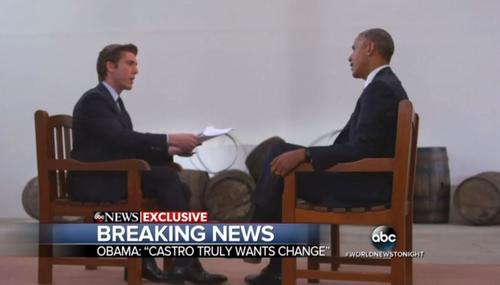
In what was otherwise a solid interview of President Obama that focused heavily on communist Cuba’s horrid human rights record, ABC’s World News Tonight anchor David Muir dropped the ball when he wondered if Cuban President Raul Castro is onto something when criticizing the United States for not being an authority on human rights when the U.S. lacks guaranteed rights to food and health care. “But…