Video
Bezos-Owned WashPost Whines IRS ‘Needs More Money’ Day Before Tax Day
April 21st, 2022 11:30 AM
The newspaper owned by the second richest man in the world actually claimed that the Internal Revenue Service needs— wait for it — more money. The Washington Post Editorial Board published an extraordinarily tone-deaf piece the day before Tax Day 2022 headlined, “The IRS urgently needs more money and staff.”
Video
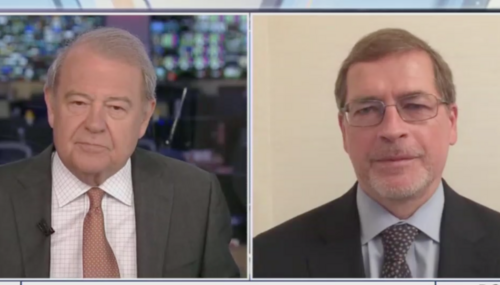
WATCH: Grover Norquist SHREDS Biden’s Trillion-Dollar Tax Plans
August 21st, 2020 12:08 PM
Americans for Tax Reform founder Grover Norquist struck down the idea that Democratic presidential nominee Joe Biden’s tax hikes will be good for people’s wallets and life savings.
Video
OF COURSE! CNN Hack Blames Reagan for High Corona Death Toll in U.S.
July 12th, 2020 8:05 PM
On his Sunday morning show, CNN host Fareed Zakaria opened with a commentary in which he blamed President Ronald Reagan for the U.S. government's failure to minimize the COVID-19 death toll as he argued that giving more funding to government agencies would have led to fewer deaths.
Video
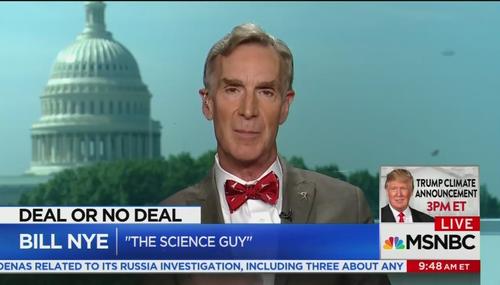
Nye Rants: 'You Can't Build a Border Wall Against...Emissions'
June 1st, 2017 2:41 PM
Bill Nye, the bow-tie wearing “Science Guy”, who, despite his degree in mechanical engineering, has somehow obtained clout as an expert on anthropogenic climate change, appeared with Americans for Tax Reform president Grover Norquist on Stephanie Ruhle’s program on MSNBC Thursday morning to discuss the ramifications of President Trump’s reported plans to leave the Paris Climate Agreement.…
Conservative Leaders React to Presidential Debate, Lambaste Moderators
October 10th, 2016 1:26 PM
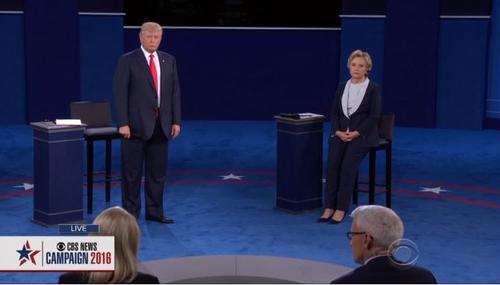
Following the second 2016 presidential debate on Sunday night between Democratic candidate Hillary Clinton and Republican candidate Donald, a diverse array of conservative leaders (including Media Research Center President and Founder Brent Bozell) offered their reactions to the proceedings and the biased performances of debate co-moderators Anderson Cooper and Martha Raddatz.
NYT Critic Loves BLM-Style Doc With 'Galvanizing' Commie Angela Davis
September 30th, 2016 8:28 PM
The front of Friday’s New York Times Arts section featured the paper’s politically correct movie critic Manohla Dargis, “From Shackles to Prison Bars,” a review of activist filmmaker Ava DuVernay’s documentary “13TH.” It’s no surprise that left-wing Black Lives Matter propaganda moved her to tears: Dargis is preoccupied with race, valuing racial bean-counting in movies over artistic excellence…
Video
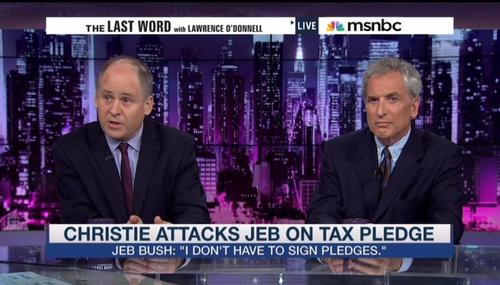
Jonathan Alter: Norquist’s Anti-Tax Pledge ‘Helped to Wreck’ the U.S.
August 13th, 2015 10:37 AM
Wednesday night on The Last Word with Lawrence O’Donnell, MSNBC political analyst Jonathan Alter claimed that Grover Norquist’s anti-tax pledge “has helped to wreck the United States." The discussion centered around New Jersey governor Chris Christie’s decision to sign the pledge, and Jeb Bush’s refusal to do so. The Newsweek veteran declared the pledge was “about the worst kind of public policy…
Ed Schultz Slimes Grover Norquist: May Be ‘Race Baiting’ With Anti
February 13th, 2014 3:30 PM
It wouldn’t be MSNBC if one of the cable hosts didn’t smear a conservative as racist. On Wednesday, Ed Schultz hinted that Grover Norquist, the head of Americans for Tax Reform, might be “race baiting” by placing ads warning about the impact of unionization.
Schultz was talking to Democratic Congressman Steve Cohen over possible unionization of a Volkswagen plant in Chattanooga, Tennessee. …
Norquist Demolishes Maher: ‘He Doesn’t Understand the Difference B
July 20th, 2013 11:38 AM
With Grover Norquist’s help, Bill Maher once again made a fool of himself Friday evening.
In the middle of an HBO Real Time discussion about ObamaCare, the host seemed shocked to hear that Bob Dole isn’t a real conservative leading Norquist to derisively comment to former Congressman Connie Mack (R-Fl.), “He doesn’t understand the difference between Reagan and Dole” (video follows with…
Daily Kos Week in Review: Shooting an Elephant
February 22nd, 2013 10:53 PM
Kossacks are rarely short of hostility and condescension for Republicans, but their blasts at the Grand Old Party and its members seemed especially abundant this past week.
As usual, each headline is preceded by the blogger's name or pseudonym.
PBS NewsHour Finally Interviews Norquist On Fiscal Cliff; Anchor Woodr
December 13th, 2012 3:30 PM
Finally, Grover Norquist was the featured guest on the PBS NewsHour’s segment on the fiscal cliff. After previous editions of the program featured softball interviews with Paul Krugman and Max Richtman -- two members of the far left who oppose entitlement reform -- as well as moderate conservative Republican Senator Bob Corker (R-Tenn.), the NewsHour saw it fit to give time to the anti-tax…
Bozell: Liberal Media Are 'Unelected Lobbyists' for Tax Hikes, More Sp
December 7th, 2012 11:12 AM
Cokie Roberts and other outspoken liberal journalists are "unelected lobbyists" in the very same sense that they charge Americans for Tax Reform president Grover Norquist is. "From her perch at ABC News," as an ostensible journalist, Roberts is agitating for tax hikes, NewsBusters publisher Brent Bozell observed on the December 6 edition of Fox News Channel's Hannity. Rather than reporting the…
MSNBC Online Interviews 'Grover Norquist' of the Immigration Debate: P
December 5th, 2012 4:10 PM
Founded by Roy Beck in 1998, Numbers USA is a grassroots organization and an influential lobbyist group that concerns itself with immigration reform and the threat of mass amnesty. As the unemployment rate among the citizenry continues to grow, over one million permanent work authorizations are handed out each year to immigrants -- further saturating an already stagnant labor market.
Beck…
Media Follow Lead of Left-Wing Groups in Grover Norquist Attack
December 5th, 2012 9:59 AM
Liberals can’t stand Grover Norquist. For years, they have lambasted and name-called Norquist, the president of American’s for Tax Reform: a staunch anti-tax hike group. But now the liberal media is also focused on him, in some cases rejoicing that he might lose his “stranglehold” over Republicans on the issue of taxes.
Left-wing websites like Daily Kos, Salon and The Huffington Post all…