CNN Mourns 'Lost' Media 'Titans' – Including Williams and Stewart
February 13th, 2015 5:06 PM
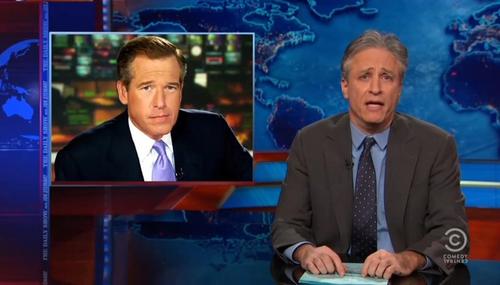
Frank Pallotta of CNN Money hyped in a Friday article that "in just one week, the media world has lost, in one way or another, four of its titans" – suspended NBC News anchor Brian Williams, liberal Comedy Central host Jon Stewart, CBS correspondent Bob Simon, and David Carr of the New York Times. Pallotta played up that "if the impact of losing Williams wasn't enough, in the same hour on Tuesday…
Video
CBS, ABC Mock Arrogant Brian Williams's 'Dumb Decisions'
February 11th, 2015 4:46 PM
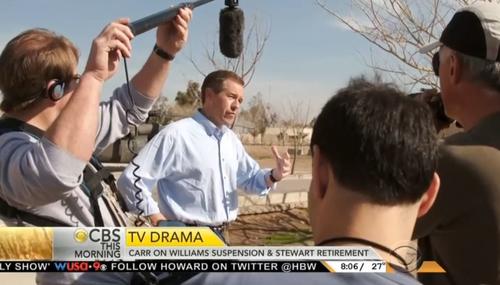
In the wake of a six month suspension for NBC anchor Brian Williams, ABC and CBS on Wednesday offered mocking coverage of their competitor's downfall. New York Times reporter David Carr appeared on CBS This Morning to deride: "...Everyone, including Brian, thought he was maybe too big to fail...Turns out, he's not the most important thing."
NYT's David Carr: Dean Baquet Threatened to Resign If Abramson Stayed
May 19th, 2014 11:25 AM
Last night (at NewsBusters; at BizzyBlog), I pointed to the track record of Dean Baquet, who has ascended to the hallowed perch of executive editor at the New York Times, and observed that "someone who has clearly been a troubling and disruptive presence is now in charge."
Two incidents spanning seven years support my contention. The first occurred in 2006 at the Los Angeles Times, where…

NY Times Notes 'Conservative' Breitbart Expansion, But Glenn Greenwald
February 17th, 2014 2:28 PM
The “new media” is expanding in the digital realm, but one trend of liberal bias certainly isn’t new: While The New York Times repeated and repeated that expanding Breitbart News network is “conservative,” left-wing ventures by Glenn Greenwald and Ezra Klein were apparently non-ideological, and drew no ideological labels of any kind – liberal, leftist, progressive – at all.
On the front of…
NY Times Picks Liberal Who Bashed Fox News as ‘Un-American’ to Rev
January 13th, 2014 2:03 PM
In 2009, Jacob Weisberg argued “The Australian-British-continental model of politicized media that Murdoch has applied at Fox is un-American.” This makes him a natural choice for The New York Times in picking a reviewer for Gabriel Sherman’s new anti-Roger Ailes biography “Loudest Voice in the Room.”
In Weisberg’s opinion, instead of helping the GOP defeat Obama, “Ailes effectively sabotaged…
Bozell Column: '60 Minutes,' Tool of the State
December 24th, 2013 10:18 PM
The New York Times published an unintentionally humorous headline on December 23: “When ‘60 Minutes’ Checks Its Journalistic Skepticism at the Door.” Times media columnist David Carr is suddenly stunned that “60 Minutes” has aired a puff piece on a serious political matter.
In his article, Carr didn’t breathe a word about Steve Kroft’s long history of servile interviews with Barack…
NYT Columnist Disdains Justice Scalia for Avoiding Liberal Media and C
October 11th, 2013 11:02 PM
From inside The New York Times – where they like to believe they’re not insular, even though their idea of a fierce conservative is David Brooks – media columnist David Carr is carping about Supreme Court justice Antonin Scalia's interview where he said he doesn’t read the Times or The Washington Post.
Scalia proved “that the tendency to limit one’s sources of information to avoid dissonance…
New York Times Hails the Humorist Chris Hayes: 'Very Well Done,' 'Bril
August 5th, 2013 3:57 PM
You can always make fun of white people. New York Times media writer David Carr bowed deeply to the satirical skills of MSNBC host Chris Hayes and his satire accomplice Cord Jefferson of Gawker.com for making fun of the dreadful moral state of white youth, and a "white criminal culture" which white elders and the "mainstream media" fail to condemn.
Carr said Hayes put on “a satire meant to…
NYT Columnist: Rolling Stone 'Committed An Act of Journalism' With Tsa
July 18th, 2013 6:03 PM
During a report on Wednesday's NBC Nightly News on the widely panned cover of Rolling Stone magazine featuring Boston bomber Dzhokhar Tsarnaev, a sound bite was included of New York Times media columnist David Carr defending the offensive display: "I think that Rolling Stone committed an act of journalism in both publishing this photo and publishing the story that they did." [Listen to the…
MSNBC Panel Fawns Over NYT Writer 'Proud' Of Mother's Abortion
July 9th, 2013 5:11 PM
The July 9 broadcast of Now with Alex Wagner wouldn’t be complete without a panel discussing Texas State Senator Wendy Davis – and the abortion battle in Texas. Yet, it reached a new level with New York Times op-ed contributor Beth Matusoff Merfish declaring that she was “proud” her mother underwent an abortion since “she had the wisdom and the courage to know that her own potential would be…
Hold Your Phone: New York Times Publishes MRC Letter to the Editor On
October 4th, 2012 11:21 AM
MRC's Christian Robey suggested a letter to the editor on Monday for David Carr's strange column attacking MRC's letter attacking the media for rigging this presidential election by hounding Romney and protecting Obama. Carr wrote Brent Bozell assembled "conservative royalty" to attack "ostensibly tendentious coverage."
Some of us were skeptical that a liberal newspaper would deign to publish…

NYT Movie Critic A.O. Scott Defends Criminal Vandalism of 'Savage' Sub
October 1st, 2012 2:03 PM
As shown on Times Watch this morning, New York Times media reporter David Carr may pooh-pooh the idea of liberal bias. But he's a stronger supporter of the First Amendment than some of his Times colleagues, like movie critic A.O. Scott, who ludicrously defended a left-wing journalist's vandalism of the subway poster as "free expression" and even "democracy."
In "The Sweet Spot," a weekly…
NYT: Conservatives Are Taking Over the Media
October 1st, 2012 9:09 AM
In an essay published on page B1 of today’s New York Times, columnist David Carr seeks to contradict an open letter which MRC president Brent Bozell and other leading conservatives signed which calls out the media for their favoritism toward President Barack Obama.
He appears to have a few problems making an intellectually coherent argument, however.
NY Times Disdains Biased Media Owner -- A San Diego Conservative Charg
June 11th, 2012 7:44 AM
David Carr of The New York Times wrote an unintentional laugh line for Monday's paper: "There is a growing worry that the falling value and failing business models of many American newspapers could lead to a situation where moneyed interests buy papers and use them to prosecute a political and commercial agenda."
No! Could you believe a newspaper would follow a political agenda based on what…