NYT's Weisman Takes Dem Dictation on GOP; Romney Now Right on Russia?
March 20th, 2022 12:52 PM
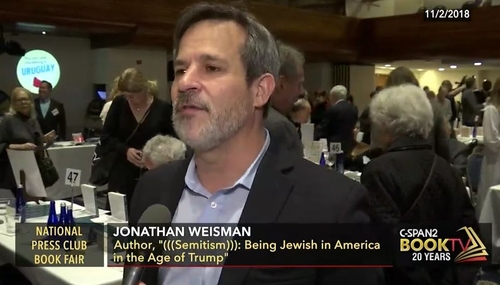
New York Times reporter Jonathan Weisman is trying hard to portray the Republican Party as extremist, or at least hypocritical, concerning the Russian assault on Ukraine. He wrote “Republicans, Once Harsh Ukraine Critics, Pivot to Strong Support," suggesting "the bulk of the Republican Party [is trying] to get on the right side of history amid a brutal Russian invasion of Ukraine." So…
HYPOCRITES: The NY Times Cares About Some Violence, Just Not THIS
September 3rd, 2020 12:20 PM
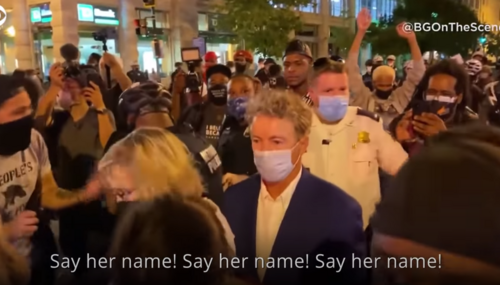
Coverage from the New York Times of the spate of left-wing rioting and attacks on conservatives remains stuck in denial mode, as unwittingly demonstrated in “Three Conspiracy Theories, Debunked." While purporting to knock Trump, the Times actually reveal their paper’s own galling dismissal of left-wing thuggery against conservatives like Sen. Rand Paul.
NYTimes: Trump-Inspired ‘Spasm of Hate’ Leaves U.S. Asians ‘Terrified'
March 25th, 2020 9:58 PM
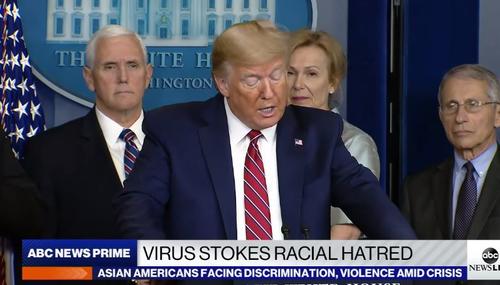
The New York Times invariably provides guilty liberal spin to any crisis, including the coronavirus pandemic. Tuesday’s front page featured “Spit On, Yelled At, Attacked: Chinese-Americans Fear for Their Safety -- As bigots blame them for the coronavirus and President Trump labels it the ‘Chinese virus’ many Chinese-Americans say they are terrified of what could come next.” An editorial also…
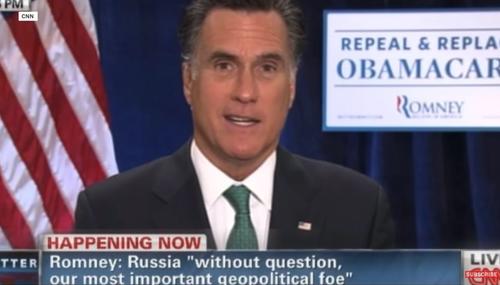
NYT Hypocrisy on Russia: Romney's 2012 Warnings 'Reckless...Unworthy'
July 20th, 2018 7:01 PM
The media is ready to convict President Trump of “treason” for his shaky summit in Helsinki with Russian dictator Vladimir Putin and has been obsessed with Trump’s supposed “collusion” with Russia during the 2016 election campaign. But this new-found fear of all things Russia is more than a little politically expedient. The New York Times is just one outlet that dismissed the very idea of Russia…

NY Times Shamelessly Links Gun Control to MLK, 60s Violence
April 5th, 2018 3:44 PM
The New York Times shamelessly shoehorned gun control into Martin Luther King’s civil rights legacy by way of Richard Oppel Jr.’s tilted history lesson of the 1960s on Wednesday, “Killing Led, at Last, To Gun Restrictions,” part of the series “King’s Legacy: A Fight for Social Change.” Oppel lamented, in the paper’s alleged news section, that if only America had only been wise enough to pass…

Is The New York Times Trying to Paint Bergdahl as a Victim/Hero
June 10th, 2014 7:15 AM
The New York Times has sunk, yet again, to a new low. Only this time, they may have created an even bigger conundrum for President Obama.
In a clear and desperate attempt to whitewash Obama's ill-fated swap of what is increasingly appearing to be an army deserter for five unrepentant deadly dangerous terror leaders (two of whom have been named war criminals by the United Nations) for a U.S.…
NYT Goes After Bergdahl's 'Raggedy' Unit Again, This Time in a Sunday
June 9th, 2014 12:45 AM
On Thursday, the editorial board at the New York Times, reacting to the growing firestorm over the release of five hardened terrorists from Gitmo in return for the Army's Bowe Bergdahl, went after Bergdahl's "army unit’s lack of security and discipline." It then incredibly claimed that a classified army report described in a separate Times dispatch that day suggested that those alleged…

NYTimes Reporter Oppel Misleads on Santorum's 'Phony Theology' Quote
February 20th, 2012 3:15 PM
New York Times reporter Richard Oppel Jr. got emotional in defense of Obama while trailing GOP candidate Rick Santorum through the Midwest: “Santorum Questions Education And Obama.”
Oppel pounced on a Santorum comment on Obama’s “phony theology,” and falsely conflated the remark with rumors that Obama was a Muslim or not American, saying that such talk “got so bad at one point” during the…

NYT Treats 'Trickle-Down Economics' As Factual Term, But 'Death Tax' J
December 9th, 2011 9:29 AM
New York Times reporter Richard Oppel Jr. twice used the term “trickle-down economics” (without the quote marks) in Thursday’s dispatch from the Republican Jewish Coalition Forum in D.C., where several Republican candidates made speeches: “G.O.P. Candidates, at Jewish Coalition, Pledge to Be Israel’s Best Friends.”
“Trickle-down economics” is a derogatory term for the Reaganesque idea that…
Playing Defense: NYT's Oppel Says It's 'Falsehood' for Perry to Call O
November 18th, 2011 11:58 AM
When Gov. Rick Perry attacked President Obama as an elitist, New York Times reporter Richard Oppel Jr. didn’t just quibble with or criticize the attacks as overboard, but banished them to the “realm of falsehood," in Friday's “Perry’s Latest Attacks Distort Obama’s Words and Past.”
NYTimes Warns Perry Tax Plan Would Send Us Back to 'Drastically Auster
October 27th, 2011 8:57 AM
The New York Times greeted Rick Perry’s “20-20” flat-tax plan with predictable hostility. In Wednesday's “Perry Calls His Flat Tax Proposal ‘Bold Reform,” Richard Oppel Jr. took only two sentences to sniff “the plan would grant a major tax cut for the wealthy”. He also saw it “requiring drastically austere federal budgets,” of the sort we haven’t seen since...well, President Bill Clinton,…

NY Times Already Predicting Racist Camp Name Will Hurt Rick Perry
October 4th, 2011 11:46 AM
Richard Oppel Jr.’s front-page New York Times story on Monday, “Snag for Perry: Offensive Name At Texas Camp,” catches up with a long, thinly sourced Washington Post article on a hunting camp in Texas, leased by Perry’s family, whose name included a racial epithet written on a rock by a camp entrance.
Although the Perry connection is extremely tenuous (the camp’s name predated the Perry…