It Is a Time for Choosing (Again)
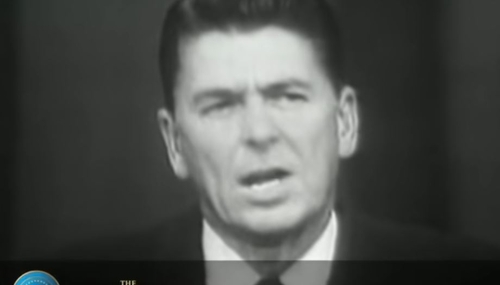
Sixty years ago this week, Ronald Reagan delivered a speech in support of Barry Goldwater’s presidential bid. It was dubbed “A Time for Choosing.” Re-reading the speech, or watching it on YouTube, is a reminder how little has changed in six decades. Some of the issues debated in 1964 are still being argued and unresolved today. On taxes and spending, Reagan noted: “Thirty-seven cents out of…

PBS Flouts Goldwater Rule: Invites Shrink to Diagnose Trump Dementia
Anchor Amna Nawaz hosted clinical psychologist Ben Michaelis on Thursday’s PBS News Hour for a segment that felt very much like a violation of the psychiatric profession's so-called Goldwater Rule: If he is reelected, former President Donald Trump, now 78 years old, would be the oldest president ever elected. After a number of appearances where his remarks were rambling or incoherent…
The Atlantic Becomes a 'Dehumanizing' Tool for Kamala
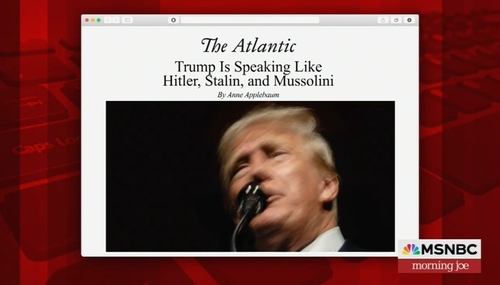
The Atlantic was once a respectable publication founded in 1857 and in the following decades featuring some of the most valued writers in America with names like Ralph Waldo Emerson, Oliver Wendell Holmes, Harriet Beecher Stowe and others. Now it's trashing Trump for "dehumanizing language" -- as if the Left hasn't done that to Republicans for decades.

Meacham: 'In Their Hearts,' Republicans Know Supporting Trump Is Wrong
On Morning Joe, Jon Meacham says that in their hearts, traditional Republicans know that their support of Trump is wrong. Meacham also says that, looking to Washington's Farewell Address for guidance on the central thesis of the American Republic, people can ignore the central role that Washington placed on religion.
Sad Scarborough Suggests: Time For Dems To Tell Biden It's 'Over'
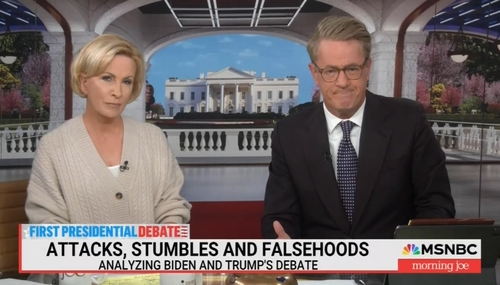
On Morning Joe, commenting on Biden's disastrous debate performance, Joe Scarborough suggests that, just as Barry Goldwater told Richard Nixon during Watergate that it was "over," and he had to resign the presidency, Dems need to tell Biden that he needs to drop out of the race.

The Importance of Rupert Murdoch
The announcement that the News Corporation’s founding father Rupert Murdoch was transitioning to “chairman emeritus” status has opened the flood gates for both admirers and critics.
'Bedwetting' Morning Joe Refuses To Believe Bad Biden Poll!
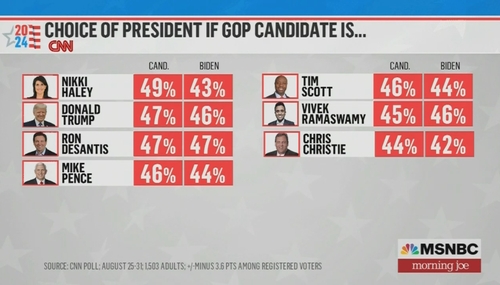
Morning Joe doubts a CNN poll showing Biden tied with Trump and losing to almost all the other Republican contenders. Jon Meacham flatly says, "I don't believe these polls."
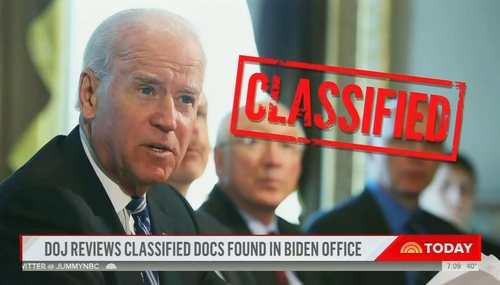
Biden’s Document Deluge and America Becoming a Banana Republic
WASHINGTON — Gen. Muhoozi Kainerugaba of Uganda has announced to the world via his Twitter account that he is offering Italy’s prime minister, Giorgia Meloni, a dowry of 100 cows if she will marry him. Kainerugaba is the 48-year-old son of Uganda’s prime minister, and his Twitter account is taken very seriously, especially in Uganda. In other news, our president, Joe Biden, heard from his…
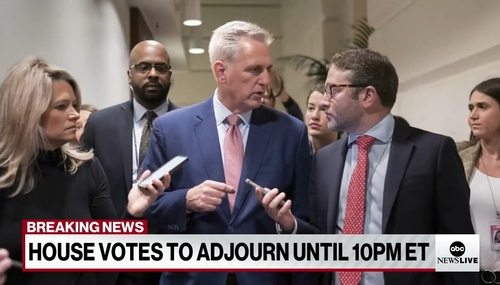
The Media and the Speaker Fight
So the media template of the GOP Speakers fight is - shocking I know - the same old, same old.
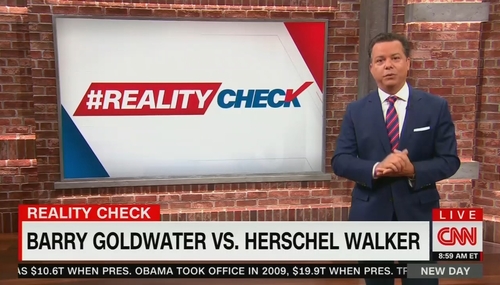
Avlon: Pro-Lifers Are Using 'Muscle of Religion' To Be Anti-Freedom
CNN senior political analyst John Avlon wrapped up Wednesday’s New Day with one of his characteristically reality-free reality checks where he proclaimed that being pro-life is anti-freedom, anti-individualism, and just another way to push religion. Avlon tried to justify this partisan diatribe by citing conservative icon Barry Goldwater.
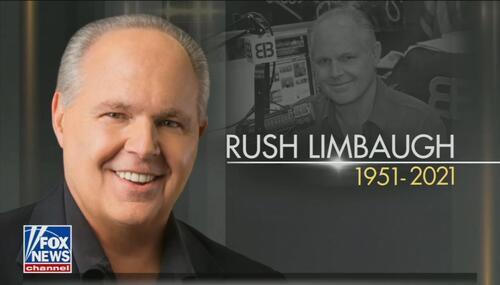
An Appreciation of the Rush Limbaugh Media Revolution
Call it Rush Limbaugh’s media revolution. To explain? Hop in the time travel machine and come with me back to 1963 and 1964. Arizona’s Republican Senator Barry Goldwater, dubbed “Mr. Conservative” as he was the unofficial standard bearer of the aborning conservative movement, was getting ready to run for president in 1964, and finally did so.

Morning Joe Advice to Dems: Stop Campaigning on 'Reason,' Act Like GOP

Sneering Scarborough: Trump Will Be 'Routed,' Lose in 2020 'Landslide'