Taibbi Says Ex-FBI Lawyer Impeded Twitter Release of Hunter Biden Docs
December 6th, 2022 6:36 PM
As a top lawyer for Twitter, Jim Baker had a duty to his client to put Twitter’s ethics above his own.

At AP, Carbon Tax-Pushing Republicans Are Now ‘GOP Senior Statesmen’
February 8th, 2017 12:12 PM
At the Associated Press, George P. Shultz, James A. Baker III and six other formerly despised Republicans and business leaders have suddenly become "GOP senior statesman." What accounts for this instant transformation? The group is pushing what it calls a "Conservative Case for Carbon Dividends.” In a Tuesday evening Wall Street Journal op-ed, Shultz and Baker advocated "a gradually increasing…
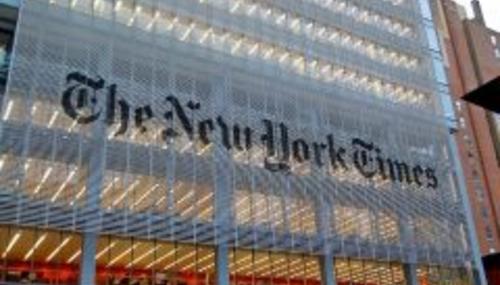
NY Times: GOP Shows 'Unquestioned...Lockstep' Support for Israel
March 28th, 2015 7:29 PM
Did you know that Republicans are in "unquestioned" "lockstep" support for Israel? That's how some New York Times headline writers saw it in an analysis by reporter Peter Baker, "For Republican Candidates, Support for Israel Is an Inviolable Litmus Test."
The initial online headline portrayed the GOP as mindless slavish drones for Israel: "Republicans, in Shift, Demand Lockstep Support for…
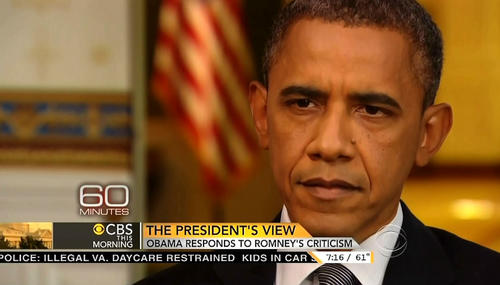
Ed Schultz Hyperventilates That Voter ID Laws ... 'Attack Women
September 13th, 2012 11:45 AM
Stay tuned as Ed Schultz describes how the massive asteroid hurtling toward earth and threatening to end all life on the planet puts women and minorities at the greatest risk ...
Sure he's a loose cannon, but Ed Schultz is a predictable one at that. (Audio after page break)

Morgan Freeman: There Is a ‘Great Attempt’ to ‘Disenfranchise
June 21st, 2012 10:27 AM
As NewsBusters previously reported, Oscar-winning actor Morgan Freeman said Tuesday, "We’re going to be in a lot of trouble if we don't reelect [Barack Obama] because people on the other side of the fence scare me."
In the second part of his Tavis Smiley Show interview aired Wednesday on PBS Freeman said, "Women, Hispanics, blacks, there is a large attempt, a great attempt, at…
James Baker to David Gregory: Financial Deregulation Happened on Clint
February 6th, 2011 5:47 PM
Former Reagan Chief of Staff James Baker on Sunday took issue with having the 40th President blamed for financial deregulation.
When "Meet the Press" host David Gregory brought this up at the end of his program, Baker replied, "[The deregulation of the financial industry didn't occur on Ronald Reagan's watch, it occurred for the most part, I think, on Bill Clinton's watch" (video follows with…
Brokaw Ignores Obama's FDR-Like Refusal to Work With Bush Economic Tea
November 23rd, 2008 3:21 PM
Though given a perfect opportunity to do so, Tom Brokaw on Sunday chose not to discuss the similarities between Franklin D. Roosevelt's refusal to work with President Herbert Hoover on solving the Depression before he was inaugurated in March 1933 and president-elect Barack Obama doing the same thing today with George W. Bush. For those not familiar with the historical reference, the financial…
AP Writer Falsely Casts Voter ID Laws As a 'Mainly' Partisan Issue
December 31st, 2007 6:19 PM
The Associated Press's Mark Sherman, as noted by Jim Taranto at Best of the Web, "reports on a pending Supreme Court case in a way that seems to give both sides their due, but in substance does not." Here are the first three paragraphs of Sherman's report (bolds are mine): The dispute over Indiana's voter ID law that is headed to the Supreme Court in January is as much a partisan political drama…