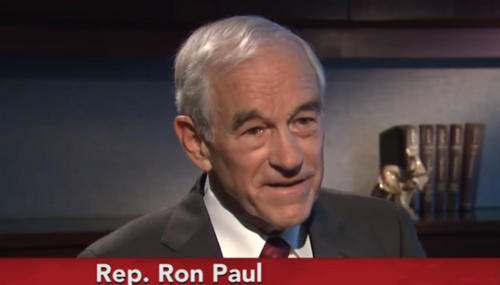
Did US Pressure Twitter to Ban Alex Berenson? Ron Paul Asks
July 14th, 2022 5:29 PM
“Free speech itself was under attack.”
Study
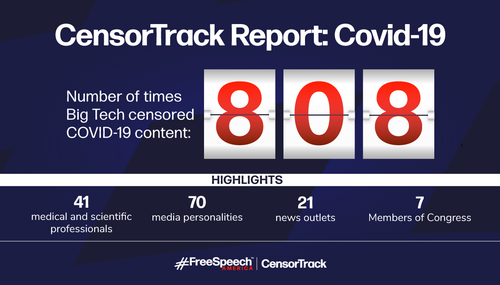
STUDY: Over 800 Cases of Big Tech Censoring COVID-19 Debate
February 9th, 2022 11:05 AM
Big Tech speech restrictions turned COVID-19 into the most pro-censorship environment in the U.S. at least since World War II. Media Research Center has found more than 800 examples of bans, deleted content, and other speech restrictions related to the virus, as well as to resultant vaccines masking and government policies.
Dr. Ron Paul Says He Was Suspended from Facebook for 90 Days
January 15th, 2022 2:37 PM
Dr. Ron Paul said that he has been suspended from Facebook for 90 days. Paul is a former congressman from Texas. The offending post was about the efficacy of the Pfizer vaccine and comments from the CEO of the company.
UPDATE: YouTube Makes 'Mistake,' Reinstates Ron Paul Institute Channel
September 30th, 2021 6:19 PM
YouTube censored, and then reinstated the Ron Paul Institute channel on its platform. Ron Paul, a former congressman from Texas, spoke out.
Ron Paul Advises Rand on Running for President: ‘Be Very Cautious
September 27th, 2013 10:50 AM
Ron Paul has some good advice for his son Rand concerning running for president in 2016.
Appearing on NBC’s Tonight Show Thursday, Paul said, “Be very cautious – you could get elected.”
Chuck Todd: Half the 2012 GOP Presidential Candidates Ran to Get a Sho
August 19th, 2013 10:24 AM
Chuck Todd doesn’t have a lot of respect for members of the GOP.
On MSNBC’s Morning Joe Monday, NBC’s Chief White House correspondent accused “about half the Republican field from 2012” of “simply [running] for exposure to get a talk show, or for exposure to get a radio deal, or a columnist, or a deal with Fox” (video follows with transcript and commentary):
WashPost's Michael Gerson Slashes Limbaugh, Levin, and Ron Paul; Levin
June 14th, 2013 11:45 AM
Washington Post columnist Michael Gerson – President George W. Bush’s top speechwriter from 2001 to 2006 – was hired by the Post in 2007 because he would be “a different kind of conservative” and "an independent voice." Translation: he would slash other people on the right as dishonest, dishonorable, unpatriotic people. He has not attacked talk-show hosts on MSNBC or other leftists this way…
Ron Paul: Obama Should Send Snowden a Thank You Note - We're Getting T
June 10th, 2013 10:12 PM
Ron Paul on Monday weighed in on the Edward Snowden/National Security Agency leak scandal in a way that only he could.
Appearing on CNN's Piers Morgan Live, Paul said of Snowden, "I think the president ought to send him a thank you letter, because the president ran on transparency, and we're getting a lot of transparency now. So, finally we're getting the president to fulfill his promise…
NSA Leaker Snowden a Ron Paul Supporter
June 10th, 2013 11:09 AM
We're beginning to learn a lot more about National Security Agency leaker Edward Snowden.
For instance, it was discovered Monday that Snowden supported Ron Paul for president last year.
Ron Paul Fans Refuse to Vote Romney
August 27th, 2012 10:57 PM
Of all the Monday newspaper reports on the Ron Paul rally in Tampa Sunday, Peter Nicholas of The Wall Street Journal best captured the fanatic nature of Paul's followers. Many said they would not vote for Romney this fall.
Take "Eric Hogan, 28, of Pennsylvania, who wore a T-shirt that read 'My President Is Paul,' said he wouldn't vote for Romney or Obama because "the will of the people is…
MSNBC Fail: Graphics Team Confuses Ron Paul with Paul Ryan
July 18th, 2012 12:48 PM
On today's edition of MSNBC Live, anchor Thomas Roberts talked with Michael Barbaro of the New York Times discussing the so-called Young Guns who are on the short list to be Mitt Romney's running mate: Sen. Kelly Ayotte (N.H.), Rep. Paul Ryan (Wis.), Gov. Bobby Jindal (La.), and Sen. Marco Rubio (Fla.).
But when the MSNBC graphics team showed photos of the Young Guns, they accidentally used a…
Huh? Rachel Maddow Claims GOP 'Being Taken Over' by Ron Paul
July 11th, 2012 10:16 PM
Rachel Maddow is indignant that more people in media don't share her penchant for elevating minor news to mountainous stories.
Last night, for example, Maddow flogged away at one of her favorite hobby horses, her dubious claim that Ron Paul's spectral presence in the presidential campaign portends seismic upheaval within the GOP. (video and audio clips after page break)
Krugman's TV Blitz: 100% Debt OK, Paul Ryan's Budget Is 'Nonsense,' Wa
May 3rd, 2012 7:43 AM
New York Times columnist Paul Krugman is doing a television tour for his book "End This Depression Now!" Charlie Rose interviewed him twice, once on CBS This Morning Monday, then that night for the full hour of Rose's PBS talk show. Krugman appeared on Bloomberg TV Tuesday debating Ron Paul, and the friendlier confines of MSNBC's Rachel Maddow show that night.
Krugman's economic recovery plan…
WaPo's Quinn Slams Rush Limbaugh Audience: 'Have You No Shame
March 6th, 2012 5:50 PM
In a March 5 post in which she deemed Rush Limbaugh's Saturday apology to Sandra Fluke as insufficient to be rewarded by her holiness, Washington Post "On Faith" feature editor Sally Quinn pounded her electronic pulpit yesterday, condemning Rush's audience for being complicit in Limbaugh's sin of daring to bombastically criticize the Left (emphases mine):