Video
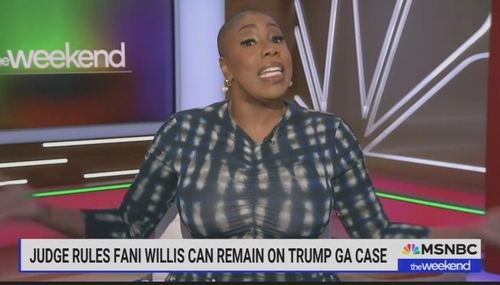
MSNBC Host: 'A Little Sexism, Racism' Behind Fani Investigation
March 16th, 2024 5:39 PM
On The Weekend, the MSNBC show she co-anchors, Symone Sanders-Townsend alleges that there was "a little sexism, a little racism" behind the investigation into Fani Willis' relationship with Nathan Wade, and that if it has been some many named "Frank" having a relationship with "Susie," it wouldn't have happened.

Should the West Seek an Off-Ramp in Ukraine?
October 6th, 2022 5:47 PM
How does the war in Ukraine end? This is precisely the question no one is supposed to ask these days. The supposition by our thought leaders seems to be that if we keep up the pressure on Vladimir Putin in Ukraine, he'll fold and go home; his threats to use tactical nuclear weapons on the battlefield are nothing more than saber-rattling. He will then retrench on the domestic front, resolidify…

Video
Gen. Petraeus DESTROYS ABC Fear Mongering, Trump Not for War With Iran
May 19th, 2019 1:33 PM
Despite warnings from the Trump administration about an imminent attack by Iran or its proxies against American allies and forces, and the attack against oil tankers that followed, the liberal media has been claiming the threat from Iran was being overblown by an administration itching for a war. But, during an interview with ABC’s chief global affairs correspondent Martha Raddatz for This Week,…
Video
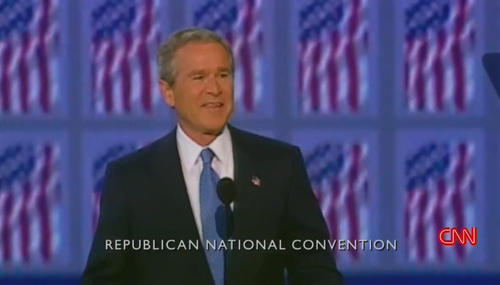
Biased Hackjob: The Worst Moments from CNN’s ‘2000s’ Smear of Bush
July 23rd, 2018 4:02 PM
For some reason, CNN decided that it would air the latest installment of its comprehensive and informative miniseries on recent decades in America history with the 2000s despite the fact that many of the same actors, elected officials, journalists, and TV shows remained relevant into this decade.

Video
Nobody Barnicle's Spoken To Thinks There's Indictable Hillary Offense
May 2nd, 2016 8:21 AM
Mike Barnicle's a guy from the Duke Ellington era, so I suppose it makes sense if he doesn't "get around much anymore." How else to explain his nonsensical statement on today's Morning Joe? When Joe Scarborough asked him why the FBI investigation of Hillary's email is taking so long, Barnicle said "I have not spoken to anyone who believes there is an indictable offense that has occurred."…
Video
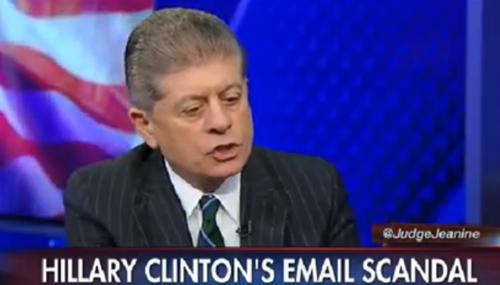
Napolitano: Hillary 'Is a Felon and Should Be Indicted'
February 10th, 2016 12:17 PM
On Judge Jeanine Pirro's Saturday Fox News program, Judge Andrew Napolitano succinctly summarized the implications of the latest revelations concerning Hillary Clinton's use of a private email server while she was the Obama administration's Secretary of State.
One can't help but notice that almost no one else is making Napolitano's obviously valid points. If a Republican or conservative had done…
Video
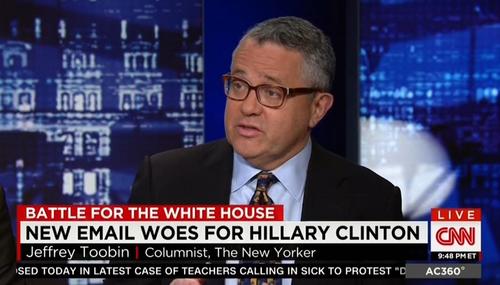
CNN's Toobin: Hillary's E-Mail Scandal Not A 'Big Legal Problem'
January 21st, 2016 3:24 PM
On Wednesday's AC360, CNN legal analyst Jeffrey Toobin downplayed the latest development in Hillary Clinton's e-mail scandal — the revelation that her private e-mail server "contained highly-classified intelligence from the most top secret of programs," as host Anderson Cooper reported. Toobin asserted that "it's a huge political problem," but added, "I don't think it's a big legal problem. I don…
Video
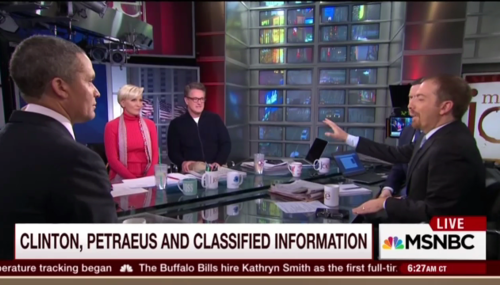
Chuck Todd Claims Petraeus Email Abuse 'Worse' Than Hillary's
January 21st, 2016 8:14 AM
Hillary Clinton's defense lawyers made a stunning appearance on today's Morning Joe, asserting that David Petraeus' mishandling of his emails was "worse" than what Hillary did, and arguing that she should not be charged. Oh, wait: those weren't Hillary's lawyers: they were NBC's Chuck Todd, and politician-turned-professor Harold Ford, Jr.
Can anyone recall this level of naked partisan advocacy…
Video
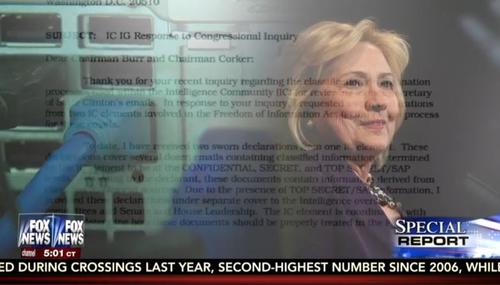
Nets Censor Hillary E-Mail Bombshell; Spend Over 10 Mins on Trump
January 19th, 2016 10:07 PM
Tuesday night offered a classic study of the liberal media and what draws their attention as the “big three” networks of ABC, CBS, and NBC and the Spanish-language networks of Telemundo and Univision all censored from their evening newscasts any mention of a massive development in the Hillary Clinton e-mail scandal in favor of ten minutes and 31 seconds of coverage across five segments on Sarah…
Charlie Rose Probes Petraeus for Hour, Skips Hillary's E-Mail Scandal
November 28th, 2015 12:44 PM
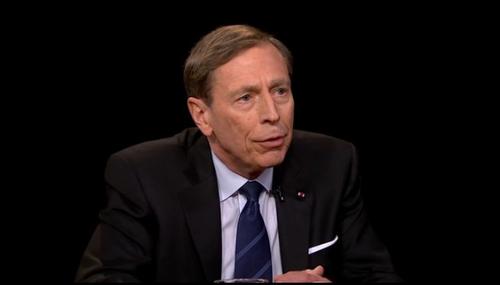
On his PBS late-night talk show on Monday night. Charlie Rose brought on Gen. David Petraeus for an hour to discuss Iraq, Syria, and defeating ISIS. There was one obvious question: Would Rose ask the general about the investigation into Hillary Clinton’s e-mails? After all, Gen. Petraeus was sentenced to two years probation and fined $100,000 for possessing classified information at an…
Video
Krauthammer: Hillary Has ‘Got a Martha Stewart Problem’ on Her Hands
November 12th, 2015 8:43 PM
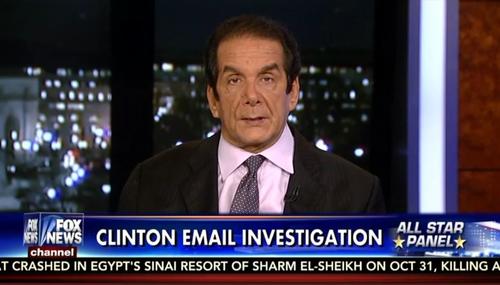
Syndicated columnist and Fox News contributor Charles Krauthammer made his almost-daily appearance on the “All Star Panel” during Thursday’s Special Report and compared Democratic presidential candidate Hillary Clinton to businesswoman-turned-convict Martha Stewart in light of her e-mail server and Clinton Foundation scandals. “Look, right now, what it looks like is she's got a Martha Stewart…
Video
Klein Blames CIA for Benghazi: They 'Should Protect Themselves'
October 20th, 2015 8:53 AM
This could be the worst whitewashing since Tom Sawyer suckered people into helping him with that fence... On today's Morning Joe, Joe Klein cleared Hillary of responsibility for American deaths in Benghazi, and blamed the CIA.
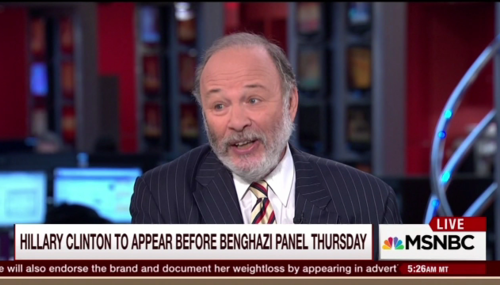
According to Klein, "this really was a CIA station there, not so much a consulate, and those guys should be able to protect themselves in most circumstances." Klein…

Video
NBC Omits Defense Dept. Finding Hillary E-Mails; ABC and CBS Minimize
September 25th, 2015 8:33 PM
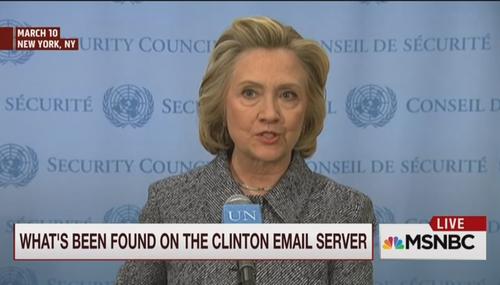
Friday's NBC Nightly News failed to cover how the Defense Department revealed earlier in the day that they found an "email chain that Hillary Clinton did not give to the State Department, as a Reuters report put it. Mrs. Clinton exchanged the e-mails with then-General David Petraeus between January and February of 2009. Anchor Lester Holt did air a 16-second news brief on the other "big news…
Video
Harold Ford's Hillary Defense: Maybe Dishonest But Not 'Unpatriotic'
September 2nd, 2015 10:29 AM
How bad is it getting for Hillary when the best her defenders can come up with is Harold Ford Jr.'s formulation: okay, so the words most associated with her are "liar," "dishonest" and "untrustworthy" but, hey!—she's not "unpatriotic."
On today's Morning Joe, after Ford resorted on Hillary's behalf to the last refuge of scoundrels, Joe Scarborough hit him with a killer question: does Ford think…