NPR Morning Host Makes a Half-Million for Hosting on Saturdays
August 20th, 2019 3:51 PM
On Tuesday morning, syndicated talk-radio host Chris Plante mocked "National Panhandler Radio" for having some seriously high salaries for a taxpayer-subsidized network that begs for listener donations in pledge drives. Plante cited tweets by Washington Post media reporter Paul Farhi from the latest IRS 990 form for nonprofits revealing the high salaries of NPR stars. Plante marveled first at…
On July 4, NPR Replay: How 'God Bless America' Is a 'Syrupy' Whitewash
July 6th, 2018 7:01 AM
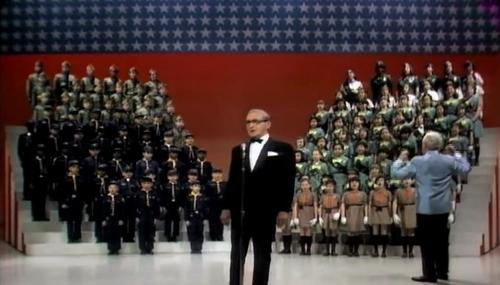
NPR has a habit -- call it "counterintuitive" -- of trashing popular beliefs on major holidays (or holy days). On Good Friday in 2008, for example, NPR's Fresh Air rebroadcast a guest who trashed Christianity. On July 4, 2018, All Things Considered replayed a five-year-old interview suggesting the beloved patriotic song "God Bless America" annoys "many" with its "syrupy nationalism and…

NPR Hypes How California Conservatives 'Benefited' From ObamaCare
July 7th, 2017 11:43 AM
Wednesday's All Things Considered on NPR touted how a conservative portion of California supposedly needs ObamaCare to stay, despite the personal opposition of the people there. Robert Siegel played up that "a lot of people there have benefited from a law Republicans are trying to roll back — the Affordable Care Act, or ObamaCare." April Dembosky of local affiliate KQED spotlighted how "clinics…

NPR Gushes Over Transgender Kid Acting As 'Teacher' to Neighbors
June 2nd, 2016 5:43 PM
Wednesday's All Things Considered on NPR touted an eight-year-old boy who now dresses as a girl serving as an "educator" of sorts about transgenderism — first to his parents, and later to his neighbors and classmates. Correspondent Johnny Kauffman of Georgia affiliate WABE played up how "the city of Kennesaw, where the [boy's] family lives, is in one of the most conservative congressional…

NPR Anchor 'Couldn't Resist' Mocking Ben Carson About 'Hummus'
December 6th, 2015 4:26 PM
On Friday's All Things Considered, NPR anchor Robert Siegel began the "Week in Politics" segment with a serious focus on San Bernardino, but he "couldn't resist" creating a tag-team mockery of conservative presidential candidate Ben Carson for pronouncing Hamas like it rhymed with "Thomas." Like Morning Joe, these media elites wanted to claim he said "hummus," which is funnier.

Video
Dionne, Brooks Tout Obama’s Decision to ‘Politicize’ Oregon Shooting
October 5th, 2015 11:57 AM
During appearances on NPR’s All Things Considered and PBS NewsHour on Friday, the Washington Post’s E.J. Dionne and the New York Times’ David Brooks eagerly touted President Obama’s blatant decision to “politicize” the Oregon school shooting to push gun control.
NPR Finds Expert to Hint Cruz Eligibility Not an 'Open-and-Shut Case'
March 24th, 2015 4:22 PM
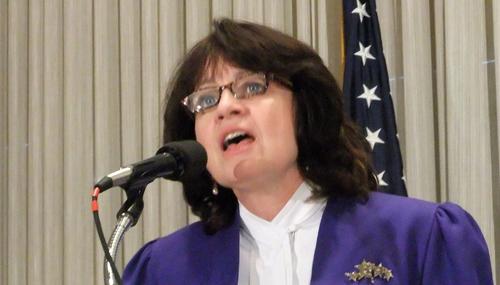
The birther issue is back. No, not the Obama birther crazies; the Ted Cruz birther crazies. In an interview with National Public Radio (NPR) on Monday's All Things Considered, Sarah Duggin of the Catholic University of America’s Columbus School of Law claimed that Ted Cruz’s eligibility for the Presidency is not “an open-and-shut case” because “we don’t know precisely what the framers of the…

NPR Anchor: Obamacare 'Should Be Welcomed by the Public' It Serves
October 14th, 2014 12:46 PM
New York Times columnist Paul Krugman has proclaimed in a 4000-plus-word Rolling Stone article that Barack Obama is one of the most successful presidents in American history. So it’s not surprising that liberal National Public Radio came calling for an interview that aired on Monday night’s All Things Considered.
Krugman’s overarching socialist narrative was that Obamacare is a Earth-shaking…
NPR's Toast to New Republic's 'Joyous Hit Pieces' Skips Glass Scandal
September 19th, 2014 2:42 PM
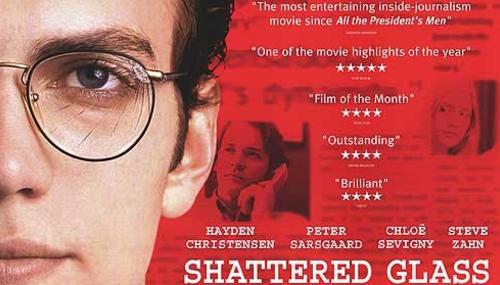
On Tuesday night’s All Things Considered, NPR anchor Robert Siegel awarded a seven-and-a-half minute interview to The New Republic and its editor, Franklin Foer. The magazine is celebrating its 100th anniversary with a new book called “Insurrections of the Mind.”
Siegel found time to ask about a Hendrik Hertzberg book review trashing Ronald Reagan as a “child monarch,” which he described as a “…
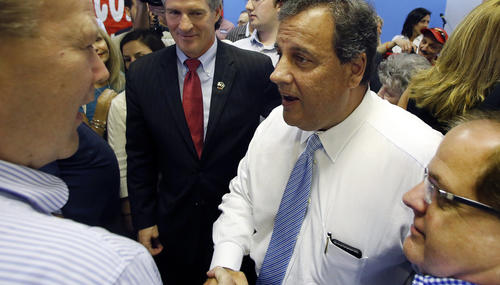
NPR Hypes "Bridgegate" Political Fallout, Ignores Christie Innocence
September 19th, 2014 12:35 PM
Talk about tone deaf at National Public Radio. On Thursday’s All Things Considered, NPR reporter Don Gonyea ran a segment on Governor Chris Christie (R-N.J.) traveling to New Hampshire to campaign with Scott Brown as he seeks to become the next senator from there.
Unsurprisingly, the NPR reporter did his best to play up the “Bridgegate” controversy despite the Department of Justice clearing…
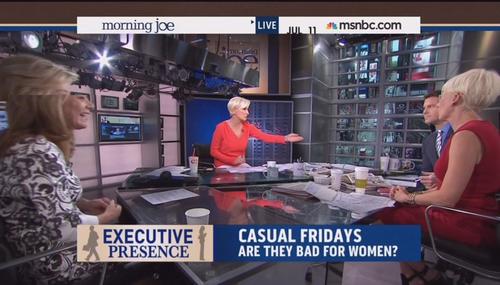
NPR Looks Back at Goldwater's 1964 Convention of 'Cavemen' Applauding
July 11th, 2014 8:13 AM
NPR got in the spirit of anniversaries on Thursday night’s All Things Considered by recalling the 1964 Republican convention in San Francisco. For analysis, they turned to.....New York Times Magazine contributor Sam Tanenhaus, whose lack of political insight was proven by his 2009 book The Death of Conservatism (broadened from a 2009 New Republic essay titled "Conservatism Is Dead.") Oopsy…
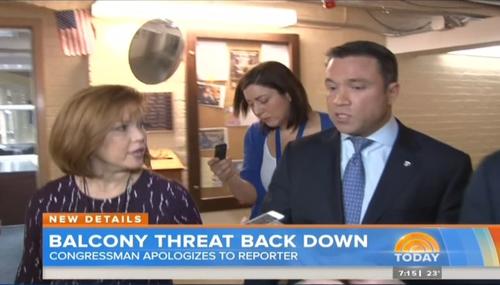
NPR Anchor Audie Cornish Peddles Liberal Talking Points During Intervi
January 30th, 2014 12:09 PM
Sen. Rand Paul sat down with NPR anchor Audie Cornish on the January 29th All Things Considered, and from the moment the interview began, NPR’s listeners knew the likely outcome: a one-sided attack job.
Anchor Robert Siegel explained that while Cathy McMorris Rodgers gave the official GOP response, Sen. Mike Lee had a Tea Party response, and Paul had an online video response. Cornish began…

NPR Brings On Author to Expose the NFL As A -- Nonprofit
September 29th, 2013 8:53 AM
NPR took up the NFL as a topic, with author Gregg Easterbrook, a sports junkie and long-time writer for liberal magazines and sites like Slate. On Wednesdays’s All Things Considered, anchor Robert Siegel seemed to sneer at the sport: “Football: part sport, part national addiction, part cult.”
Siegel told Easterbrook “Yours is one of the most conflicted books I've ever read. You love the…

Sen. Patty Murray Argues With NPR Anchor that Americans Are Ignorant o
September 27th, 2013 8:40 PM
Kudos to NPR All Things Considered anchor Robert Siegel, who on Thursday night pressed liberal Sen. Patty Murray to consider that perhaps Democrats might want to bend a little on Obamacare. He cited a Pew poll showing the partisan blame for a shutdown would be 39 percent Republican, 36 percent Democrat.
But it really got amusing when Murray wouldn’t budge – in fact kvetched that Obamacare…