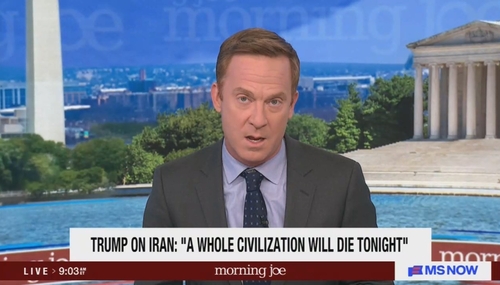
Morning Joe Insists Trump Is ‘Genocidal,’ America Will Be ‘Villain’
In a continued meltdown after President Trump’s press conference and continuous Truth Social posts, Tuesday’s Morning Joe on MS NOW continuously claimed Trump was about to commit war crimes in Iran, except for newly signed MS NOW analyst John Kirby, who acted as a voice of reason as he put trust in military leaders instead. Even after Kirby’s moment, during the 9 a.m. hour, co-host…
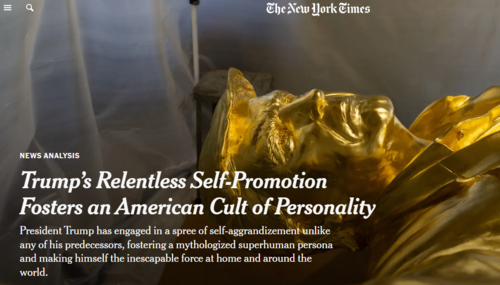
NY Times Front Page Condemns Trump’s ‘Cult of Personality': Obama Who?
A 3,000-word “news analysis” by New York Times chief White House correspondent Peter Baker on Trump’s supposed cult of personality was headlined cheekily: “A Superman, Jedi and Pope -- Trump’s Relentless Bid to Mythologize Himself.” The online version was more insulting: “Trump’s Relentless Self-Promotion Fosters an American Cult of Personality-- President Trump has engaged in a spree…
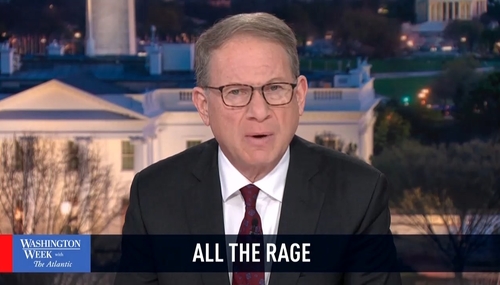
PBS 'Washington Week' Rips Trump's 'Unmanaged Anger' at Orders Video
Washington Week with The Atlantic host Jeffrey Goldberg opened Friday’s political roundtable on PBS by setting up a segment on the reckless video issued by Democrats pressuring current military members “to refuse illegal orders” – while leaving the illegal orders supposedly issued by Trump undefined. Goldberg led off by ripping Trump's "unmanaged anger" over the "eminently ignorable"…
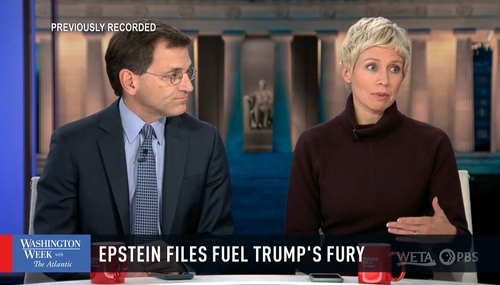
PBS Panel Hits Trump 'Misogyny,' Defends ABC's Compromised Mary Bruce
Friday’s Washington Week with The Atlantic on PBS was more feistily anti-Trumpism than usual, with moderator Jeffrey Goldberg leading the panel into various anti-Trump segments, including the president’s fraught relationship with the mainstream press. Goldberg used Trump’s spat with two female reporters in the White House press pool to label Trump, an equal-opportunity insulter, as a…
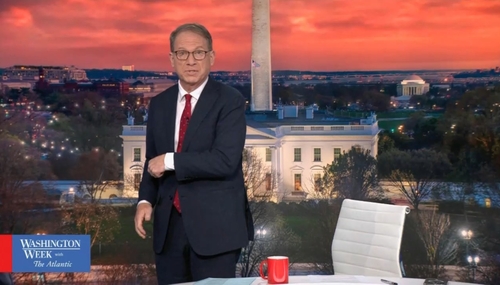
PBS Falls Overboard on East Wing Demolition: 'Shocking to Conscience'
On Friday’s Washington Week with The Atlantic, moderator Jeffrey Goldberg devoted 14 minutes -- over half the show’s 22-minute discussion time -- to the East Wing demolition undertaken by President Trump, using private funding, in order to build a much-needed White House ballroom. After the introduction, where Goldberg complained “President Trump this week took a wrecking ball to the…

MSNBC Flat-Out Lies about Iran Nuclear Deal, Diminishes Trump Strike
After President Trump’s speech at the Israeli Knesset on Monday, MSNBC contributors tag-teamed a critique of his actions against Iran and his international diplomatic capabilities. This included affirmation for the Joint Comprehensive Plan of Action, a failed Obama-era treaty that primed Iran for nuclear weapons capabilities.
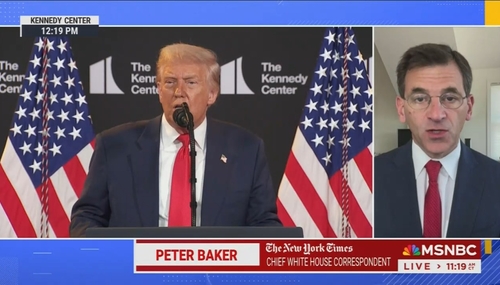
Peter Baker on Trump's America: 'Putin Would Feel Very Comfortable'
New York Times chief White House correspondent Peter Baker joined Wednesday’s Chris Jansing Reports and unleashed, even by MSNBC’s standards, one of the most ridiculous reductio ad Putinum claims ever uttered on the network as he claimed the Russian dictator would “feel very comfortable” in Donald Trump’s America.
Page 1 Editorial: NYT’s Peter Baker Seethes at Trump’s ‘War on Facts'
If there’s anyone who is least qualified to kick up a stink over anybody initiating a so-called “war on facts,” it's New York Times chief White House correspondent Peter Baker.
PBS's Frontline: Trump 'A Travesty in All of American History'
Even as the Senate was preparing to take up defunding PBS, the taxpayer-funded network was shamelessly airing another Trump-trashing Frontline documentary on Tuesday evening. The online blurb to “Trump’s Power and the Rule of Law” explained they would spend 90 minutes warning about the "high-stakes showdown" between Trump and judges trying to curb his executive powers.
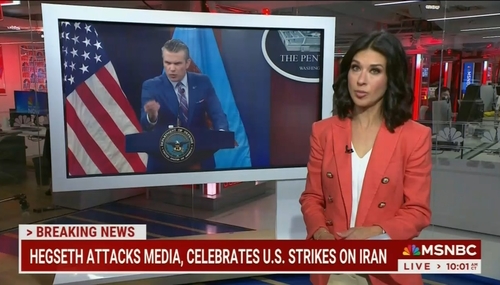
Ana Cabrera Forces Narrative Onto WH Denial of Fordow Assessment Leak
On her show Thursday morning, MSNBC’s Ana Cabrera made her opinions obnoxiously clear through her biased leading questions. While holding a group discussion on President Trump’s disagreement with a leaked early intelligence report of the damages to Iran’s Fordow nuclear facility, Cabrera asked her guests about what Trump’s denial of the report meant, never once asking whether the report was…

NYT Picks Sides, Trusts Anti-Semitic UN: Gaza's'Deadly Aid Deliveries'
Lauren Jackson started off Wednesday’s edition of the New York Times newsletter “The Morning” with anti-Israel bias: “Deadly Aid Deliveries in Gaza -- Israel’s troops have repeatedly shot near food distribution sites.” Jackson previously covered the United Nations, and knee-jerk favoritism for her old beat, and distrust of anything said by Israel, is peppered throughout the report.…
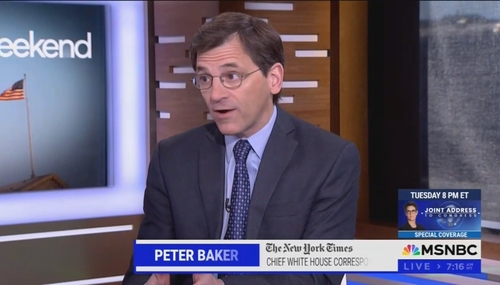
N.Y. Slimes: 'In Trump’s Washington, a Moscow-Like Chill Takes Hold'
White House correspondent Peter Baker indulged his paranoia in a story in Friday’s New York Times: “In Trump’s Washington, a Moscow-Like Chill Takes Hold -- A new administration’s efforts to pressure the news media, punish political opponents and tame the nation’s tycoons evoke the early days of President Vladimir V. Putin’s reign in Russia.” The odious Russia comparison is not just a…
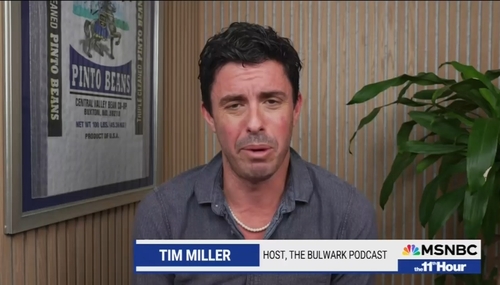
'He’s Such a P*S': MSNBC Makes Reagan Airport Tragedy All About Trump
On Thursday night’s episode of MSNBC’s The 11th Hour, Stephanie Ruhle hosted a panel including Tim Miller of The Bulwark podcast, NBC senior national politics reporter Jonathan Allen, and New York Times chief White House correspondent Peter Baker. Ostensibly the topic of discussion was Wednesday night’s mid-air crash at Reagan National Airport, in which all…
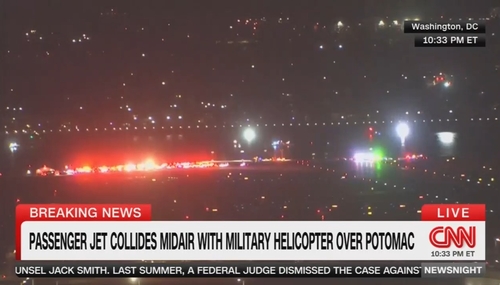
Here’s the Worst Overnight Takes on the Reagan National Airport Crash
Before President Trump’s Thursday morning press briefing allowed the liberal media to tangle with him directly and make Wednesday’s deadly crash between American Airlines flight and a blackhawk helicopter all about Trump, the liberal media were left to their own imaginations Wednesday night to spin up evil and ghoulish conspiracy theories on their own.