Video
New Dem Senator Uses WashPost's Fake Vt. Hack Story in Hearing
January 12th, 2017 11:19 PM
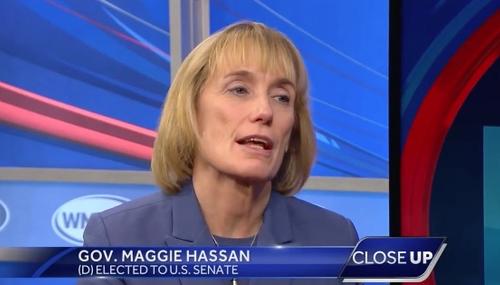
Demonstrating the power of fake news to influence uninformed people, just-elected Democratic Senator Maggie Hassan of New Hampshire brought up a thoroughly discredited Washington Post story at the Senate confirmation hearing for Former General John Kelly. President-Elect Donald Trump has nominated Kelly to be the nation's next head of the Department of Homeland Security. Hassan brought up the…
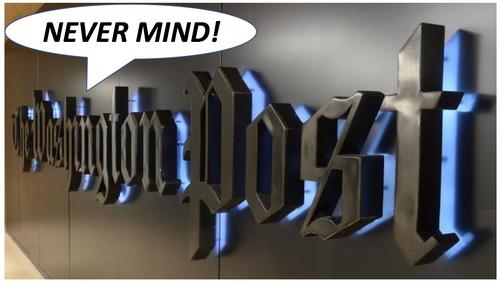
WashPost on Russian Connection to Vermont Utility Hack: Never Mind
January 3rd, 2017 11:20 AM
Monday evening, just three days after causing an uproar by reporting that "Russian hackers penetrated (the) U.S. electricity grid through a utility in Vermont," the Washington Post is now saying that "Russian government hackers do not appear to have targeted Vermont utility, say people close to investigation." In other words (cue the late Glida Radner's famous Saturday Night Live character Emily…

WashPost Keeps Alive Russia-Grid Hacking Story Despite Falling Apart
January 2nd, 2017 2:27 PM
UPDATE, January 3: "WashPost on Russian Connection to Vermont Utility Hack: Never Mind"
A not very funny thing happened to the Washington Post after its Juliet Eilperin and Adam Entous posted a story on Friday (now time-stamped as if it was Saturday) claiming in its headline that "Russian hackers penetrated U.S. electricity grid through a utility in Vermont." The claim, according to the utility…

WikiLeaks Continue to Show Journalist Cooperation for Clinton Campaign
Business
October 19th, 2016 3:53 PM
The mounting archive of WikiLeaks emails between Hillary Clinton and her staff continues to reveal the Democratic presidential candidate’s special relationship with members of the liberal news media. Not only did she hold an off the record dinner with “influential reporters, anchors, and editors” just before officially launching her presidential bid, but reporters also asked for interviews…
Video
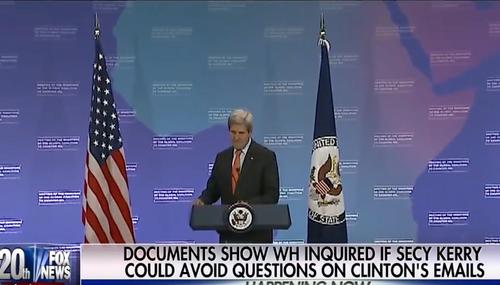
CBS Issues Hollow Denial on Failure to Ask Kerry About Hillary Emails
October 9th, 2016 2:56 PM
As Mike Ciandella at NewsBusters noted Thursday morning, newly obtained documents indicate that the White House and Secretary of State John Kerry's underlings worked aggressively to "crush" any chance that he might be questioned about Hillary Clinton's use of a personal email account for public business or her stationing of a private server registered under a pseudonym at her Chappaqua, New York…
Video
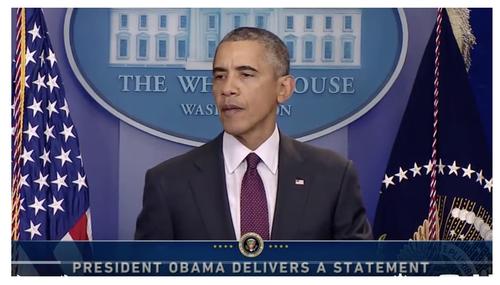
Not News: Obama's Planned Visit to Roseburg, Ore. 'Not Welcome' There
October 5th, 2015 10:28 PM
Items found at the Associated Press, the New York Times and the Washington Post, in reporting that President Obama plans to visit Roseburg, Oregon later this week, have all failed to report that community leaders have said that his visit is not welcome.
The 4:10 p.m. PT (7:10 PM ET) entry at a running timeline at AP announced that "Barack Obama will travel to Oregon this week to visit privately…
WashPost Devotes Gooey 12-Paragraph Story to Obama Car Photo-Op, No Me
July 16th, 2014 6:33 PM
On page A7 of the July 16 paper, Washington Post staff writer Juliet Eilperin hacked out 12 paragraphs of goo over President Obama's Tuesday visit to the Turner-Fairbank Highway Research Center in McLean, Va., where he "[made] a case for pouring more federal funds in U.S. infrastructure" and also got behind the wheel of "a self-driving car stationed at a simulator." "Man, this is so exciting…
What Protesters? WashPost, NY Times Ignore 'March for Marriage,' Print
June 23rd, 2014 7:08 AM
Protests are usually designed as attention-grabbers, publicity-seeking events. But liberal reporters cannot be dragged to a conservative protest. Thursday’s “March for Marriage” was blown off by The Washington Post and The New York Times. Attendance too small? The Post has written 10,000 words glorifying three anti-nuke protesters. The Times thinks four illegal aliens hiking is a hot protest…
WashPost Devotes Front-Page Real Estate to Junk Food-less Obama White
April 21st, 2014 12:40 PM
What better day than Easter Monday for the Washington Post to publish a 31-paragraph page A1 fluff piece celebrating the health nuts in chief at 1600 Pennsylvania Avenue?
Staff writer Juliet Eilperin was positively saccharine sweet about how the Obamas "have so transformed the culture inside" the White House "regarding nutrition and fitness" while painting conservatives as foot-stamping…
WashPost Still Spraying Heavy Perfume, Calling Obamacare A 'Signature
March 31st, 2014 8:40 AM
It’s the bland leading the bland as Obamacare enrollment (sort of) ends. The front page of Monday’s Washington Post carries the headline “New fronts in health battle: Challenges after sign-up milestone.” (Yawn.) The pull quote inside on A-2 is “The unresolved issues mean it is far too soon to know how President Obama’s signature domestic achievement will turn out.”
In that case, why use the…
WashPost Subtly Relays That Major Government Grantee Planned Parenthoo
February 22nd, 2014 8:10 AM
On Friday, Washington Post reporter Juliet Eilperin filed a Style section front-pager on Marlon Marshall, the “deputy director of the White House Office of Public Engagement, where he is charged with helping to sell the Affordable Care Act, which remains politically polarizing and was damaged by a disastrous Web site rollout last fall.”
What sticks out most in this profile is how Planned…

Red State Dems Urge Obama to Approve Keystone Pipeline; Broadcast Nets
February 5th, 2014 6:30 PM
Yesterday afternoon three red state Democratic senators -- plus Rep. John Barrow (D-Ga.) -- joined a number of Republican legislators and the Canadian ambassador to the United States at a press conference called to publicly press President Obama to approve the long-delayed Keystone XL oil pipeline.
Such a show of bipartisan and international agreement on an economic-development issue is…

WashPost's Eilperin Sees Obama's Forthcoming Visit with Pope Bolsterin
January 22nd, 2014 4:15 PM
On Tuesday -- just one day before he hailed the 41st anniversary of Roe v. Wade -- President Obama's White House issued a press advisory noting that the president would meet with Pope Francis on March 27. Naturally the dutiful Obama acolytes at the Washington Post put staff write Juliet Eilperin hard at work spinning the forthcoming meeting as virtually guaranteed to be a net political coup for…
WaPo, Which Claims to Have Discovered It, Says Obama Admin 'Quietly De
December 27th, 2013 3:18 PM
With a headline at a Washington Post story by Amy Goldstein and Juliet Eilperin reading "Obama administration quietly extends health-care enrollment deadline by a day," you would think that the administration issued some kind of press release without comment — or at least, as was the case with its announcement waiving the individual mandate for those who had individual policies cancelled,…