Big Business Loves Big Government
July 8th, 2021 6:41 PM
Politicians say they pass laws to “protect Americans from big business.” People like hearing that. Many don't like big business. Unfortunately, most people don't realize that those laws often help big business while hurting consumers. “Big business and big government are not enemies like a lot of people think they are,” says American Enterprise Institute fellow Tim Carney in my new video. “…

Video
Super Woke ‘Superstore’ Fights ICE and Corporations
Culture
September 26th, 2019 10:11 PM
Last season, the NBC comedy Superstore ended with a dramatic ICE arrest. During last season’s finale, the audience was supposed to feel sympathy for Mateo (Nico Santos), the illegal immigrant who stole a woman’s identification to get his job. The season premiere, “Cloud 9.0,” on September 26 began with a vigil by the Cloud 9 store’s employees to protest their illegal co-worker's detainment.

Video
'Superstore's' Super-sized Sexism: 'Women Make Better Bosses Than Men'
Culture
March 30th, 2018 4:00 PM
NBC’s Superstore leans in on sexism and falls flat on its face. On Thursday night’s episode, appropriately titled “District Manager,” after Jeff’s departure to be with Mateo, it is announced that for the first time Cloud 9 will have a female district manager, which leads the more liberal-minded employees to rush to celebrate the hire.
Bizarre: NYT Hits Walmart for Raising Worker Pay, Switches on Earmarks
January 12th, 2018 7:38 PM
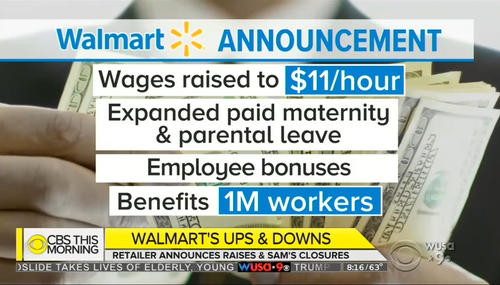
When is increasing pay for hourly workers politically suspect? When are earmarks considered pork? When they are encouraged by Donald Trump, at least at the New York Times. Walmart can do no right in the eyes of the liberal paper. Michael Corkery managed to turn even the liberal-pleasing move against the despised company: "Walmart, the nation’s largest private employer, waded into the bumpy waters…

Video
Bozell Scalds Media Over Ignoring Trump’s Economy; 'They Loathe' Him!
January 12th, 2018 5:56 PM
Speaking on the Friday edition of the Fox News Channel’s Your World, MRC President Brent Bozell came out swinging against the liberal media and their refusal to cover stories of economic growth under President Trump, telling fill-in host Trish Regan they “loathe him” so much that “if he finds a cure for cancer, they'll attack him for not curing AIDS.”

Video
ABC Ignores Walmart Raising Wages to $11/Hour Citing GOP Tax Cuts
January 11th, 2018 9:18 PM
Walmart employees received some much-welcomed news on Thursday: Their hourly wage went from nine dollars an hour to eleven and on top of that, many were receiving $1,000 bonuses. The company also cited the GOP tax cuts as the reason behind the move. But instead of reporting on the great news for many workers, ABC’s World News Tonight spent two minutes and 26 seconds hyping the new movie about…
Ignorance Versus Stupidity
November 8th, 2017 12:32 AM
One of the most challenging and important jobs for an economics professor is to teach students how little we know and can possibly know. My longtime friend and colleague Dr. Thomas Sowell says, "It takes considerable knowledge just to realize the extent of your own ignorance." Nobel laureate Friedrich August von Hayek admonished, "The curious task of economics is to demonstrate to men how little…

Corporate Harassment Policy Does Harm on NBC’s ‘Superstore'
Culture
February 9th, 2017 11:59 PM
Well, nowadays it's just a matter of time before you're in hot water for something you say to someone. NBC’s Superstore exemplifies how relationships in the workplace can be almost impossible thanks to vague sexual harassment policies.

Video
NBC's 'Superstore' Blasts 'Unethical' Corporations
Culture
November 4th, 2016 1:39 AM
The NBC comedy Superstore continues to insert pro-labor propaganda into its show. Thursday night's episode "Election Day" once again pits employees against their "unethical" corporation.
‘Superstore’ Strikes, Mocks ‘Bigots’ Against Transgender Bathrooms
Culture
September 23rd, 2016 7:26 PM
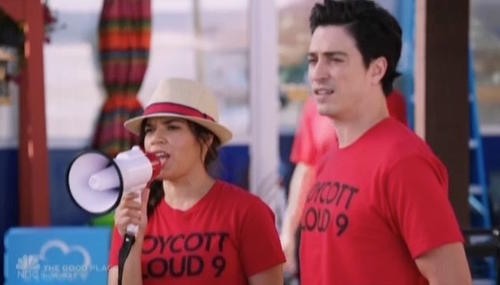
In its season two opener, NBC’s big box store comedy, Superstore, continued its sharp left turn left. At the end of the show’s first season, a majority of Cloud 9’s employees went on strike after the store manager was fired for “suspending” an employee, with pay, who had just given birth in the store because the corporate office had refused to offer maternity leave to its associates.

Top Firms Like Walmart, ExxonMobil Gave $4.8 Billion to Charity in '15
Business
June 2nd, 2016 9:57 AM
Liberals often decry corporate greed, but a new report showed that the largest corporations donated $4.8 billion in charity. Three of the highest donating firms were typical media targets: Exxon, Walmart and Goldman Sachs.

AP Has Falsely Cited 'Perked Up' Sales at Wal-Mart Since Last Summer
March 13th, 2016 10:53 PM
Retail giant Wal-Mart Stores Inc. apparently got on the good side of the Associated Press a year ago when it announced that would be raising entry-level wages.
Since that announcement, AP, in particular wire service reporter Anne D'Innocenzio, has been excusing the company's relatively poor financial performance while complimenting it for a virtually imaginary "perk up" in sales. Falling profits…

Video
NBC's 'Superstore' Gives Birth to Union Propaganda
Culture
February 23rd, 2016 1:35 AM
In this week's episode of Wal-Mart, I mean Superstore, we get to one of the issues we've all anticipated since the show's premiere: labor unions. As Cheyenne (Nichole Bloom) goes into labor at work, the chaos is comical but the dialogue is obviously meant to persuade the viewer that it's the store's responsibility to take care of the 17-year-old pregnant girl.

Ho, Ho... No: AP Xmas Sales Reporting Was Way Off Target
January 21st, 2016 12:19 PM
On December 28, the headline at a conveniently unbylined report at the Associated Press screamed: "HOLIDAY SPENDING UP 8 PERCENT; ONLINE SALES SURGE." As I noted in a post later that day, this was odd, to say the least, given that even the incurably optimistic National Retail Federation had predicted an increase of only 3.7 percent. It turned out that the reported growth rate was based on the…