PolitiFact Contradicts Itself On Whether Trump Threatened War Crimes
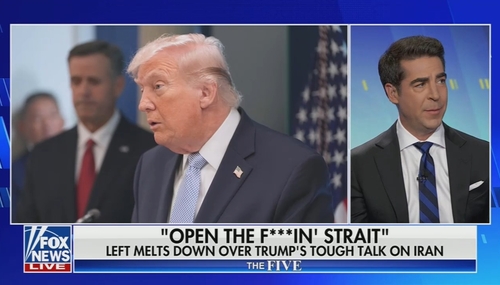
Is it true that President Trump’s threats to hit Iranian power plants constituted a potential war crime? According to PolitiFact’s Louis Jacobson, that depends on what day of the week it is. On April 7, Jacobson penned a piece that suggested Fox News’s Jesse Watters was probably correct in saying they would not be given historical precedents in places like Iraq, but Jacobson still refused to…
OMISSION: Network Newscasts Pretend Swalwell Allegations Didn’t Happen
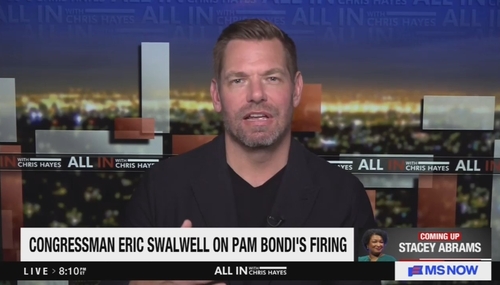
The Elitist Media are known for hiding significant news that doesn’t align with their liberal agenda or generally naked Democrats look bad. Their ongoing omission of new allegations against U.S. Rep Eric Swalwell (D-CA) stands as the latest example.

ABC, NBC Are Upset ICE Shot a Gangbanger Trying to Run Over an Agent
The Elitist Media seem to be bothered that an ICE agent dared to defend himself against a violent gangbanger wanted for questioning related to a murder in El Salvador. Their response was to avoid reporting the story in a clean manner.
MS NASTY: On 'Deadline,' House Dem Says 'Good Riddance' to Pam Bondi
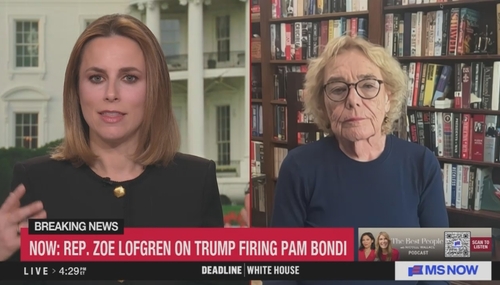
On Thursday's Deadline: White House on MS NOW, Rep. Zoe Lofgren (D-CA) reacted to Pam Bondi’s firing with a coarse sendoff—“good riddance”—then proceeded to dismiss every potential replacement, all while being encouraged by host Alicia Menendez.
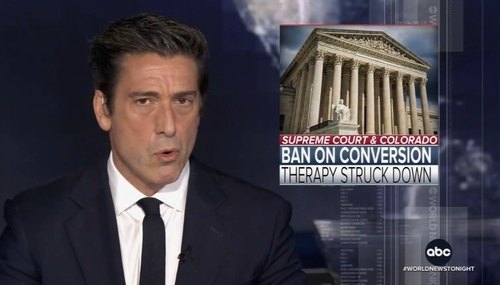
OMISSION WATCH: Network Newscasts Mostly Ignore the Supreme Court
There are several major stories swirling around the United States Supreme Court that have gone grossly undercovered or outright ignored by the Elitist Media. It’s as if the media didn’t want their viewers learning about an inconvenient ruling and a pivotal argument, both against major policy items for the left.
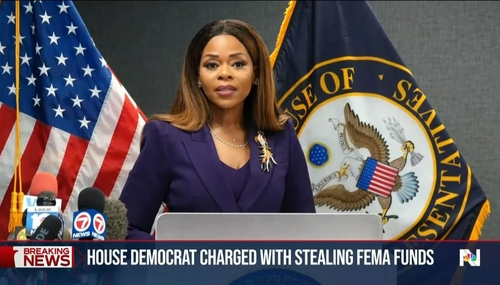
OMISSION: Nets Silent on Cherfilus Scandal, DoJ MN Trans Policy Suit
The Elitist Media network newscasts continue to suppress from their viewers those stories which run counter to their agenda. Tonight’s newscasts saw not one, but two major omissions.
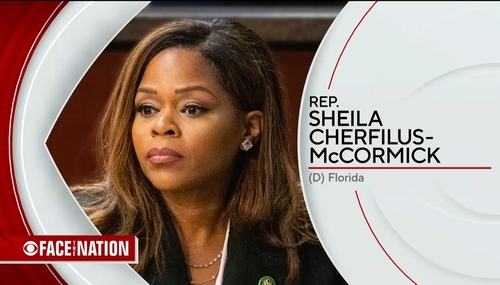
OMISSION: Sunday Shows Mostly Ignore Dem Congresswoman’s Ethics Trial
The Elitist Media continue to circle their wagons around embattled Rep. Sheila Cherfilus-McCormick (D-FL), providing near-zero coverage of the latest episode in this ongoing saga. The omission campaign has now extended to the Sunday political affairs shows which, with one exception, a throwaway segment on CBS’s Face the Nation.
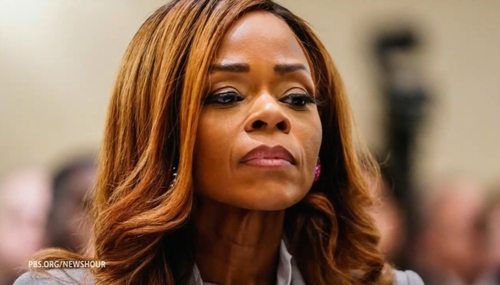
OMISSION: ABC, CBS, NBC Ignore Dem Congresswoman’s Ethics Trial
The House Ethics Committee held their scheduled adjudicatory hearing, more commonly referred to as a “trial”, against Rep. Sheila Cherfilus-McCormick (D-FL). Sadly, none of the main broadcast network newscasts saw fit to carry the story.
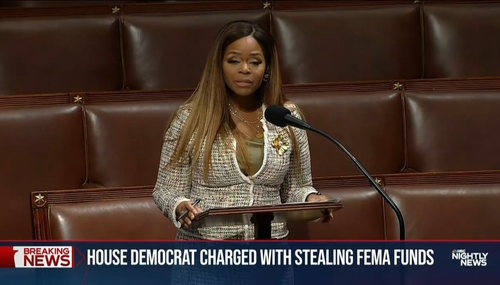
IT’S (D)IFFERENT: Media SILENT on Florida Congresswoman’s Ethics Probe
There was once upon a time when the news media pretended to care about congressional ethics, and made an effort to cover alleged violations of the public trust. Nowadays, the Elitist Media appear to deploy an obvious double standard when covering these.
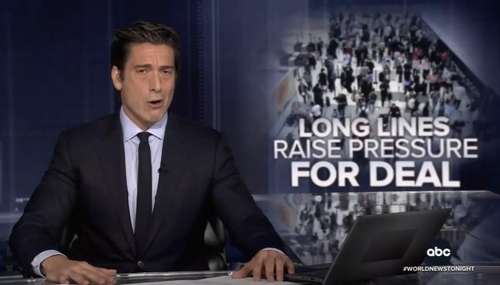
SHUTDOWN PROPAGANDA: ABC Shamelessly Tries to Pit TSA Against ICE
The DHS shutdown grinds on, with passengers standing interminable lines and missing flights as TSA agents go over a month without being paid. ABC News, in a weird report that serves little purpose, saw this as an opportunity to try to drive an internal wedge at DHS by questioning whether the fairness of ICE agents getting paid as they assist TSA agents who are not.
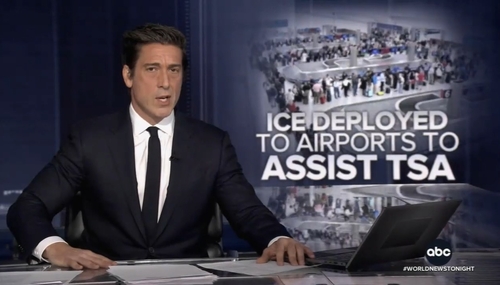
Network Newscasts Continue to Shield Democrats During DHS Shutdown
As the DHS-only government shutdown rages on, the Elitist Media’s broadcast network newscasts continue to work overtime to shield the Democrats from accountability over their role in creating the shutdown in the first place. This dirty work is being performed as security lines worsen across the nation’s airports.
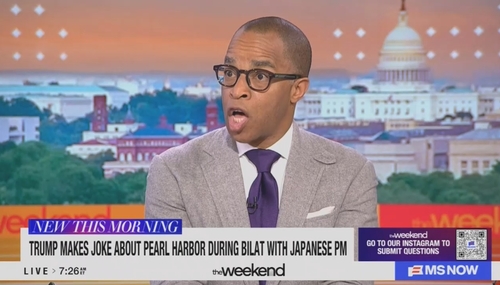
Capehart Calls For 25th Amendment Talk After Trump's Pearl Harbor JOKE
On MSNBC’s The Weekend, co-host Jonathan Capehart reacted to President Trump’s Pearl Harbor joke in front of the Japanese prime minister by demanding discussion of invoking the 25th Amendment. Capehart didn't want any dump-Biden talk when that started up.
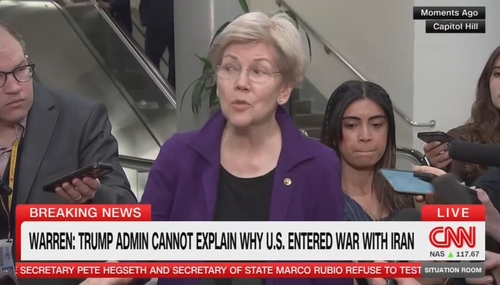
PolitiFact Uses Double Standard On Experts To Benefit Elizabeth Warren
When a military expert’s opinion is different than a politician’s, how are fact-checkers like PolitiFact supposed to adjudicate the politician’s claim? If a Friday article by Zoe Weyand is anything to go by, the answer is not at all, or at least if the politician is Democratic Sen. Elizabeth Warren. However, Weyand's standard for giving Warren a “true” rating for a recent claim she made about…
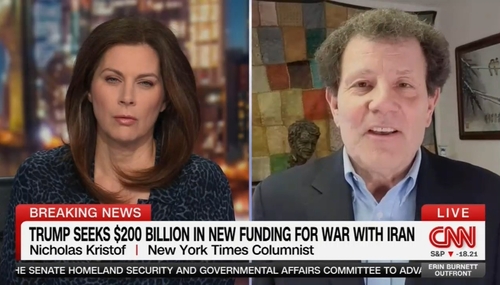
NYT's War Hypocrisy: Iran Pacifist Kristof Turned Warmonger in Libya
New York Times columnist Nicholas Kristof is a case study in liberal media hypocrisy on intervention in the Middle East. His opinions on the Iraq War (led by Republican president George. W Bush) were hateful, but when Democratic president Barack Obama invaded Libya (also without congressional approval), a newly war-mongering Kristof beamed that we were (yes) greeted as liberators. Now…