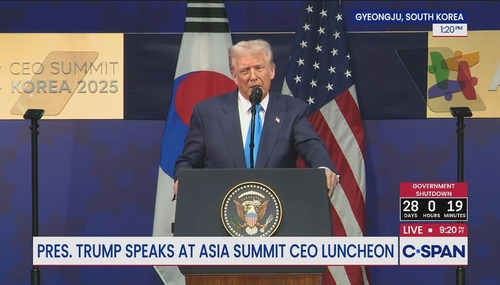
MAGA Makes Allies Great Again
From Argentina to Japan, MAGA is going global. President Donald Trump’s slogan has long been “America First,” and his movement is all about making America great again — language the president’s foes misunderstand as meaning “isolationism.” In fact, strengthening America requires strengthening our friends as well — and Trump sets an example for those leaders in Latin America, Asia and Europe…
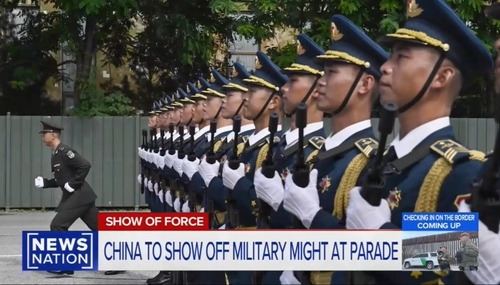
AP Pens Glowing Preview Of CCP's Revisionist WWII Victory Parade
It is bad enough that the Chinese Communist Party is staging a massive military parade on Wednesday to rewrite history and portray itself as one of the main victors of World War II as it seeks to build up its image as a global leader, but making things worse was Associated Press China reporter Ken Moritsugu’s mostly uncritical Tuesday article that helped spread the Party line.

Can’t Get Enough: CBS Sucks Up to Former New Zealand PM Ardern
Few foreign leaders in recent decades have engendered as much fawning, pathetic adulation in the American liberal media like New Zealand’s Jacinda Ardern, who served as the leftist prime minister from 2017 to 2023 and thus, with a memoir out, they’d be lining up to sing her praises. Tuesday’s CBS Mornings filled that quota with co-host and Democratic donor Gayle King emoting joy over…

PBS Cries Over USAID Absence After Quake: China Filling the 'Vacuum'!
The PBS News Hour on Monday ran two stories grounded in liberal alarmism against the Trump administration’s quest to cut wasteful spending and fraud in the federal government, including at USAID -- the United States Agency for International Development that provides foreign aid and economic development worldwide. The online headline showed how public television has suddenly discovered…
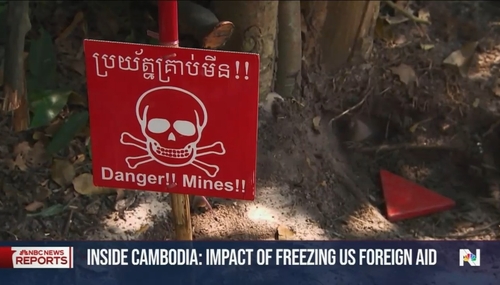
NBC: Axing USAID Means People Will Die in Cambodia From U.S. Landmines
Making sure all sob stories are fed to the masses, the liberal media are pulling out all the stops to defend and justify the need to keep the U.S. Agency for International Development (USAID) in place (and offer no suggestions for reform). Friday’s NBC Nightly News sent its China-based correspondent Janis Mackey Frayer to Cambodia to declare innocent Cambodians will die without USAID…
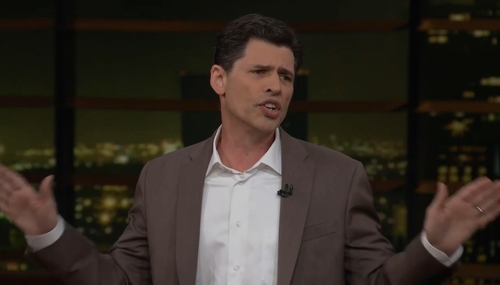
World War Z Author Imagines Xi Blackmailing Trump With Plane Crashes
World War Z author Max Brooks went off on a nonsensical hypothetical tangent on HBO’s Friday episode of Real Time with Bill Maher. In the context of a larger conversation about the need to keep Chinese fingerprints off of critical infrastructure, Brooks mused that Chinese dictator Xi Jinping could blackmail President Donald Trump over Taiwan in order to avoid more plane crashes like…
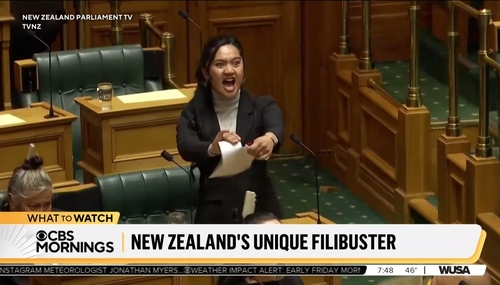
CBS Fawns Over Indigenous Filibuster in New Zealand as Role Models
Friday’s CBS Mornings embarrassed itself with a fawning segment of the bizarre and viral Māori protest in New Zealand parliament, fawning over it as a “beautiful” and “powerful” sign of confidence by women — including the leader of the Haka Dance, 22-year-old Hana-Rawhiti Maipi-Clarke — that featured co-host Vladimir Duthiers said he’s “going to save this video and show it” one day to…
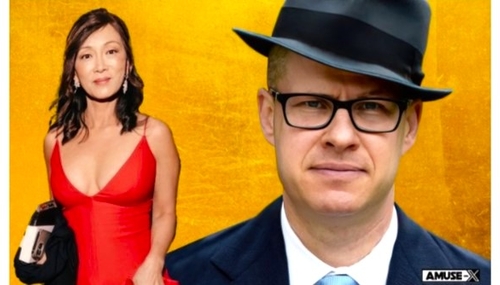
Collusion Cackles? Max Boot's Wife Indicted as Agent of South Korea
Buried at the bottom of page A-3, today's Washington Post ran a little item headlined "Ex-CIA expert accused of aiding South Korea." Sue Mi Terry was "indicted on criminal charges of acting as an agent of South Korea," failing to register as a foreign agent -- like Hunter Biden. At the bottom of paragraph 8, we learned Terry is "the wife of Post columnist Max Boot," a Russian…
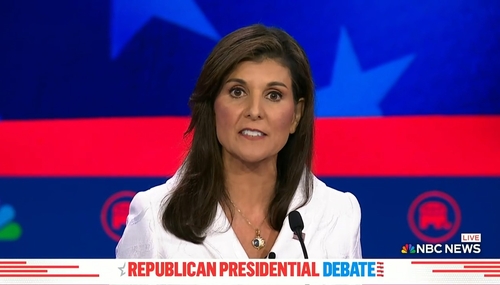
PolitiFact Refuses To Give Haley 'True' Rating For True China Claim
There are only three things certain in life: death, taxes, and professional fact-checkers condemning Republican politicians for lamenting the small size of the U.S. Navy. The latest installment in this nearly-decade long exercise of opinion-checking disguised as fact-checking came on Monday as PolitiFacat’s Louis Jacobson only gave presidential candidate Nikki Haley a “half-true” rating for…
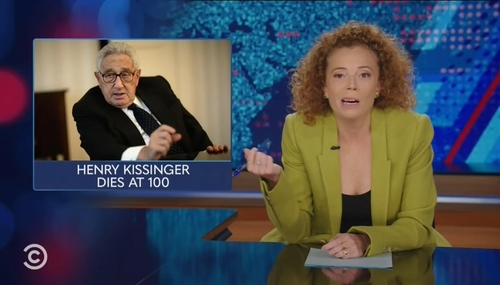
Daily Show Faux-Debates 'America's Greatest War Criminals'
Comedy Central’s tempt host of The Daily Show, Michelle Wolf welcomed correspondents Ronny Chieng and Michael Kosta for a “debate” on who is “America’s greatest war criminal” after the death of former Secretary of State Henry Kissinger. As Chieng and Kosta fake fought over Kissinger and former Vice President Dick Cheney, Wolf offered up President Andrew Jackson.
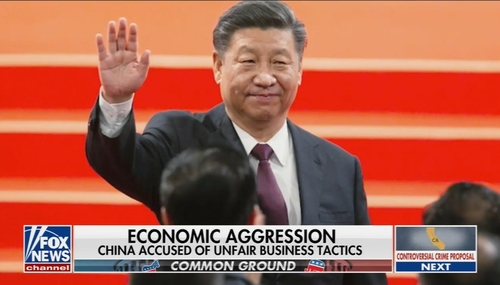
WashPost's Bump Accuses GOP of Turning 'CCP' Into a 'Pejorative'
Washington Post national columnist and hamburger height fact-checker Philip Bump released a column on Thursday discussing what he considers to be the latest scandal plaguing the Republican Party: the use of the terms “Chinese Communist Party” and “CCP.”
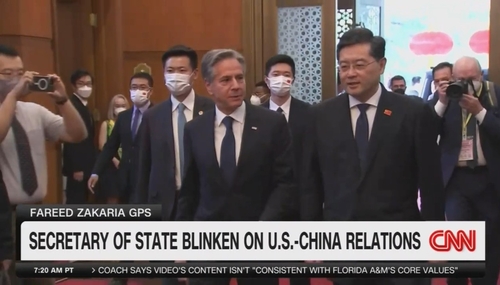
PolitiFact Rushes To Biden's Defense On The Chinese Spy Balloon
As Republicans prepare for their first primary debate, PolitiFact’s Amy Sherman came running to the defense of President Biden and his China policy on Tuesday, rating former Vice President Mike Pence “mostly false” for claiming Biden sent Secretary of State Anthony Blinken to “kowtow” before Beijing after the spy balloon incident.
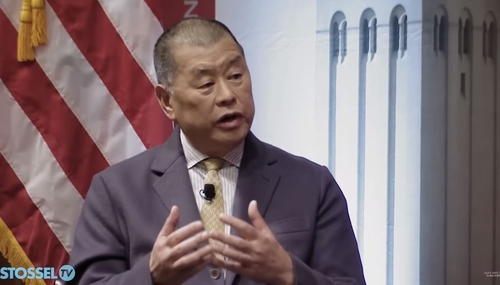
Jimmy Lai: Jailed by the CCP While Fighting for Freedom in Hong Kong
This week, while we celebrate the work of America's founders, I honor a living freedom fighter: billionaire businessman Jimmy Lai. When Communist China crushed freedom in Hong Kong, Lai could have gone anywhere in the world and lived a life of luxury. But he chose to stay in Hong Kong and go to jail. A new documentary, “The Hong Konger,” tells his story. Lai grew up in poverty in China.
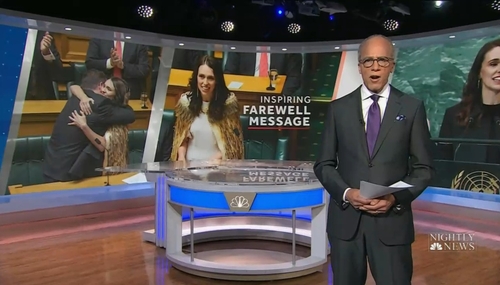
NBC Swoons Over 'Groundbreaking' Leftist New Zealand PM's Farewell
In January, NewsBusters noted that far-left New Zealand Prime Minister Jacinda Ardern’s sudden resignation caused the big three news networks in the United States to get weak knees over what they described her as an “empathetic” leader, an “inspiration”, a “pioneer” and "trailblazer" for her authoritarian tenure in office. On Wednesday, NBC Nightly News used the last segment of the…