By Lachlan Markay | February 3, 2010 | 3:46 PM EST
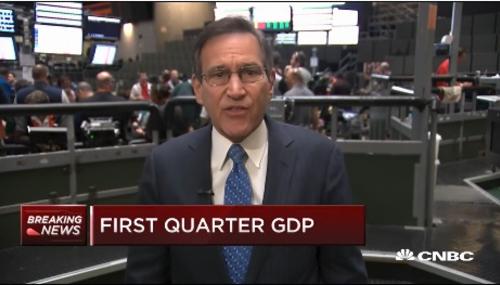
Rick Santelli is the star of perhaps the most politically consequential online video, viral to the extreme, of the past year (right). On February 19, 2009 he let loose on the Obama administration's economic policies on CNBC's "Squawk Box", calling for a "tea party", and inspiring millions of Americans to speak out against what he and many others see as collectivist economics policies pursued by the President and Congress..

“That was spontaneous, absolutely,” he said in an interview with the Daily Caller. “It was also from the heart, and I had no idea of the direction it would take or the response it would get.”

Almost a year later, Santelli is widely seen as the godfather of a large political coalition that, according to some polls, rivals the two major parties in popularity. The Tea Party protesters staged 48 simultaneous protests on tax day last year, a rally on the lawn of the Capitol with hundreds of thousands, if not millions of attendees, and will hold its own convention this week, with Sarah Palin giving the keynote address.
By Jeff Poor | February 3, 2010 | 11:40 AM EST

As the old cliché goes, you don't use a sledgehammer to crack a nut, but according to Rick Santelli, that's exactly what it appears the Obama administration is doing terms of financial regulation and fiscal discipline.

On CNBC's Feb. 2 broadcast of "Fast Money," host Melissa Lee proposed that taxing the wealthy is not the path to "economic prosperity and fiscal stability." Santelli, the network's CME Group floor reporter, agreed.

"Well, you're right," Santelli said. "But I also think you're going to see when the Bush tax cuts expire, a lot of middle class write-offs and exemptions and various tax benefits will also fall by the wayside. Not the least of which to mention, I have so many friends that work for the financial industry. And they've learned from the government, even if you only make $25,000 to $125,000 a year, one firm says if you leave to go into another job or whatever, anything outside retirement, they're going to keep 10-to-20 percent of the stock they took from you following the government's directives."

By Jeff Poor | January 25, 2010 | 4:36 PM EST

It's curious to see people in the mainstream media try to make sense of the Tea Party movement. The New York Times, which once called the Tea Parties a psychological phenomenon rather than a political movement, has now changed its tune.

In the wake of the stunning upset by Scott Brown in the Jan. 19 Massachusetts special election to fill the seat vacated by Ted Kennedy's death, the Times is attempting a more analytical look at the so-called "tea party tiger." Specifically, the Times looked at some key figures in the movement, Sen. Jim DeMint, former Alaska Gov. Sarah Palin, Fox News host Glenn Beck and CNBC CME group reporter Rick Santelli.

CNBC ‘Squawk Box' co-host Joe Kernen told Santelli about the Times story on Jan. 25.

By Jeff Poor | December 29, 2009 | 2:52 PM EST

While much of the national media was focused on a Christmas Eve Senate vote to pass health care reform legislation, the Obama administration's Treasury Department was tending to other business that will have serious implications for the U.S. economy. But did anyone notice?

As Zachary Goldfarb reported for The Washington Post on Christmas Day, the Obama Treasury said it would lift the limits on what the federal government could provide in "emergency aid" to Fannie Mae and Freddie Mac - without seeking permission from Congress. That led CNBC CME Group floor reporter Rick Santelli to ask if anyone noticed and/or realized what was really at stake with this move during the Dec. 29 broadcast of "Squawk Box."

By Jeff Poor | December 17, 2009 | 5:36 PM EST

It's often said markets function better when there is gridlock in Washington, D.C. because there's less of a chance for government will interfere in the private sector, creating a sense of security. But in this day and time, that theory applies to the U.S. dollar as well.

On CNBC's Dec. 17 "Squawk Box," CNBC Chicago Mercantile Exchange reporter Rick Santelli debated what was causing the recent rise in the U.S. dollar. Santelli, the original inspiration for the tea party movement, squared off with Jim Iuorio, CNBC "OptionsAction" regular and CME trader, about the cause - a weakened European economy or the place in the calendar year.

"So Rick, is the bigger deal right now on the dollar move - the risk-aversion trade because of the end of the year or because of the problems in Europe?" Iuorio said. "Or is it a combination of both? Which is the bigger thing, do you think?"

By Jeff Poor | November 20, 2009 | 8:51 PM EST

It's an issue that libertarian Rep. Ron Paul, R-Texas, and Sen. Bernie Sanders (I-Vt.), a self-proclaimed socialist agree on: Congress should have the authority to call for the Federal Reserve to be audited.

But it is also something that some in the financial media are reluctant to support, especially judging from the tone of CNBC "The Call" co-host Trish Regan and comments CNBC senior economics reporter Steve Liesman. On the Nov. 20 broadcast of "The Call," CME Group reporter Rick Santelli made the case that Federal Reserve should be audited. He cited opposition to the Fed audit proposal from Sen. Judd Gregg, R-N.H., which was based on Congress' inability to be fiscally responsible.

"He said, ‘You know, there independence is important to protect the soundness of the dollar,'" Santelli said. "Has he read any papers lately or looked at any charts? Come on. Amen, amen that this process is happening. They're not taking away their independence to make a decision on interest rates. We need to know where the money is going. I remember when Ben Bernanke faced committees of elected officials and said, ‘We can't audit the Fed because then you might look unfavorably on some of the counterparties we deal with. That's like finding paraphernalia under your kids bed and then not asking where he got it."

By Jeff Poor | November 20, 2009 | 10:43 AM EST

Now that former CNN host Lou Dobbs has been freed of his duties with his former network, he has been making the rounds on other networks - Fox News "The O'Reilly Factor," Comedy Central's "The Daily Show" and now with his long-time rival's show CNBC's "The Kudlow Report." 

One of the issues debated among a panel consisting of Dobbs, host Larry Kudlow, former Clinton Secretary of Labor Robert Reich and CNBC CME Group reporter Rick Santelli on Nov. 19 was the issue of wage stagnation - which Dobbs blamed on outsourcing, immigration policy and technological advancement.

"I believe that the issue of unemployment in this country and job creation fundamentally will have to be taken on as a matter of government policy," Dobbs said. "It will also have to be taken on as a matter of business leadership. As to the idea that wages have been stagnant in this country for 35 year, point of fact, we have to understand what the causes are."

Video Below Fold

By Jeff Poor | November 6, 2009 | 10:26 PM EST

A rising Dow Jones Industrial Average (DJIA) means better times are on the way, right? Not necessarily, according to CNBC CME floor reporter and tea party movement inspiration Rick Santelli.

Santelli made an appearance on CNBC's Nov. 6 "Fast Money," a show which the host, Melissa Lee, is skittish about a discussion that politics interferes with the market is a reality. Nonetheless, Santelli explained there so happens to be correlation between a rise in unemployment rates and the rise in the Dow Jones Industrial Average.

"[I] think we're building a stairway to heaven in Dow prices on the back of paper and I think that, you know it seems kind of dire to me that 8 percent - 8,000, 9 percent - 9,000, 10.2 - 10,000," Santelli said. "I shudder to think where the unemployment rate is going to be at 11 and 12,000 in the Dow."

By Jeff Poor | October 31, 2009 | 6:01 PM EDT

Now that the Obama administration is attempting to take a victory lap on the U.S. economic recovery, claiming the $787-billion stimulus passed earlier this year was what did the trick, despite a cost of $160,000 per 'stimulus' job, as ABC's Jake Tapper pointed out, it has come at the cost of the U.S. dollar.

Since then, the stock market has rebounded nicely. The Dow Jones Industrial Average (DJIA) is off a March low of 6,547 points, even topping the 10,000-mark recently. But what has caused this nearly 50-percent jump? According to CNBC's Larry Kudlow - loose monetary policy by the Federal Reserve, with low interest rates, has made it possible for the markets to rise, with the 'loose' money going into the market.

"The funny thing is, Steven, it has gone into stocks - I mean the stock market guys ... there's no real multiplier for the economy, right?" Kudlow said on his Oct. 30 CNBC program. "But it has gone into stocks and the stock market crowd wants to see the Fed to keep pouring the money in no matter what happens to the U.S. dollar."

By Jeff Poor | September 14, 2009 | 3:13 PM EDT

Not everyone at the NBC Universal umbrella of networks got the gag order memo about the Sept. 12 march on Washington, D.C.

Rick Santelli, who has been a target of the Obama White House and is credited with being the inspiration for the 2009 tea party movement, spoke out about how the media ignored the march. But, a year after the fall of Lehman Brothers, he was making the larger point that the government's intervention to thwart a financial crisis had been an ineffectual and potentially dangerous maneuver at the expense of taxpayers.

"I think this one-year anniversary is great, but I think it's great for another reason," Santelli said on CNBC's Sept. 14 "Squawk Box." "I think someday we'll learn that we didn't need to do very much, that time heals all wounds and you don't have to go broke in the process."

By Jeff Poor | September 4, 2009 | 4:52 PM EDT

It's been nearly seven months since CNBC reporter Rick Santelli took a stand against the Obama administration, which inspired the tea party movement - and the White House hasn't forgotten.

White House Press Secretary Robert Gibbs was asked by CNBC Washington correspondent John Harwood why the administration decided to go after Santelli after his Feb. 19 call for a metaphorical revolt over President Barack Obama's economic policies.

"Truthfully, one primary reason," Gibbs said in comments aired on CNBC's Sept. 4 "Squawk on the Street." "And that was - I thought the argument that he was making was both disingenuous and not based on the facts. It was clear that Rick was very passionate about the issue. And look, we have differing opinions from both sides of the political aisle. It was clear to me that the argument that he was making wasn't based on him having actually read our plan."

By Jeff Poor | August 5, 2009 | 7:04 PM EDT

When in doubt blame conservatism, even when it comes to the struggles of a media outlet - and ignore the possibility that liberalism might be to blame.

Ever since Nielsen came out with the July numbers for CNBC that showed the network had suffered a 28 percent ratings decline over a year ago, some of the financial media intelligentsia have been eager to point to what they perceive are the right-leaning political shortcomings of the network as a possible reason.

According to Daniel Gross, the Moneybox columnist for Slate.com and a columnist for Newsweek (and a known proprietor of "teabag" double entendres), there's been a decline in interest in financial news since the markets haven't been as volatile. But Gross is also convinced there's a component of the network's "rightward, anti-Obama tilt," despite its efforts to placate the left.