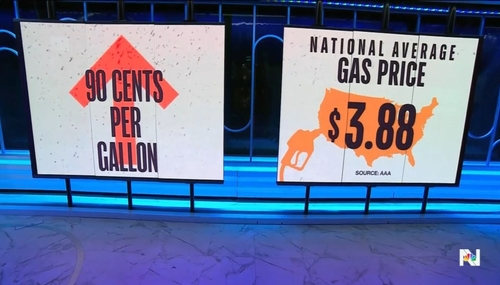
Freedom Is Not Free
At the height of the energy crisis in the 1970s, when oil prices more than sextupled, The Economist magazine showed a map of the Persian Gulf on its cover with the headline, “What’s a Nice Thing Like Oil Doing in a Place Like This?” The Iranian miscreants, with whom we are now at war, understand that, although they could care less what their own citizens think, in free countries…
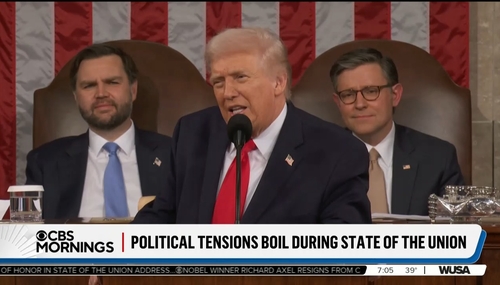
‘Plenty of Division’; CBS Upset by Trump’s ‘Contentious’ SOTU Speech
Despite having been painted a picture by the liberal media that the new CBS News would become something akin to MAGA TV, it has been anything but. Wednesday’s CBS Mornings reacted with negative narratives about President Trump’s “contentious” 2026 State of the Union speech, “clash[ing] with Democrats” and painting a supposedly dour economy as strong.
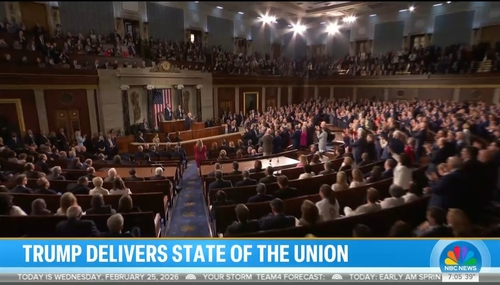
NBC’s ‘Today’ Show Offers Surprisingly Balanced SOTU Wrap-Up
As we’ve documented recently at NewsBusters, CBS’s flagship newscasts have shown little wholesale changes under editor-in-chief Bari Weiss that we both initially saw and as had been reported. Instead, it’s been more of the same liberal drivel. But ironically, there have been a few moments at NBC where it’s come across as this was the network she actually leads and such was the case on…
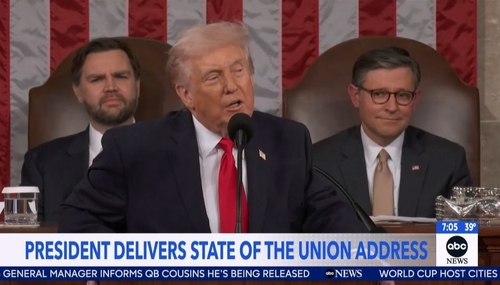
ABC SLAMS Trump for ‘Partisan Attacks’ in SOTU, ‘Short on Specifics’
In reacting Wednesday to President Trump’s 2026 State of the Union address, ABC’s Good Morning America followed its tiresome pattern of being all Trump hate, all the time by repeating an absurd 11 times the President’s grappling with negative polling and went out to deliver a speech that consisted of “brutally harsh” “partisan attacks” and irresponsibly “paint[ed] a rosy picture” of…
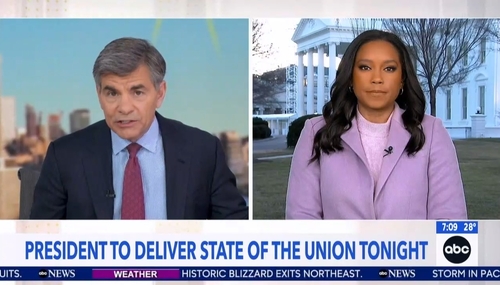
ABC Hurls Trump Hate Before SOTU, CBS Hits GOP But Goes Soft on Dems
On Tuesday, ABC’s Good Morning America (GMA) and CBS Mornings combined to offer widely negative rhetoric in previewing President Trump’s State of the Union, painting it as an almost hapless endeavor amid “his lowest numbers yet” to change the minds of voters poised to trigger a blue tsuanmi in November. Unsurprisingly, GMA was the most negative. In short,…
Americans Vote With Their Feet
It may seem that it’s impossible to get anything done in Washington these days. Nevertheless, the free spirit of Americans cannot be suppressed. Americans are voting with their feet. Per the Census Bureau’s just released annual report on population growth and migration in the U.S., Americans are packing up and moving from anti-growth blue states to pro-growth red states.
The Midterms: It’s Not About ‘Affordability’ — It’s About Trump Hatred
No, the midterms will not turn on the issue of “affordability.” If affordability truly were decisive, Republicans would easily retain the House and the Senate. Consider the economic backdrop. Gas prices are at a five-year low, with gas stations in several states selling a gallon of regular for under $2. Several times since Trump’s reelection, the stock market indexes have recorded all-time…
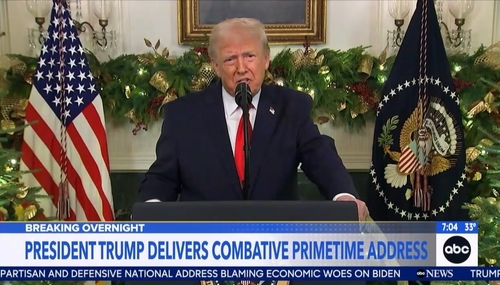
ABC RAGES Over ‘Combative,’ ‘Defensive,’ ‘Hyperpartisan’ Trump Speech
On Thursday, the broadcast networks led with President Trump’s Wednesday primetime address to the nation and all took great umbrage with his blaming of the Biden regime for the economy he inherited, but ABC’s Good Morning America was far and above the worst for its deep disgust over the “combative,” “defensive,” and “hyperpartisan” speech that ignored the “economic pain...under his…
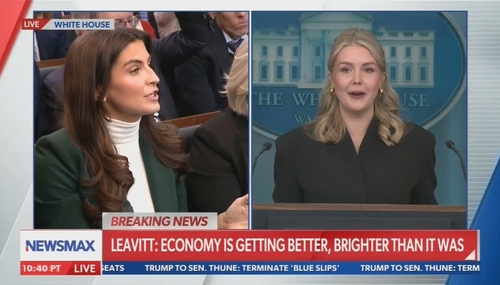
Leavitt Puts CNN’s Collins on Blast Over Questions About the Economy
During a White House press briefing on Thursday dominated by questions about either the economy or Venezuela, Press Secretary Karoline Leavitt threw down with former conservative reporter-turned-liberal CNN host and chief White House correspondent Kaitlan Collins over the former topic with Collins insisting the state of the economy was not as strong as Leavitt made it seem and Leavitt hitting…
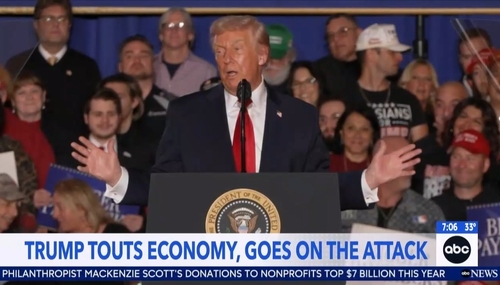
ABC Paints Trump Economy as in Turmoil, Slams ‘Vicious’ Jabs at Omar
While all three networks went hard in the paint Wednesday morning against President Trump and painted the economy as in turmoil, ABC’s Good Morning America was particular vicious with an entirely negative story and zero recognition of how economic indicators have improved vis-à-vis the Biden economy.
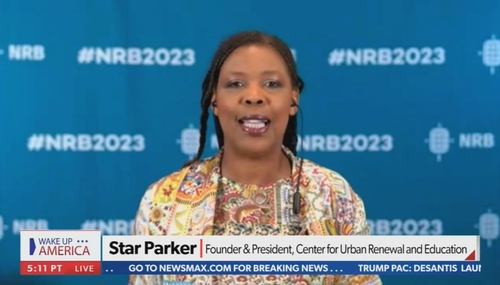
Last Thing on Democrats’ Agenda — Telling the Truth to Americans
Recently, in The Wall Street Journal, Neera Tanden, CEO of the Center for American Progress, a major foghorn in our nation’s capital for America’s left, explained “Why Democrats Won the Shutdown.” The most accurate declaration in the article is “fights tell the country a lot about what -- and who -- the fighters care about.” And, indeed, there should be no question what the Democratic…
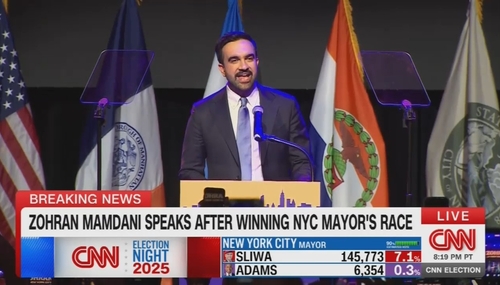
Mamdani’s Bad Ideas: Seizing Means of Production, Gov't Groceries
People are turning to socialism. Two-thirds of Americans ages 18-29 hold a “favorable view” of it. New York just elected a “proud socialist” mayor. My video explains why his ideas would make things worse. Of course they would! Socialism has never worked. Anywhere! Yet Seattle, too, just elected a socialist mayor. “Let’s give socialism a chance,” said a student writing in The…
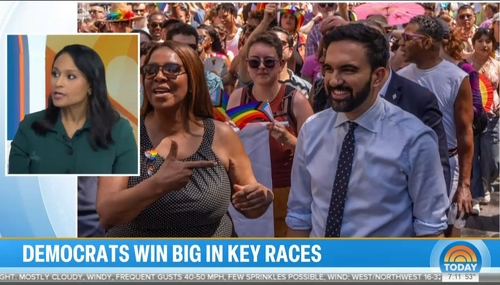
Networks Celebrate ‘Earthquake’ Dem Wins, Predict Blue Wave in 2026
On Wednesday morning, ABC, CBS, and NBC were riding high and drunk on power after seeing their preferred candidates sweep with socialist Zohran Mamdani’s “astonishing surge” in New York City and Democrats Mikie Sherrill in New Jersey, and Abigail Spanberger in Virginia romping to huge wins, declaring this a GOP “bloodbath” and “glimmer of hope” for Democrats in 2026 with “a guidebook” to…
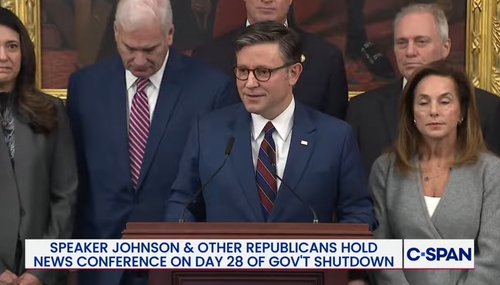
Hill Journos Tweet Twice as Many Johnson Jabs vs Shutdown Consequences
A NewsBusters analysis of five leading liberal Capitol Hill reporters has found that, by a margin of roughly two-and-a-half-to-one (72 to 28), they have taken to X more times since the start of the government shutdown to condemn Speaker Mike Johnson (R-LA) and the House for being out of session than they have highlighted crucial government programs like food stamps and pay for soldiers that…