
With Kennedy as Hook, Couric Rues Inadequate Cancer Spending

Photo of Brent Baker.
  • Bookmark and Share

CBS anchor Katie Couric used news, that Senator Ted Kennedy is suffering from a brain tumor, as the hook for a lengthy story in which she railed against reduced federal funding for cancer research, though her own numbers and official numbers contradict her premise of any significant reductions. Noting how “nearly one in two men, and more than one in three women, in this country will be diagnosed with cancer in their lifetime,” Couric regretted: “Yet since 2004 federal funding for research into the four most common kinds of cancer -- lung, colon, breast and prostate -- has been cut by more than $100 million.” In fact, National Cancer Institute numbers show a 4.4 percent overall budget increase since 2003, not enough to match inflation but hardly a huge cut, while spending on “brain & central nervous system” (Kennedy's plight) grew by 33 percent and spending on pancreatic cancer, which killed Couric's sister, rose 75 percent.

Relying on a March report published by seven research companies and universities interested in more grants, “Broken Pipeline? Flat Funding of the NIH Puts a Generation of Science at Risk,” Couric asserted that “experts worry this small, elite army” of cancer scientists “is leaving the field in droves because government funding, which once allowed cancer research to flourish, is now drying up.” Seconds later, however, Couric reported that “between 1998 and 2003, Congress doubled the National Institutes of Health budget, allowing research to thrive,” but “since 2004, funding has flat lined.” So it has “flat lined” at a level double where it stood ten years ago.

Story Continues Below Ad ↓

Couric then yearned for the U.S. to follow the European model, lamenting how scientists are “heading overseas where governments and companies in Asia and Europe are creating a brain drain in this country.”

No CBS story would be complete without someone blaming the Iraq war and, indeed, Couric featured a Cornell doctor who insisted the grant situation is “disheartening” because of “all the economic problems” and “the continuation of the Iraq war.”

Couric concluded that “the more than 10 million Americans currently living with cancer” have “the most to lose” from “declining research dollars.”

The view from conservatives Wednesday night? Couric plugged how in part two of “The War on Cancer, Where We Stand,” CBS will look at how “it can take years for the FDA to approve experimental treatments. Is red tape costing lives?” That's an unusual take for network news which loves to hype any studies that suggest any danger from a prescription drug.

Maybe cancer research is deserving of more government funding over less-pressing areas, but viewers deserve better than inflammatory claims of huge imaginary “cuts” in funding and the assertion that a doubling of spending to $4.7 billion (NCI's budget) means money “is now drying up.”

Page vii (page 10 of the PDF) of the National Cancer Institute's “2007 Fact Book” states:

“The NCI budget has increased by $200.3 million -- or 4.4% -- since FY 2003. Cancer Centers, Specialized Centers, and R&D Contracts have experienced percentage increases greater than the total NCI growth since FY 2003.” Research grant spending has risen “by 2.6 percent” -- below the inflation rate.

(NCI is part of the National Institutes for Health, which in turn is part of the Department of Health and Human Services.)

Total NCI funding, by recent fiscal year:

2003: $4.592 billion
2004: $4.723
2005: $4.794
2006: $4.747
2007: $4.792

On page xiii (page 16 of the PDF) a chart on research funding from 2003 to 2007 reports the allocations for the four cancers cited by Couric:

Lung: down $46 million
Colorectal: down about $3 million
Prostate: down about $9 million
Breast: up $24 million

That net outs to a $34 million reduction, far from Couric's $102 million claim. The cut is even less if measured from 2004.

Of course, funding levels change year by year depending on the promise of grant requests and lobbying of Congress, so several cancer areas saw big hikes between 2003 and 2007:

Brain & Central Nervous System grew by $37 million (33 percent), from $111 million to $148 million.

Non Hodgkin's Lymphoma rose $23 million (20 percent), from $95 million to $113 million.

Pancreatic increased $31 million (75 percent), from $42 million to $73 million.

Transcript of Couric's piece on the Tuesday, May 20 CBS Evening News:

KATIE COURIC: The news today that Senator Ted Kennedy has cancer reminds us again how this disease can change our lives in an instant. Nearly one in two men, and more than one in three women, in this country will be diagnosed with cancer in their lifetime. And yet since 2004 federal funding for research into the four most common kinds of cancer -- lung, colon, breast and prostate -- has been cut by more than $100 million [$102]. Tonight we begin a special series: The War on Cancer, Where We Stand.

They are America's foot soldiers in the war on cancer: Young scientists whose research may some day lead to better treatments, maybe even cures. But experts worry this small, elite army is leaving the field in droves because government funding, which once allowed cancer research to flourish, is now drying up.

How bad is it?

DR. DON NANUS, CO-CHIEF ONCOLOGIST, WEILL CORNELL MEDICAL CENTER: I think we're at very high risk of losing some of our best and brightest young people. It's very disheartening. Between all the economic problems in the United States, the continuation of the Iraq war, the low levels of funding.

COURIC: So what does that mean?

NANUS: Short term? It's not good.

COURIC: The statistics are staggering. Between 1998 and 2003, Congress doubled the National Institutes of Health budget, allowing research to thrive. But since 2004, funding has flatlined. Today only one in ten promising cancer research proposals gets funded. And on average, researchers are 43 years old when they get their first grant. These doctors are frustrated.

DR. JOSEPH MANCIAS, TRI-INSTITUTIONAL MD-PHd PROGRAM: Some of your best ideas need to be funded at an earlier point in your life so you have the energy and the drive to continue.

COURIC: Is this going to be very damaging to our efforts to lead the pack in terms of novel cancer treatments and medicines for other serious illnesses?

DR. HEARN CHO, NYU CANCER INSTITUTE: America has been the unquestioned leader in biomedical research for a long time. But that primacy is at risk now.

COURIC: Doctor Hearn Cho specializes in plasma cell cancer. He graduated from medical school 12 years ago and since then has struggled to fund his research. And he makes only half of what his colleagues earn in private practice.

CHO: When I reached a point where I was concerned about the future and I had to consider practical matters of staying employed, I had to consider the possibility that I might have to take a job in industry.

COURIC: By industry, he means pharmaceutical companies. And while they were they are doing research it's focused on moving drugs into clinical trials instead of basic research where the creation of new drugs and approaches takes place. Some researchers are getting out of the field altogether to pursue more lucrative careers sometimes, on Wall Street. Still others are heading overseas where governments and companies in Asia and Europe are creating a brain drain in this country, attracting young Americans like Duncan Odom who left M.I.T. to go to great Britain's Cambridge University.

DUNCAN ODOM, ONCOLOGY GROUP LEADER, CAMBRIDGE RESEARCH INSTITUTE: The feeling within Europe itself that there's a very positive forward-thinking optimistic feel about the future of not just cancer research but science research in general.

COURIC: At 38, Dr. Odom runs his own lab, has a staff of three and has secured financial backing to the tune of more than $1.2 million a year.

ODOM: The difference is that cancer research in U.K. has core funded me indefinitely which means that these are expenditures that I don't have to think about.

COURIC: Unlike his fellow researchers back in the U.S.

Why do you guys do it?

CHO: Because this is what we love. We've dedicated our lives to advancing the understanding of cancer as a disease and developing new ways of treating it.

GABRIELLE RIZZUTO, TRI-INSTITUTIONAL MD-PHd PROGRAM: I'm excited about the prospect of finding something that will actually make a difference.

COURIC: A difference for the more than 10 million Americans currently living with cancer. And when it comes to declining research dollars, they have the most to lose.

The war on cancer is not just a fight for money but also a battle against time. It can take years for the FDA to approve experimental treatments. Is red tape costing lives? We'll have that story tomorrow as we continue the War on Cancer: Where We Stand.

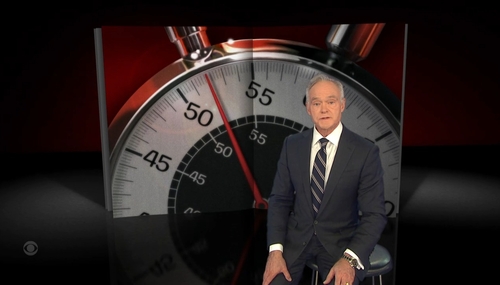
Online version of Couric's Tuesday night story, with video of it.

—Brent Baker is Vice President for Research and Publications at the Media Research Center


Comments Policy

All comments are owned by whoever posted them and are subject to our terms of use. They should not be assumed to represent the views of NewsBusters.

Viewing options

Select your preferred way to display the comments and click "Save settings" to activate your changes.

The "War" on Cancer?

So, Katie thinks we've declared "War" on cancer? Talk about an un-winable war! You might as well declare war on death; it'll have the same effect. None whatsoever.

What is with the MSM and their declarations of war for everything? It seems to be their favorite description for EVERYTHING! The “War on poverty, the “War” on obesity, etc... Can’t they come up with a new descriptor, or are they all stuck on stupid?

The war on

Ah, but remember there is no war on terrorism, it's just a legal/police matter.


"ODOM: The difference is

"ODOM: The difference is that cancer research in U.K. has core funded me
indefinitely which means that these are expenditures that I don't have
to think about."

Translation: I don't have to be accountable for my work, they're going to pay me anyway.

Just wondering,does anyone know how much is spent on these things in the private sector? I'd be willing to bet it dwarfs what the federal government spends.

Frankly, the U.S. government should take their AIDS money and spend it on cancer research, if they insist on being in the research field. Why spend billions on a cure for something that can be prevented with a $.99 condom?

The difference is

Some unlucky people, including babies, catch it through ways other than sex. A condom wouldn't help there.

  And what percentage of


And what percentage of the total are those people? AIDs, for all intents and purposes, is nearly 100% preventable. As such, the majority of that funding should be spent on diseases that aren't so that they eventually are.

Leave it to the Libs

To let no tragedy go unexploited as a political bludgen.  Having lost both my Mother-inlaw and my only brother to glioma brain tumors I have seen what an awful death it will be for the Senator.  I would not wish that kind of suffering on anyone, even someone as loathsome as Ted Kennedy.  My prayers are with him and his family.  I can only hope that before his time comes he will confess his sins, both personal and political and ask the good Lord for forgiveness. 

"A nation which can prefer disgrace to danger is prepared for a master and deserves one."

Alexander Hamilton

Of course, in typical beaurecrat fashion,

the logical next step if a problem is not immediately solved, or solved in an unrealistic time frame, then just throw more money at the problem! It doesn't work that way. These people just have no concept of how the free market works...as a previous poster mentioned, what the private sector (meaning: private donations and companies who can profit from a cure) spends on research likely dwarfs public spending. If someone can make money at it, betyerass they're trying to figure it out.

Oh, and by the way, I've never worked anywhere where the employees in a particular department or discipline didn't feel as if not enough were being spent in their particular area. Scientists are no different...they always feel underfunded as well. The reality of life is that ALL of our budgets are smaller than we would like.

Katie's

still on the air???

If I were the conspiracy type

I would bet that there IS a cure for cancer but they can make more money "researching" for the cure.

Maybe not all cancers but most... of course for sale to the highest bidder plus a vow of secrecy.

Some conspiracy type's do say...

... that there is a cure for many cancers.  The problem is, they are "natural" cures and therefor cannot be patented.  No patent means no money.  I don't know if thats true, but I've heard it said.

http://www.natural-cancer-cures.com/

   I lost my father-in-law 2 years ago to cancer (including brain) and I feel for Kennedy.  But I can't say I'm going to miss him much.  (Sorry, its just the way I feel)

Cancer research is BIG

Cancer research is BIG business. The last thing they want is to find a cure. Oh they will look for some solutions to prolong life but a true cure, no way. Then they would all be out of business.

"Forget change, I want improvement!"

Spending

Katy's income is going to take a cut after she is cut from the team or sent out to pasture.


  • "But this one goes to 11"

Research

Which other illness receives the same attention as does cancer?

JDW

If you mention ANWR it means you don't care about the environment but when congress says ANWR it means you don't care about the gasoline prices

Kennedy's being released

Kennedy's being released from hospital today. Looks like it's all over for him pretty soon.

To answer Couric... maybe if the media, Hollywood, et al wasn't so interested in AIDs, they could raise more funds which would be spent on general CANCER research.

Cancer is the #1 killer in the US. AIDS doesn't even make a blip on the stats. What about Heart Disease? Diabetes?

Guess what? Around 350,000 people die of Diabetes and Diabetes related symptoms each yesr. And diabetes is about #7 on the death stats.

22,000 people die of Aids. But for some odd reason that's the condition that gets most of the sympathy, and the Hollywood fund raisers. 

Vote 4 change. Vote 4 anything. See Jack & Mr Shy's first campaign ad for the ONLY viable 3rd party candidate.

Government funding for medical research

I've been battling Crohn's disease for 38 years now and have faced numerous life threatening complications. The cause is still unkown and there is no cure for it. Ted Kennedy suddenly gets a headache and he's got Katie whining for more spending on cancer. When will Katie campaign for more government spending on research into Crohn's disease?

Are you sure you really want it??

Look at the Wright Brothers example in the middle of this book review before you answer...
JMR

The tax & spend drug war looks racist in the real world.

Good point

Actually, I am dead set against universal health care and a firm believer in the free market system. And I do help fund research by supporting CCFA, a non-profit organization the provides funding for research and training for Crohn's disease and ulcerative colitis. In fact, 87% of their funding comes from contributions.

"That's an unusual take for

"That's an unusual take for network news which loves to hype any studies that suggest any danger from a prescription drug."

The MSM is engaging in a typical no-win scenario.

If FDA approves a drug that ends up hurting a percentage of people (no matter how small), the MSM will hammer on the agency, as well as those evil drug companies that dare to seek a profit. The MSM, being a tool of the left, has zero tolerance for risk. Every drug, every food, every toy, every vehicle... EVERYTHING... has to be 100% risk-free.

However, the MSM will also hammer on the FDA for "taking too long" approving drugs. They drone endlessly about miracle cures in Europe (particularly in the treatment of AIDS) that the evil bureaucrats here are holding back.

So, really, in order for us to "win", we must only approve drugs that are 100% risk-free, and do so expeditiously.

And maybe the free marketplace

With competing agencies and patients making their own choices among them all, instead of an expensive & centrally-controlled FDA, could do that job better for patients. Sometimes it seems that the west learned absolutely nothing from the collapse of the Berlin Wall.
JMR

The tax & spend drug war looks racist in the real world.

I saw this drivel live

...unfortunately, while at my parents. My first thought was, "How much of your 23[?] million dollar salary did you donate Katie? Hmmmm?

She referred to Teddy as the "Liberal Lion of the Senate" and I thought she left off the animal he is altogether -- he's definitely a liberal lyin' weasel

  MSM - shaping all the perceptions you need to believe.

blame aids, MSM, the Lavender Mafia

The billions of dollars wasted on AIDS research would have made a serious (good) impact on several major cancers. AIDS is easy to stop - monagamous sex with your spouse, no intravenous drugs. Works every time.

If you take the dollars-per-death investments in research, the AIDs gang has steamrollered all the real health threats to the American public. All hyped by the MSM or course.

While AIDS is a terrible disease, its spread is behavioral. Cancer on the other hand is organic.

Nixon & the National Cancer Act of 1971

If, of course, it had been Jimmy Carter or JFK, who had led on this historic effort, Couric would have led off with something positive about their legacy here:

National Cancer Act of 1971
In 1970, the American people made clear their desire for a cure for the second-leading cause of death in the United States. President Nixon responded during his January 1971 State of the Union address: "I will also ask for an appropriation of an extra $100 million to launch an intensive campaign to find a cure for cancer, and I will ask later for whatever additional funds can effectively be used. The time has come in America when the same kind of concentrated effort that split the atom and took man to the moon should be turned toward conquering this dread disease. Let us make a total national commitment to achieve this goal."

And we did:

On December 23, 1971, President Nixon followed through on his promise as he signed the National Cancer Act into law.

We've come a long way - without you, Katie.

In the moment, perhaps, a little bit (the budget is a war zone, Katie) has been shifted into another area, which if you were not such a biased little partisan bigot, you would be pumping the great news up once or twice a month, because it's something you claim you care about.

That would be President Bush's concern over the Global Aids pandemic, he inherited from an uncaring and unwilling to lead Pres. Clinton; Bush's leadership with his twin HIV/Aids and Malaria programs for Africa and Indonesia. Funding has now, since he became leader of the caring world topped $22 billion. See: Total US contribution to Global Aids 2001-2008, and the results are in with most understanding that his efforts have easily saved over a million lives and prevented infections of millions more, which will result in many millions more less lives lost. Imagine the effect, alone, of  the 1.9 billion condoms alone that he has distributed in 3rd world countries - a small part of the effort. Oh, right, you thought he put a hold on distributing condoms - most of the left wants to believe that spin. 

For a refresher on how your dear Bill Clinton performed as president on the issue, I suggest you read David Corn's (The Nation), Too little, too late - How many times is Bill Clinton going to apologize to Africa? 

Additionally, President Bush's concern about the suffering and deaths caused by Malaria led him to charge ahead here as well, and with remarkable results. See: The President's Malaria Initiative and U.S. Efforts to Fight Malaria.

The nation is moving forward in the world, Katie, and we're doing it without you.

cancer and ted Kennedy

It is always expediant to call for funding for the cure for cancer when it is you or some one you know or like has cancer , Ted Kennedy could have been a crusader for cancer reseach if he had any compassion towards his people. so I will let it stop there although I have very little compassion for Mr. Kennedy .

Conflict of interest?

If Katie is going to do stories like this personally, would she be ethically required point out that she lost her husband to colon cancer some years ago, or that she's the co-founder of a foundation funding research into that disease?

When you put the clowns in charge, don't be surprised when a circus breaks out.

»→ Tough question, viking

Inasmuch as most Americans have lost somebody to cancer, maybe it's not such a necessary disclaimer.

  • LYDSEXICS UNTIE!

But that's why

It's so hard to cut public science funding in that area, despite what might be called "Wright Brothers results" in the real world (see book review comment above). It's easy to paint us cutters as "heartless," so that gets done in the real world of politics, even though we intend to give all cancer patients the benefits of the best possible chance at a cure -- a free marketplace instead of wasted taxes. It's sad.
JMR

The tax & spend drug war looks racist in the real world.

»→ No disagreement, sarc.

Government grants can easily benefit the best bullsh*tter (or payola expert) rather than the most productive or visionary or ingenious.

There's a Filo T. Farnsworth out there somewhere.  Probably doing something with liquifying coal.

  • LYDSEXICS UNTIE!

Katie not just another American who lost family member to cancer

True, but then, Katie uses her platform to raise awareness and money for colon cancer. Both are laudable, of course, but you have to wonder if that passion colors her views on the policy question of government spending on cancer research.

When you put the clowns in charge, don't be surprised when a circus breaks out.

»→ True enough, viking

My brother-in-law lost his dad to the 1947 Texas City explosion.  He grew up to be a Liability lawyer specializing in Workman's Comp.

The problem isn't Katie's life experience, but rather her inability to maintain objectivity in a job that used to demand it.

  • LYDSEXICS UNTIE!

Kennedy "single most effective senator"

Well, here's a quote from McCain today about Kennedy -

"I have described Ted Kennedy as the last lion in the Senate," said presumptive GOP presidential nominee Sen. John McCain, his eyes glistening and his voice thick.
"He remains the single most effective member of the Senate," McCain said of his Democratic friend. "He is not reluctant to share the credit. And when it fails, he's willing to take the blame. We will miss him for that and many other reasons."

http://www.nydailyne...

Anybody having cancer is a sad thing, but "SINGLE MOST EFFECTIVE MEMBER OF THE SENATE?" This from a Republican, no less the nominee for President?

This country is so screwed.